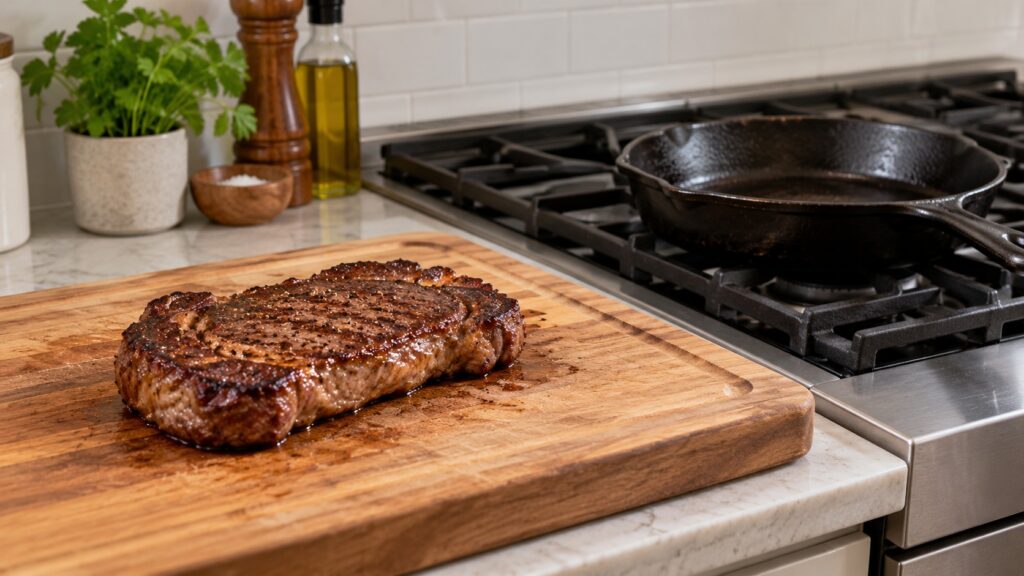
Good searing steak on la cornue burners comes down to four things: a dry steak, a heavy pan that has heated through, the right burner, and air movement in the kitchen. The range is built for high heat, and the burners on its rangetop are meant to be judged on their top end as well as their low one. This guide covers the preparation and the setup, with attention to the hood and to safety, since a hot pan and a lot of smoke are the two things that go wrong. It gives no temperatures and no cooking times, because they depend on the cut, the pan and your taste; follow a recipe you trust for those, and your owner’s manual for the range.
How do you set up a La Cornue rangetop for searing?
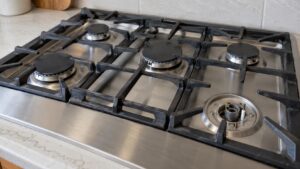
Start with the burner. Our glossary of burner and flame terms says the model pages list front burners on the Château gas burner rangetop at about 17,000 BTU and rear burners at about 7,500 BTU on natural gas, so the front burners are the ones for hard searing. For any other model, use the rating in your manual. Before you cook, check that the burner cap is seated flat and the crown slots are open. Our burner caps and grates guide explains why a cap that does not sit flat moves the flame away from the spark. A healthy flame is steady and blue, as how La Cornue gas burners work describes, and a yellow flame is a reason to stop and read our yellow flame guide before you start.
Which pan should you use?
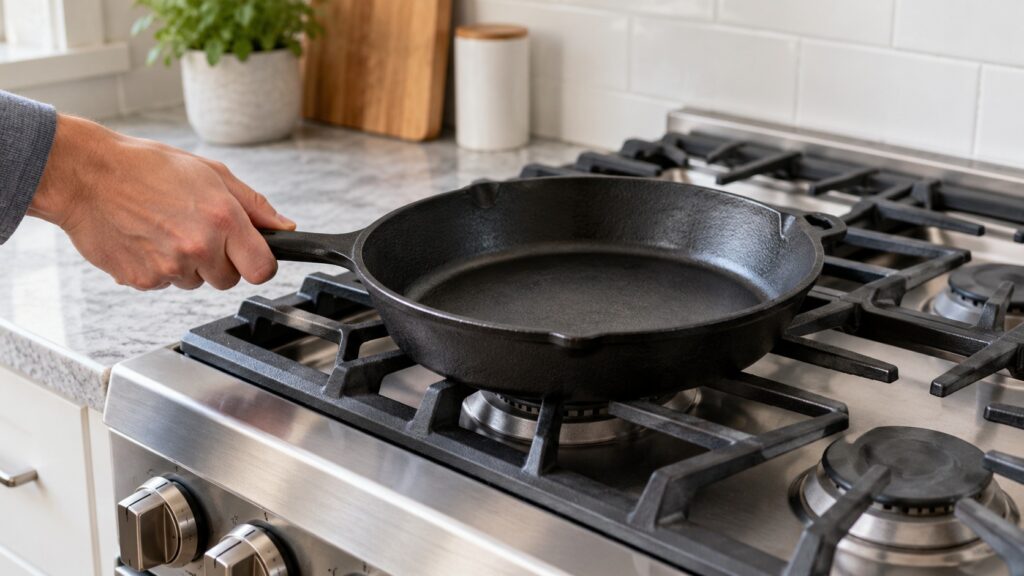
Use a heavy-based pan: cast iron, enameled cast iron or thick clad stainless. Thin pans heat in a small hot spot and cannot hold heat when the steak goes in. Our simmer tips make the same point for low heat, that heavy pans spread heat, and it matters just as much at the other end. Match the pan to the burner, so the flame heats the base, not the sides. We cannot promise that any particular pan suits every grate or burner; check the grate and the manual, and make sure the pan sits steady and flat. A rocking pan on a hot burner is a hazard.
Heat the pan gradually. Setting an empty pan on the strongest flame and leaving it can overheat the pan and the coating on it. Put the pan on the grate while it is cold, light the burner and let the pan come up to heat, watching it as you do.
How should you prepare the steak?
Pat it dry with paper towels, because surface moisture turns to steam and stops browning. Take it out of the refrigerator in good time so it is not ice-cold at the center, and season just before it goes in. Pat it dry again if it has sweated. Have your tools to hand before the pan is hot: tongs, a plate for resting and a lid for the pan. Do not crowd the pan; steaks that touch lower the pan’s temperature and steam instead of searing. Cook one or two at a time, depending on the pan.
We give no minutes and no internal temperatures. Use a meat thermometer and the guidance you trust for doneness, and rest the steak when it comes off the heat.
What should the hood be doing?
Searing makes smoke. Our hood usage tips say to switch the hood on a minute or two before cooking, so the airflow is established before the plume rises, to use the lowest speed that keeps the air clear and to switch to boost only for searing and frying. They also suggest using the back burners for smoky tasks, which the hood captures better; for a steak, you may weigh that against the stronger front burners. If you have a tight, well-sealed house, the tips mention opening a window so the hood has air to draw. Keep the filters clean; a clogged filter is the most common cause of weak suction.
What about flare-ups and grease fires?
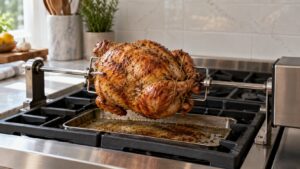
Hot fat can smoke hard and, if it ignites, it can flare in the pan. Keep a lid that fits the pan within reach. If fat in a pan catches fire, cover the pan with the lid, turn off the heat and leave the lid in place until it has cooled. Do not use water, and do not run the hood to try to clear it. Never leave a hot pan unattended, and keep children and pets away from the range while you sear. Keep towels, sleeves and packaging away from the flame.
If you ever smell gas, do not switch anything on or off, do not light anything, leave the house and call your gas utility or 911 from outside. A burner that clicks without lighting, or lights unevenly, is covered in our clicking igniter guide.
Is the French top or the grill module better for searing?
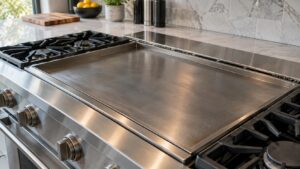
They are different tools. The French top is a solid plate with heat zones from a center boil to an edge hold; see how to cook on a La Cornue French top. A grill module gives an outdoor grill style of searing, as our grill tips explain. Use whichever your range has and the manual describes. This guide is about a pan on a gas burner.
What should you do after searing?
Turn off the burner and let the range cool before cleaning. Wipe spatter while the surface is warm, not hot, with a soft cloth, and see our guide to what cleaners are safe for La Cornue surfaces for what to use. Let the hood run for a few minutes after cooking, as the usage tips suggest. If the burner has become hard to light, or the flame turns yellow after heavy use, clean the cap and crown as the guides describe. For service, we are an independent repair company, not the manufacturer. Our La Cornue range top repair page explains how a visit works, and you can schedule a visit online.