The honest answer to what cleaners are safe for la cornue surfaces is that no single cleaner is safe for all of them. A La Cornue range combines vitreous enamel, brass, nickel or chrome trim, stainless steel and, on some models, ceramic-glass induction, and each material is damaged by something different. What is safe on one can pit, dull or scratch another. This guide puts the surfaces side by side: what is gentle enough for each, what to avoid and the habits that apply to every one of them. It names no commercial products and cannot promise that any product is harmless to your finish. The owner’s manual for your model is the final check.
Which cleaners are safe on La Cornue vitreous enamel?
Vitreous enamel is glass fused to metal, so it resists staining and is smooth. Our enamel cleaning guide says to wipe spills promptly with a soft damp cloth, to use mild dish soap and warm water for grease, and to rinse and dry to avoid streaks. For stubborn marks it suggests a paste of baking soda and water, applied briefly and wiped off with a soft cloth. What to avoid: scouring powders, steel wool and abrasive pads, which dull the gloss; harsh chemicals such as oven cleaner on the enamel body; and acidic spills such as citrus, tomato or wine left to sit. The main danger to enamel is impact rather than chemistry, since a dropped pot can chip it.
What is safe on brass, nickel and chrome?
Brass develops a patina, and you choose whether to polish it or let it age. Our brass cleaning guide recommends a soft damp microfiber cloth for routine care, with a drop of mild dish soap for light grime, dried immediately. A brass-specific polish is for uncoated brass only: lacquered brass should not be polished with abrasive products. Avoid abrasive pads and harsh chemicals. If you do not know whether your trim is lacquered, ask before you polish.
Nickel and chrome do not tarnish like brass, but they scratch and spot. Our nickel and chrome trim guide lists mild soap and a soft cloth, dried at once, and tells you to avoid scouring pads, acids, bleach and ammonia. On brushed finishes wipe along the grain. Black chrome needs a lighter touch still. In all cases, spray the cloth, not the trim or the area near knobs and electronics.
What is safe on stainless steel and induction glass?
Stainless steel should be wiped along its grain with a soft cloth dampened with warm water and a drop of mild dish soap, as the stainless surface care guide explains. Avoid steel wool and abrasive pads, and avoid chloride-based or bleach cleaners, which can pit stainless. Leaving salty or acidic spills to sit can also cause spots.
Ceramic-glass induction surfaces are cleaned differently. Our induction glass cleaning guide says to wait until the residual-heat indicator shows the zone has cooled, wipe with a damp cloth and a drop of mild dish soap, and use a ceramic-cooktop cleaning cream with a non-scratch pad for burnt-on residue. Avoid scouring pads, steel wool and gritty powders.
Which cleaners should never be mixed?
Do not mix cleaning products. Combining them, for example bleach with ammonia or with an acid, can release dangerous fumes, and a mixture can also damage a finish in a way that neither product would on its own. Use one product at a time, rinse the surface with clean water between products and ventilate the room. We name no particular products and do not say which are compatible with which finish. If you want to use something specific, check it against the manual first and test it on a hidden spot.
What habits apply to every surface?
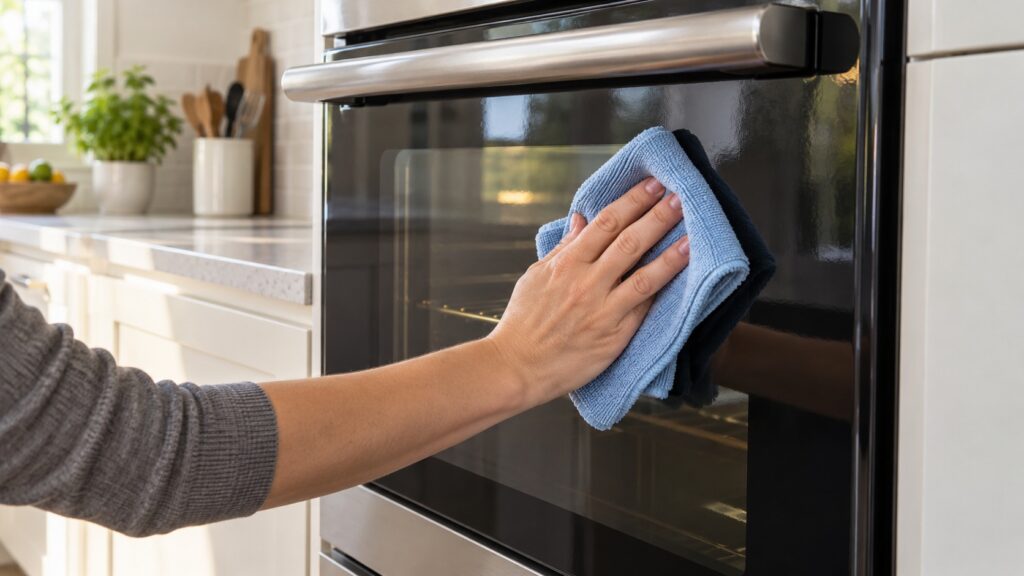
Let the range cool completely before you clean it. Turn off the burners and the oven. Wipe spills early, because they are far easier to remove fresh. Work with a soft cloth and warm water first, and move to a stronger step only if you need to. Keep liquid away from knobs, controls and the gaps around burners. Our knob and bezel care guide explains why spraying near controls lets liquid reach valves and switches. Dry as you go to avoid water spots on polished finishes.
Two parts have their own care. The French top is seasoned and maintained differently from the other surfaces, so follow our guide to seasoning a La Cornue French top and not the advice above. The burner caps and grates have their own routine in the burner caps and grates care guide.
What should you do if a cleaner has damaged a surface?
Stop using it and rinse the area with clean water. Do not try to fix the damage with something stronger. A dulled patch, a pitted spot or a scratch may not be reversible with home methods, and further rubbing can make it worse. Photograph it and note what was used. If an enamel chip or a finish problem needs attention, our guide to repairing an enamel chip vs replacing a panel explains the options.
When should you call a technician?
Call if cleaning liquid has run into a control or burner area, if a knob will not turn after cleaning, if you see damage you cannot explain or if the range behaves differently after a clean. If you smell gas at any time, do not switch anything on or off, do not light anything, leave the house and call your gas utility or 911 from outside. We are an independent repair company, not the manufacturer. Our La Cornue range repair page explains how a visit works, and you can schedule a visit online.