
Cleaning a La Cornue Induction Glass Surface
Cleaning a La Cornue Induction Glass Surface is a common question among La Cornue owners. This guide walks through it step by step with technician-grade detail.
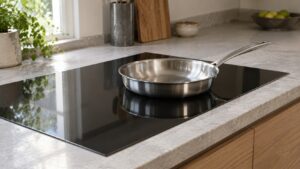
One of induction’s advantages is how easy the ceramic-glass surface is to clean — there are no grates or burner parts, and the glass stays relatively cool except where a pan sits. Still, the glass needs the right care to stay scratch-free and clear. This guide explains.
Daily cleaning
- Wait for the surface to cool — the residual-heat “H” indicator tells you a zone is still hot.
- Wipe spills with a soft, damp cloth and a drop of mild dish soap.
- Dry with a microfiber cloth for a streak-free finish.
Removing burnt-on residue
For cooked-on food or boil-overs, use a ceramic-cooktop cleaning cream and a non-scratch pad designed for glass cooktops. Apply the cream, rub gently, then buff clean. For hardened spots, a dedicated cooktop scraper held at a low angle removes residue without scratching when used carefully.
Sugar and plastic spills — act fast
Sugary spills and melted plastic can permanently pit ceramic glass if they cool and harden on a hot surface. While the zone is still warm (using a mitt and the scraper), remove these immediately rather than waiting for the surface to cool.
What to avoid
- Abrasive scouring pads, steel wool, and gritty powders that scratch the glass.
- Dragging heavy, rough-bottomed cookware, which scratches the surface.
- Harsh chemicals and bleach.
- Cleaning while a zone still shows the “H” residual-heat indicator.
Protecting the glass long-term
Use flat-bottomed, induction-compatible cookware and lift rather than slide pans. For cookware selection, see our best induction cookware guide. A cracked glass surface must be replaced and should not be used — see our induction repair-or-replace guide.
Reference and service
Cleaning recommendations are on lacornueusa.com. If the glass is cracked or a zone problems, schedule a technician for inspection.
The right tools for induction glass
Keep three things on hand and the surface stays pristine: a ceramic-cooktop cleaning cream, a non-scratch pad made for glass cooktops, and a dedicated cooktop scraper held at a low angle for hardened residue. Avoid the kitchen drawer’s general-purpose scouring pads and gritty powders — they leave fine scratches that dull the glass permanently. A microfiber cloth for the final buff prevents streaks once the surface is clean.
The fast-action spills
Two spills demand immediate attention even while a zone is still hot (use a mitt and the scraper): sugar and melted plastic. As they cool and harden on ceramic glass they can pit the surface permanently, so remove them right away rather than waiting. For everything else, let the residual-heat “H” indicator clear first, then clean cool. Pairing flat-bottomed, induction-compatible cookware with a lift-don’t-slide habit protects the glass long term — see our induction cookware guide.
Frequently asked
- Why not clean while it shows “H”? The zone is still hot; cleaners can bake on and you risk a burn.
- Can a scraper scratch the glass? Used flat at a low angle it will not; digging in with a corner can — keep it nearly parallel.
Protecting the glass for the long term
Daily habits matter more than any cleaner. Use flat-bottomed, induction-compatible cookware and lift pans rather than sliding them, since dragging rough-bottomed pots is the most common source of fine scratches. Wait for the residual-heat “H” indicator to clear before cleaning a cooled zone, and avoid harsh chemicals, bleach, and gritty powders entirely. A cracked surface is the one thing you must not keep using — moisture can reach the electronics — and it is replaced as its own part, as covered in our induction repair-or-replace guide. For cookware that protects rather than scratches the glass, see our induction cookware guide. Sugary spills and melted plastic deserve special urgency: remove them while the zone is still warm (with a mitt and the scraper), because once they cool and harden they can pit the ceramic glass permanently.