
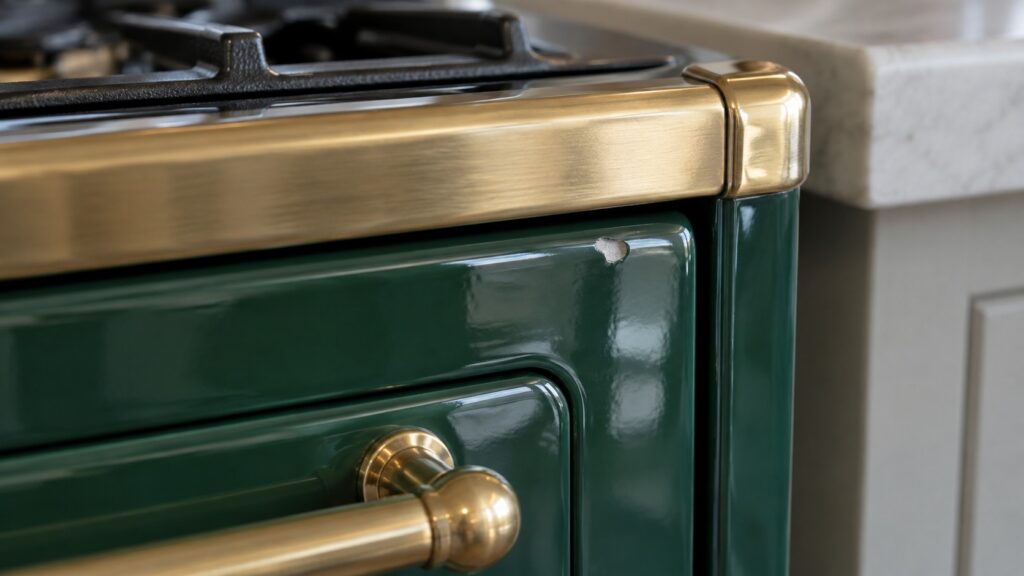
A La Cornue enamel chip repair or replace decision depends mainly on the chip’s size, location, and how much it exposes the metal underneath — small chips are often repairable with a proper touch-up process, while a larger crack, a chip that has exposed bare metal to moisture, or damage across a visible focal panel more often points toward panel replacement. None of these are guesses you need to make alone — a technician familiar with vitreous enamel can usually tell you within a few minutes which category a specific chip falls into. Vitreous enamel is glass fused to metal, not paint, so the repair options and their limits are different from what you would expect on a painted appliance body — and understanding that difference before calling anyone helps you set realistic expectations about what a repair can and cannot achieve, rather than expecting a result closer to a car body shop’s paint match.
Why is vitreous enamel different from a painted finish when it comes to repair?
Vitreous enamel is glass powder fused to the metal body at high temperature, creating a hard, glossy surface that is part of the metal rather than a coating sitting on top of it. This is why enamel is so durable in normal use, resistant to everyday heat and cleaning that would degrade paint — but it also means a chip is a break in that glass layer rather than a scuff in a soft coating, and it cannot be simply sanded and repainted the way an automotive-style finish could be, nor does it respond to the kind of quick cosmetic touch-ups people sometimes reach for on a painted appliance body. Repair options for enamel are more limited and more specialized than for a painted surface, which is the main reason the repair-versus-replace decision matters more here than it would on many other appliances.
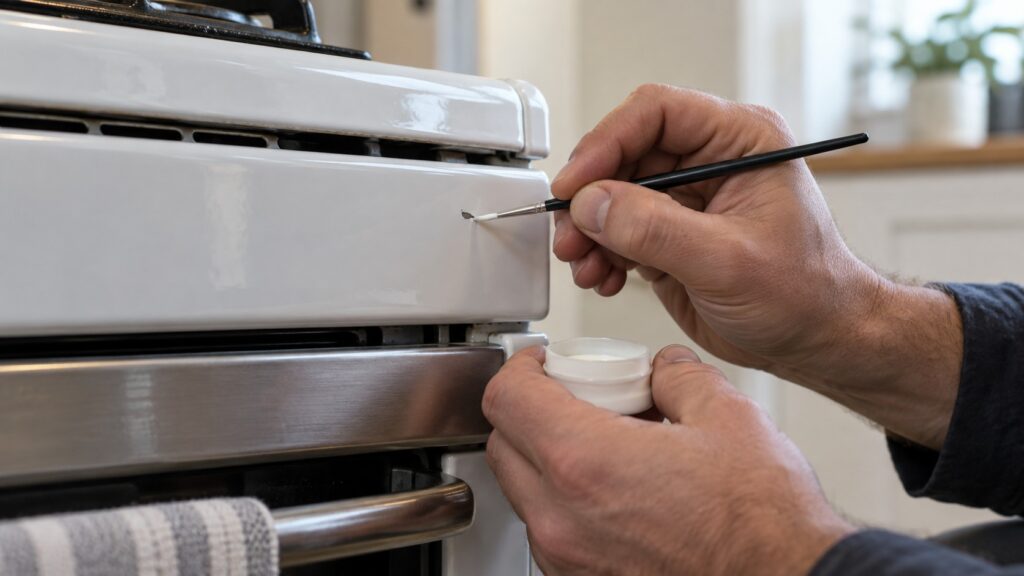
When is a touch-up repair actually a good option?
A small chip, especially one on a less visible surface or one that has not exposed bare metal, is often a reasonable candidate for a color-matched enamel touch-up product designed for this kind of repair. The realistic expectation matters here: a touch-up can protect the exposed area and blend reasonably well from a normal viewing distance, but it will rarely be invisible up close, since matching a glass-fused finish exactly with a touch-up compound has real limits. For a chip on a rarely seen surface — the back or underside of a panel, for instance — this limitation matters much less than it would on the range’s most visible front panel. A technician-applied touch-up generally blends more evenly than a DIY kit purchased and applied at home, since matching enamel color and getting a smooth, feathered edge takes some practice; a homeowner attempt is more reasonable on a hidden surface where a slightly rougher result is acceptable than on a panel everyone in the kitchen will see every day.
Why does exposed metal change the urgency, even for a small chip?
Once a chip breaks through to bare metal, that spot is exposed to moisture and kitchen humidity in a way the surrounding enamel is not, and left untreated, it can begin to corrode underneath the enamel around the edges of the chip — a problem that spreads slowly but does get worse over time, potentially undermining enamel beyond the original chip. Treating an exposed-metal chip promptly, even a small one, is worth prioritizing over a cosmetically larger but fully enamel-covered chip elsewhere on the same range.
When does panel replacement become the better call?
A crack, rather than a simple chip, is generally not something a touch-up product can address reliably, since a crack implies the enamel has separated along a line rather than lost material at a single point — repair attempts often do not hold up under normal heat cycling. Damage on a highly visible focal panel, where even a well-done touch-up’s slight color mismatch would bother you every time you look at the range, is also a reasonable case for replacement rather than living with a visible repair indefinitely. And multiple chips accumulated over years, even if each one individually could be touched up, can reach a point where replacing the panel is more practical than treating each spot separately.
How much does a repaired chip actually cost compared to replacing a panel?
A touch-up repair is meaningfully less expensive than a panel replacement in nearly every case, which is exactly why it is worth attempting first on a chip that is a reasonable candidate. Panel replacement on a range this specialized involves ordering a color-matched enamel panel to the specific model and finish, which takes both more time and more cost than a touch-up product applied during a single visit. This gap in cost and lead time is part of why the decision matters — choosing replacement for a chip that a touch-up could have handled well is an avoidable expense, while choosing a touch-up for damage that really needed panel replacement often means paying for both eventually.
What should guide the decision on your specific chip?
- Check whether bare metal is exposed — this affects urgency regardless of the chip’s size.
- Consider the panel’s visibility — a chip on a focal panel deserves a higher cosmetic standard than one on a hidden surface.
- Distinguish a chip from a crack — cracks are far less likely to hold up under a touch-up repair.
- Weigh accumulated damage if there is more than one chip, rather than treating each in isolation.
Our enamel surface care guide covers the cleaning habits that help prevent future chipping, and our enamel colors and trim guide is useful if replacement means choosing a finish again. For a related structural concern, see our cracked French top repair-or-replace guide. You can schedule a visit for an assessment of your specific chip or crack before deciding.