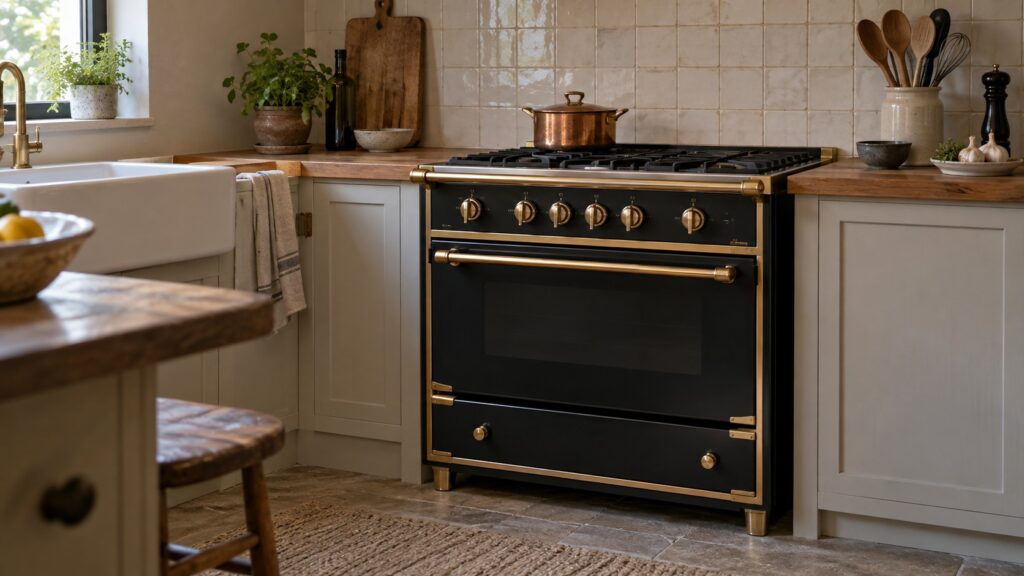
The La Cornue Château 60 is the smallest range in the Château family, and the choice that matters most is whether to buy it in gas or induction: gas gives you the classic flame and works with any pot, while induction gives you faster, more controlled heat and a flat, easy-to-clean surface but needs cookware a magnet will stick to and the right electrical supply. Both are offered here in the same compact body and in brushed nickel or polished brass trim.
What is the La Cornue Château 60 and who is it for?
La Cornue builds its Château line in a series of widths, and the 60 is the compact end. It brings the same hand-finished approach and vaulted oven design as the larger models into a body that fits a small kitchen, a city apartment, a guest house or a second kitchen where a full-size range would overwhelm the room. If you have been looking at the larger Château models and the space simply is not there, the 60 is the member of the family that answers that problem. You can see how the size steps work in our guides to the Château 75 vs 90 and the Château 90 vs 120.
The smaller body means fewer burners or zones and a smaller oven than the larger sizes, so match the range to how you cook. A household that cooks several dishes at once for large gatherings will feel the limits sooner than a couple who cook two or three pots at a time. Check the data sheet for the number of burners or zones, the oven capacity and the weight of the particular version you are considering.
Should you choose gas or induction?
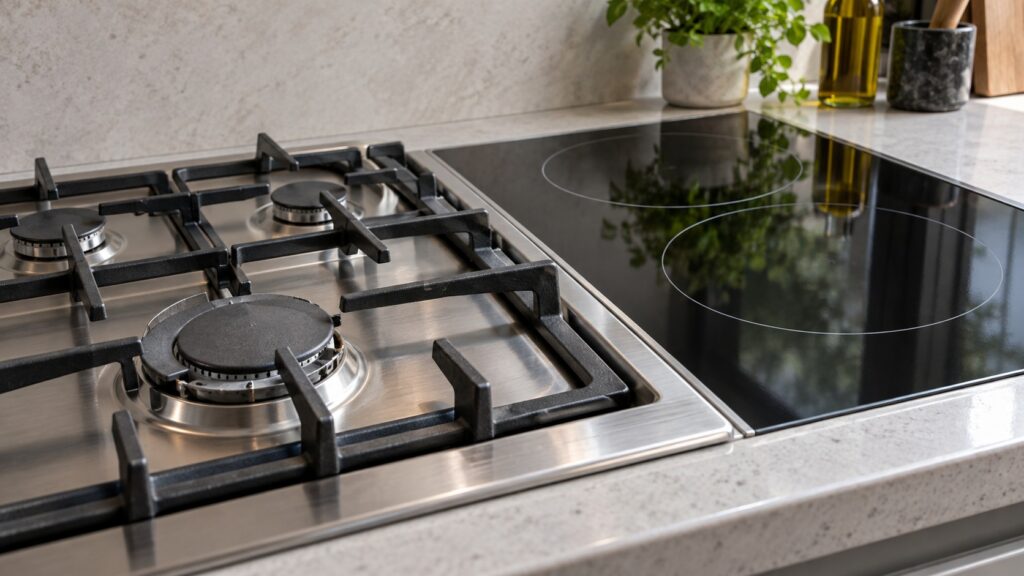
A gas Château 60 gives you an open flame, which many cooks prefer for searing, charring, and the visual feedback of a flame that rises and falls with the knob. It works with any cookware, including thin pans, woks and enameled cast iron. It needs a gas line or a propane supply, a correctly sized shutoff and a hood that moves the combustion products away. An induction Château 60 heats the pan directly through a magnetic field, which means water boils faster, low heat holds more steadily and the surface stays cooler around the pan. It needs a dedicated electrical circuit of the size in the installation sheet, and it needs cookware with a magnetic base. Our gas vs dual fuel vs induction guide compares the fuel choices for the whole brand.
What about the cookware you already own?
If you choose induction, test your pans with a magnet. A magnet that grips the base firmly means the pan will work; a magnet that does not hold means the pan will not heat. Many people discover that a few favorite pieces need replacing. On gas, the only question is whether the pan fits the grate and sits level over the burner. This is a small detail that often decides the choice for a household with a large collection of copper, aluminum or glass cookware.
What should you check about installation?
A compact range still needs correct utilities. For gas, you need a shutoff within reach and a connection that follows local code, with a regulator set for natural gas or propane as the model requires. For induction, you need a dedicated circuit and wiring that follows the installation sheet, and our induction wiring guide explains a wiring mistake that causes a connection error on some models. Either way, you need a hood or a ventilation plan, and the range must be leveled and secured with the anti-tip device. See our installation requirements guide for the checklist.
How do the finishes and colors work?
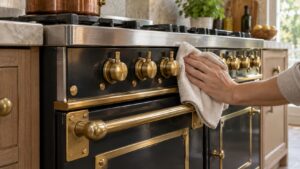
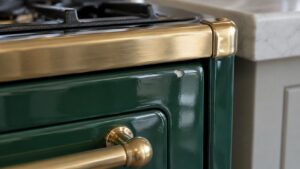
On the models we list, the Château 60 comes with brushed nickel or polished brass trim in the gas and induction versions. The enamel color of the body can usually be chosen from the palette, and the trim sets the character of the range: nickel reads as cool and modern, while brass reads as warm and traditional. Brass will develop a patina unless you polish it, which some owners like and others do not, so decide in advance how you feel about that. Our guide to choosing enamel colors and trim covers the options in detail.
Is a Château 60 worth it compared with other options?
A La Cornue is a considered purchase, and the question of value is personal. The 60 gives you the look and the build of the brand in a small footprint, and for the right kitchen that is the whole point. If you want to know how the brand compares with its better-known rivals, our La Cornue vs Lacanche, Wolf and AGA guide sets them side by side, and the guide to whether a La Cornue range is worth it looks at the broader decision. Once you own one, our range repair page explains how service works.
How do you plan a small kitchen around a Château 60?
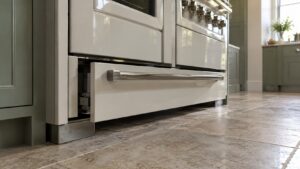
Start with the work triangle and the landing space. A compact range leaves little counter beside the burners, so plan at least one clear surface within arm’s reach on each side for hot pans. Think about the hood early, since a narrow range still needs a hood wide enough to capture steam and grease, and our hood sizing guide explains the rule of thumb. Measure the door swing of the oven, the clearance for the anti-tip bracket and the path the range will travel through the house, because a narrow hallway or a tight stair is a common surprise on delivery day. A little planning on paper saves a lot of trouble when the range arrives.