Sizing a La Cornue Range Hood
Sizing a La Cornue Range Hood is a common question among La Cornue owners. This guide walks through it step by step with technician-grade detail.
A La Cornue range deserves a hood that matches its power and presence. Sizing a hood correctly ensures effective ventilation and a coordinated look. This guide covers the key factors.
Match the hood width to the range
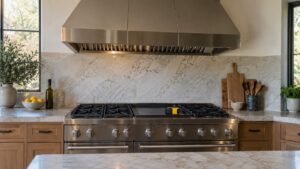
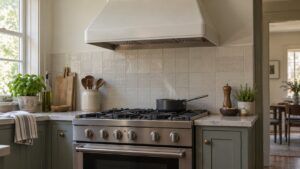
As a rule, the hood should be at least as wide as the range, and many designers spec a hood slightly wider for better capture. A 90cm Château or CornuFé pairs with a 90cm-class hood; a 150 or Grand Palais 180 needs a much wider hood to cover the full cooking surface.
CFM and ventilation
Château hoods typically run a 4-speed blower around 600 CFM through a 6-inch duct. High-BTU gas burners and grill modules produce significant heat and grease-laden air, so adequate CFM and a properly sized, short, straight duct run are essential. Longer or twistier ducting reduces effective airflow.
Hood styles
La Cornue offers Château hoods as well as the CornuFé Hood Collection in several styles — Cascade, Euclid, Loge, and Marquee — plus dedicated CornuFé 90 and 110 hoods. Choose a style that complements your range’s lines and your kitchen architecture. Many hoods feature baffle filters and 3×20W halogen lighting.
Sizing checklist
- Width: equal to or greater than the range width.
- CFM: matched to your highest-output modules (burners, grill).
- Duct: 6-inch, as short and straight as possible.
- Mounting height: follow the manufacturer’s recommended clearance above the cooking surface.
- Make-up air: high-CFM hoods may require make-up air per local code.
Filters and lighting
Baffle filters are dishwasher-safe and should be cleaned regularly; the halogen bulbs (3×20W) are replaceable. For routine care, see our baffle filter cleaning guide.
Installation and service
Proper hood venting is critical — review our hood venting guide before installation, and confirm hood dimensions and CFM ratings on lacornueusa.com. If a blower, switch, or light fails, our technicians service La Cornue hoods; schedule a repair.
Ducted vs. the realities of recirculating
A La Cornue hood performs best ducted to the outdoors, where heat, steam, and grease actually leave the kitchen. Recirculating (ductless) setups only filter and return air and cannot match a ducted run for a high-BTU range — avoid them where venting outside is at all possible. If your layout forces tough duct routing, prioritize the shortest, straightest path over raw blower CFM; our venting guide explains why routing often matters more than the spec sheet.
Match the hood style to the range, not just the size
Beyond width and CFM, the hood is a visual partner to the range. The CornuFé Hood Collection (Cascade, Euclid, Loge, Marquee) and dedicated Château hoods each carry a distinct profile; choose one whose lines echo your range and cabinetry. A correctly sized hood that clashes stylistically undercuts the centerpiece effect a La Cornue is meant to create.
Frequently asked
- How wide should the hood be? At minimum the range width; many designers go slightly wider for better capture.
- Do I need make-up air? High-CFM hoods can require it by code in a tight home — confirm with your installer.
Size the whole system, not just the hood
The hood is only as good as the duct behind it, so size the two together. A high-CFM blower throttled by a long, twisty, or undersized duct underperforms, while a modest blower on a clean, short, straight 6-inch run can outperform it. Match the blower output to your highest-output modules — high-BTU burners and a grill produce the most effluent — and plan the duct routing at the same time. Our venting guide covers the duct side so the capacity you pay for actually reaches the kitchen. Plan the mounting height per your model’s recommended clearance as well — too high loses capture, too low risks heat damage.