La Cornue Gas vs Dual
La Cornue Gas vs Dual is a common question among La Cornue owners. This guide walks through it step by step with technician-grade detail.
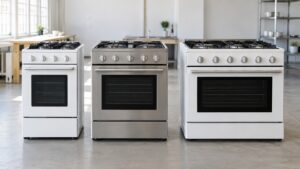
One of the first decisions when ordering a La Cornue is the fuel configuration: all-gas, dual-fuel, or induction. The choice shapes how the rangetop responds, how the oven heats, and what your installation requires. This guide explains the trade-offs.
All-gas
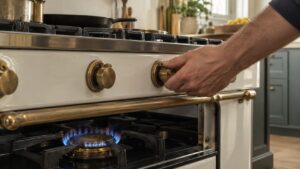
A full-gas configuration pairs brass “flammes” gas burners (front burners up to ~17,000 BTU on natural gas, rear ~7,500 BTU) with a gas oven. Gas gives instant visual flame feedback and classic high-heat searing. On Château models the gas oven feeds the vaulted dome for radiant roasting. Gas requires a properly sized gas line and, in many regions, conversion between natural gas and propane (LP). See our NG to LP conversion guide.
Dual-fuel
Dual-fuel combines a gas rangetop with an electric oven (or, on larger Châteaus like the 120, one gas vaulted oven plus one electric vaulted oven). Many cooks prefer electric ovens for steadier, more even baking temperatures, while keeping the responsiveness of gas burners up top. Dual-fuel needs both a gas connection and a dedicated electrical circuit.
Induction
Induction rangetops use ceramic-glass zones (about 2,100W per zone, up to 3,700W on boost) with a built-in pan detector and a residual-heat “H” indicator. Induction is the most responsive and easiest-to-clean option, and it stays cool except where a pan sits. The CornuFé 90 and 110 both offer 5-zone induction; Château rangetops offer induction modules too. Induction demands correct high-amperage wiring — miswiring is the most common cause of the U400 connection problem.
Comparison at a glance
- Responsiveness: Induction > gas > electric.
- Oven evenness: Electric (dual-fuel) tends to bake most evenly.
- Cleaning: Induction glass is easiest; brass gas burners need more care.
- Installation: Gas needs a gas line; induction and dual-fuel need heavy electrical service.
- Cookware: Induction requires magnetic (ferrous) pans — see our best induction cookware guide.
What about the French Top?
Regardless of fuel, you can specify a French Top (plaque coup de feu) module — a cast-iron simmer plate engraved with La Cornue’s signature stars. It creates concentric heat zones for everything from a hard boil at the center to a gentle hold at the edge.
Match the fuel to your kitchen
If your home already has robust gas, all-gas or dual-fuel is straightforward. If you are renovating and can run a heavy electrical circuit, induction offers the cleanest, most precise rangetop. Full configuration details are on lacornueusa.com. When you need installation help or service on any configuration, book a certified technician.
What the fuel choice means for installation
The configuration you pick determines which trades you need before delivery. All-gas needs a correctly sized gas line and, on propane homes, an NG-to-LP conversion with the right orifices and regulator setting. Dual-fuel needs both a gas line and a dedicated electrical circuit for the electric oven. Induction needs the heaviest electrical service of all, with the breaker rating and wire gauge specified for your model — miswiring is exactly what triggers a U400 problem on first power-up. Read our installation requirements guide and have a licensed professional make the connections.
Maintenance differs by fuel too
Brass gas burners need their caps and ports kept clear so they light cleanly and burn blue; induction glass needs only gentle wiping but scratches if you drag rough cookware. An electric oven has fewer wear parts than a gas oven’s glow-bar igniter and safety valve. None of this should drive the decision on its own, but it helps set expectations for long-term care.
Common questions
- Can I change fuel later? Switching configurations on a built range is involved and not a casual retrofit — decide carefully at order time.
- Is induction worth it on a luxury range? For precision, speed, and easy cleaning, yes — provided your home can supply the high-amperage circuit it needs.
- Does dual-fuel bake better? Many bakers prefer the steadier electric oven, which is the core appeal of dual-fuel.
Matching the fuel to how you cook
Beyond the hardware, let your cooking style settle the choice. If you sear, stir-fry, and want visible flame feedback, all-gas or dual-fuel keeps brass burners up top. If even, repeatable baking matters most, dual-fuel’s electric oven is the draw. If precision, speed, and effortless cleanup top your list — and your home can carry the heavy circuit — induction is the most modern option. There is no single best answer; the right configuration is the one that fits the dishes you actually make and the kitchen you actually have.