Season a La Cornue French Top
Season a La Cornue French Top is a common question among La Cornue owners. This guide walks through it step by step with technician-grade detail.
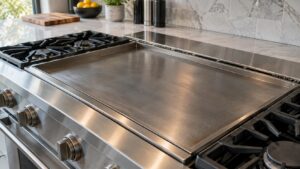
The French Top (plaque coup de feu) is a cast-iron simmer plate engraved with La Cornue’s signature stars. Like any cast iron, it needs seasoning — a baked-on layer of oil — to resist rust and cook well. This guide walks through the process.
Why seasoning matters
Cast iron is porous and will rust if left bare and exposed to moisture. Seasoning fills those pores with polymerized oil, creating a smooth, semi-non-stick, rust-resistant surface. A well-seasoned French Top heats evenly and looks rich and dark; a neglected one rusts and cooks unevenly.
Initial seasoning (new plate)
- Clean the plate with warm water and a mild brush to remove any manufacturing residue. Dry it completely.
- Apply a very thin coat of a high-smoke-point oil (such as grapeseed or flaxseed) over the entire surface, then wipe off the excess so it looks nearly dry.
- Heat the plate gradually using its gas burner until the oil polymerizes (the surface darkens). Ventilate the kitchen and run the hood.
- Let it cool, then repeat the thin-coat-and-heat cycle two or three times to build a base layer.
Ongoing maintenance
- After cooking, let the plate cool somewhat, then wipe clean. Avoid soaking or harsh detergents that strip seasoning.
- If food sticks, scrub with hot water and a non-metal brush, dry thoroughly, and re-oil lightly.
- Always dry the plate completely — trapped moisture is the enemy. A quick warm-up on the burner drives off residual water.
- Apply a thin maintenance coat of oil periodically to keep the surface protected.
Avoid thermal shock
Never pour cold water onto a hot French Top. The sudden temperature change can crack or warp the cast iron — a leading cause of the damage covered in our cracked French Top guide.
Dealing with rust
Light surface rust can be scrubbed away, then the plate dried and re-seasoned. Persistent or deep rust may need professional attention. For cooking technique that keeps the plate in good shape, see our French Top cooking guide.
Reference and service
Care details for your configuration are on lacornueusa.com. If the plate is cracked or warped beyond seasoning, schedule a technician to evaluate replacement.
Choosing the right oil
Seasoning quality depends partly on the oil. High-smoke-point oils that polymerize well — grapeseed and flaxseed are popular choices — build a hard, durable layer. Avoid butter, olive oil, or low-smoke-point oils, which can go sticky or gummy rather than curing to a smooth finish. The key in every coat is the same: apply a very thin film and wipe off the excess until the surface looks almost dry, then heat. Thick coats are the usual cause of a tacky, uneven season.
Reading the surface
A well-seasoned French Top is dark, smooth, and slightly glossy, and food releases cleanly. Dull gray patches or a reddish tinge signal bare or rusting spots that need re-seasoning. If food suddenly sticks where it used to release, the season has worn thin in that zone — a quick clean, dry, and thin re-oil restores it. This ongoing attention is what keeps the cast iron sound for decades; for cooking technique that builds rather than strips seasoning, see our French Top cooking guide.
Frequently asked
- How often should I re-season? A light maintenance coat periodically, plus spot re-seasoning whenever food starts to stick or you see dull patches.
- Can I use soap? Avoid soaking and harsh detergents that strip seasoning; hot water and a non-metal brush are enough.
Dealing with rust and thermal shock
Two things undo a French Top fastest. Rust appears when the porous cast iron is left bare and damp — light surface rust scrubs away, after which you dry the plate and re-season it, while deep or persistent rust may need professional attention. Thermal shock is the other enemy: never pour cold water onto the hot plate, as the sudden temperature change can crack or warp the cast iron, a leading cause of the damage covered in our cracked plate guide. Dry the plate fully after every cleaning — a quick warm-up on the burner drives off residual moisture.