La Cornue Brass Cleaning and Polishing
La Cornue Brass Cleaning and Polishing is a common question among La Cornue owners. This guide walks through it step by step with technician-grade detail.
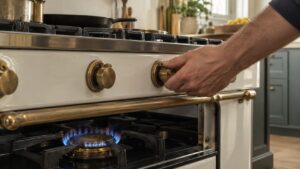
Brass trim and brass “flammes” burners give a La Cornue its warm, classic character — but brass naturally tarnishes and develops a patina. Whether you prefer bright polished brass or an aged look, this guide explains how to care for it.
Polished vs. brushed brass
Polished brass is mirror-bright and shows tarnish and fingerprints more readily; brushed brass has a satin texture that hides marks better. Both are real brass and will patina over time unless polished. Decide whether you want to maintain a bright shine or let a patina develop — both are legitimate, and many owners enjoy the evolving look.
Routine cleaning
- Wipe brass with a soft, damp microfiber cloth to remove dust and cooking residue.
- For light grime, use a drop of mild dish soap in warm water, then rinse the cloth and wipe clean.
- Dry immediately with a soft cloth to prevent water spots.
Polishing tarnished brass
To restore shine, use a brass-specific polish:
- Confirm the trim is uncoated/raw brass (lacquered brass should not be polished with abrasive products).
- Apply a small amount of brass polish to a soft cloth and rub gently along the grain on brushed brass, or in small circles on polished brass.
- Buff off the residue with a clean cloth.
- Avoid abrasive pads and harsh acids that scratch or etch.
Brass burners
Brass burner caps and bases collect cooking soil. Clean them with warm soapy water and a non-metal brush, ensuring igniter ports stay clear. Dry fully before reinstalling. Never put brass burner parts in the dishwasher.
Protecting the finish
After polishing, some owners apply a thin protective wax to slow re-tarnishing. Keep acidic foods and harsh cleaners off the brass. For coordinating care across finishes, see our nickel and chrome trim care guide and our enamel and trim guide.
Reference and service
Finish-care recommendations are on lacornueusa.com. If brass trim or burners are damaged or corroded beyond cleaning, schedule a technician for replacement options.
Lacquered vs. raw brass — know which you have
Before reaching for polish, determine whether your brass is raw (uncoated) or lacquered. Raw brass tarnishes and can be polished to restore shine. Lacquered brass has a clear protective coating that keeps it bright but must not be polished with abrasive products — doing so scratches through the lacquer and ruins the finish unevenly. If you are unsure, test a hidden spot or ask our service line which finish your model uses.
A gentle DIY polish option
For raw brass, a commercial brass polish is most reliable, but a mild homemade option works for light tarnish: a paste of equal parts salt, flour, and white vinegar, applied briefly, then rinsed and dried thoroughly. Always rub along the grain on brushed brass and avoid acids sitting on the metal. Whichever route you choose, finish by drying completely and consider a thin protective wax to slow re-tarnishing.
Frequently asked
- Should I let it patina instead? That is a legitimate choice — many owners enjoy the aged look; just keep it clean of cooking soil.
- Can brass burner parts go in the dishwasher? Never — hand-wash, dry fully, and keep igniter ports clear.
Caring for brass burners specifically
Brass burner caps and bases collect cooking soil that, left on, fouls the flame and clogs the small igniter ports. Clean them with warm soapy water and a non-metal brush, taking care that the igniter port and burner ports stay clear, then dry fully before reinstalling so moisture does not cause ignition trouble. After polishing trim, some owners apply a thin protective wax to slow re-tarnishing, and keeping acidic foods and harsh cleaners off the brass preserves the finish. For a consistent routine across finishes, see our nickel and chrome trim care guide.