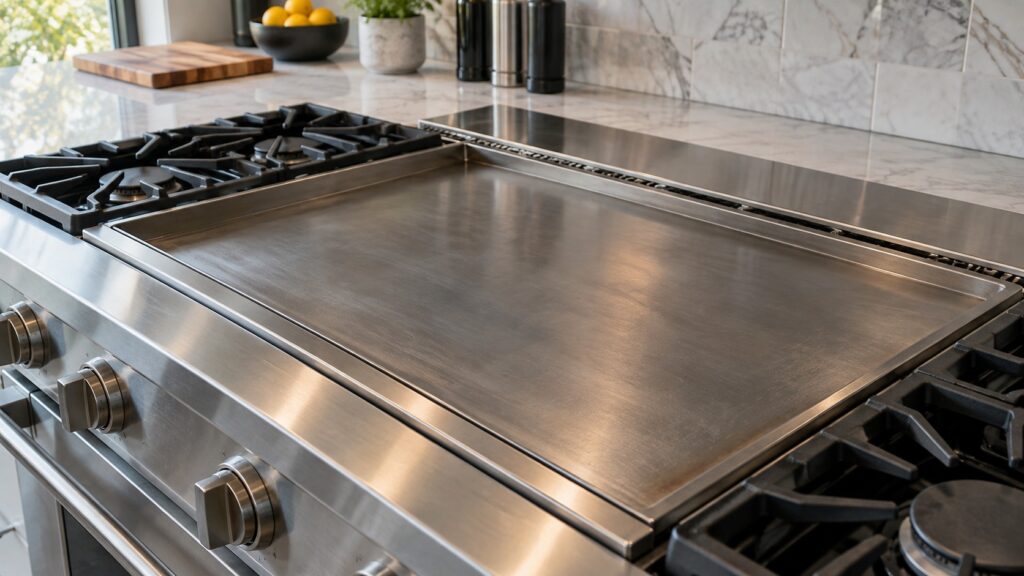
Cleaning La Cornue teppanyaki griddle plates takes a different routine than caring for the cast-iron French top, because the teppanyaki plate is a flat, electrically heated cooking surface rather than a simmer plate meant to hold residual heat for hours. Getting the two routines confused is common simply because both modules sit in the same rangetop family, but treating the teppanyaki griddle like the French top — or like a French top like the teppanyaki — leads to the wrong cleaner, the wrong tool, or a cleaning step that damages one surface while doing nothing useful for the other. Understanding the two as genuinely different materials with different care needs, rather than as two versions of the same rangetop surface, is the fastest way to avoid that mistake.
Why can’t the French top seasoning routine be used on the teppanyaki plate?
The French top is cast iron, and its care routine is built around maintaining a seasoned surface that develops over time — light oiling, avoiding harsh detergents that strip that seasoning, and treating rust spots promptly. A teppanyaki griddle plate is a different material with a different finish, engineered for the higher, more even heat a griddle needs rather than for the graduated heat zones of a French top. Applying French top seasoning habits to a teppanyaki plate at best does nothing useful and at worst leaves a residue that affects how food releases from the surface on the next use, which shows up as sticking or uneven browning the next time you cook on it.
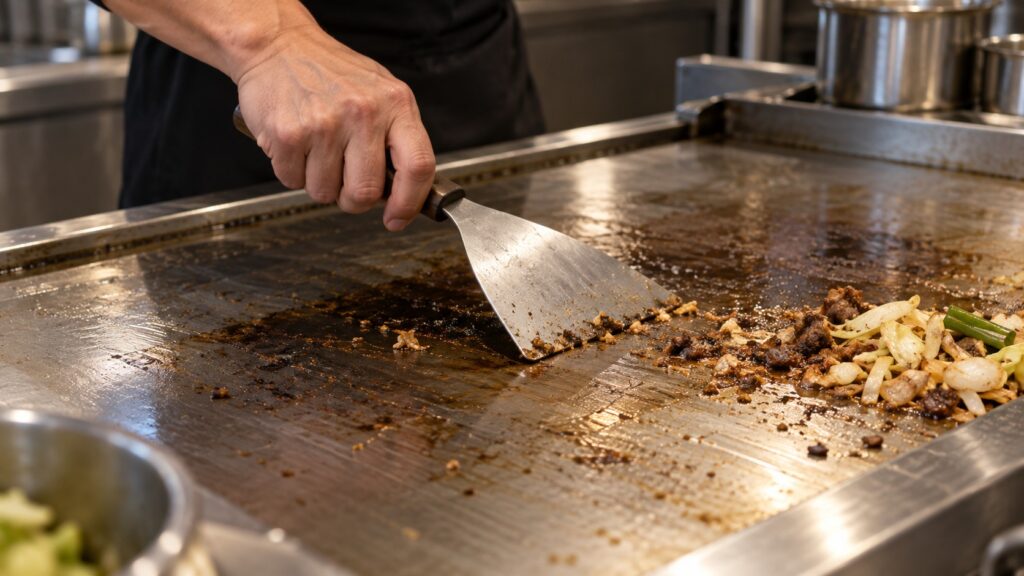
What is the right routine right after cooking?
While the plate is still warm but no longer hot enough to risk a burn, scrape off food residue with a flat griddle scraper — this is the easiest point to remove residue, since it releases far more readily while warm than once the plate has fully cooled. Once the plate is cool enough to touch safely, wipe it down with a damp cloth to lift any remaining light residue. This two-step habit, done after every use rather than saved for a weekly session, prevents the kind of stuck-on buildup that later needs a more aggressive clean to remove. It also takes only a couple of minutes, which makes it easy to keep up with consistently compared to a deeper clean that people are more likely to postpone when the kitchen is busy.
What does a deeper weekly or heavy-use clean actually involve?
For griddles used heavily or not scraped promptly after every session, a dedicated griddle cleaner paired with a grill stone or a plastic-safe scraper — matched to your specific plate’s finish — lifts buildup that a simple wipe-down will not remove. Always confirm the cleaning product and tool are rated for your teppanyaki plate’s actual surface material before using them; a product formulated for a different griddle finish can dull or damage a surface it was never designed for. Rinse and dry the surface thoroughly afterward, since leftover cleaner residue can smoke or affect flavor the next time the griddle heats up.
How often this deeper clean is needed depends heavily on how the plate is used. A household cooking on the teppanyaki griddle a few times a month can likely go weeks between deeper cleans if the after-use scrape-and-wipe routine is kept up consistently, while frequent use — especially cooking with sauces, marinades, or anything sugary that can caramelize and stick — calls for the deeper clean more often, sometimes after every few uses rather than on a fixed weekly schedule.
How should the plate be stored between uses if it sits idle for a while?
A teppanyaki griddle that will not be used for an extended stretch — during a season away from the property, or simply during a slow cooking period — should be cleaned thoroughly, dried completely, and, if your model’s finish calls for it, given a light protective oil coating before being left alone. Leaving any moisture on the surface for an extended idle period is a more common cause of surface issues than the idle time itself, since standing moisture has far longer to affect the plate than it would during normal day-to-day use with regular cleaning in between. Checking on a plate that has sat unused for months before the next cook, rather than assuming it is exactly as you left it, is a reasonable habit either way.
Does the teppanyaki plate need any kind of seasoning at all?
This depends entirely on the specific surface finish your model uses — some teppanyaki plates benefit from a light food-safe oil wipe after cleaning to protect the surface, similar in spirit to cast-iron seasoning but not identical in method or frequency, while others use a finish that does not need or benefit from oiling at all. Checking your specific model’s care documentation before assuming either way is worth the few minutes it takes, since guessing wrong in either direction — oiling a surface that doesn’t need it, or skipping oil on one that does — can affect how the plate performs over time. If your original documentation is not on hand, a technician familiar with your specific range configuration can usually confirm the correct approach from the model itself rather than leaving it to guesswork.
What should you watch for that signals a real problem, not just normal wear?
- Uneven heating across the plate that persists after cleaning — this points at an electrical or heating-element issue, not a surface care issue.
- Visible warping of the plate itself, which is a structural concern beyond routine cleaning.
- Food consistently sticking even right after a proper clean and any appropriate oiling — this can indicate the surface finish itself has degraded.
- A cleaning product leaving a residue that will not rinse off — stop using that product and confirm it was actually rated for your plate’s finish.
If the plate is not heating evenly or at all, that is a mechanical issue rather than a cleaning one — see our teppanyaki not heating fix guide. For the cast-iron French top’s separate care routine, see our French top seasoning guide, and for cooking technique once the plate is clean, see our teppanyaki cooking tips. You can schedule a visit if cleaning does not resolve a sticking or heating concern.