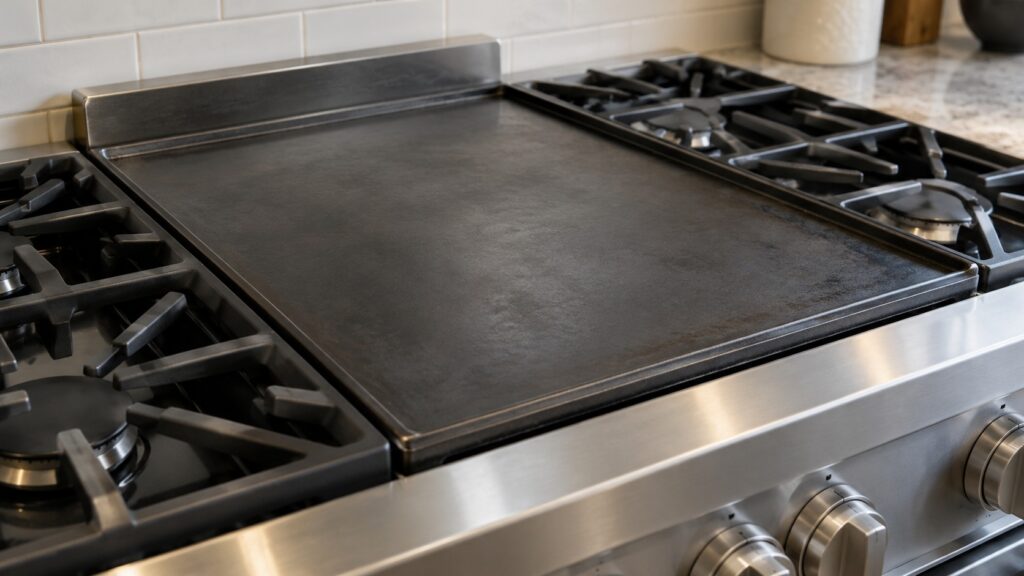
To understand how a La Cornue Teppanyaki works, think of it as an electric flat-top griddle built into the rangetop: an electric heating element sits beneath a smooth plate, and a thermostat or control regulates how hot the plate gets. Unlike the gas burners beside it, there is no flame and no ignition, and unlike the cast-iron French Top it is not a simmer plate that holds heat for hours. This guide explains the parts of the module, how it differs from the other rangetop modules, what to expect when you switch it on and what to leave to a technician. It gives no temperatures or wattage, because our site does not, and the plate gets hot enough to burn.
What is the La Cornue Teppanyaki module?
The Teppanyaki is one of the modules you can specify when the rangetop of a Château is configured. Our model page lists the Château Teppanyaki Module as an electric teppanyaki plate cooking module, with a thermostatically controlled griddle surface, that fits the Château 75 to 165 rangetop bays and matches the range’s enamel and trim. Our Teppanyaki cooking tips describe it as an electric flat-top griddle that brings restaurant-style griddling to the rangetop, suited to seared vegetables, proteins and quick high-heat cooking. It is a solid, smooth surface, so food that would fall through a grate stays put.
Because the module is chosen at order time, not every La Cornue has one. If you are not sure whether yours does, the configuration code on your range’s data plate and the order paperwork will tell you. Our guide on choosing a rangetop configuration covers all the modules side by side.
How does the plate heat?
An electric element beneath the plate warms its surface, and a thermostat or control regulates the heat. Our pages on the module say the element heats the plate to an even, controllable temperature and that control is precise and clean because it is electric. When you turn the control to a heat setting, power goes to the element, the plate warms up, and the thermostat cycles the element to hold the setting. The exact range of settings and the way your control behaves belong to your model; the owner’s manual describes them.
Our cooking tips say to let the plate come fully up to temperature before cooking so the whole surface sears consistently. We do not give a time, because it depends on the model and the setting. Cooking on it follows the usual griddle habits: a thin film of oil, space between foods, and a flat spatula or scraper.
How is it different from the other rangetop modules?
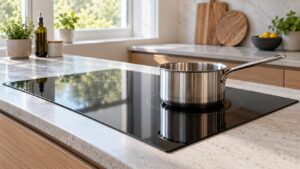
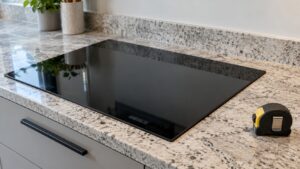
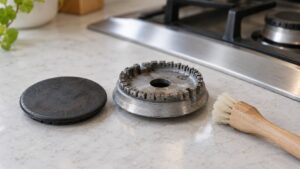
The brass gas burners make a flame and respond to the knob instantly. Our gas burners guide covers that. The French Top is a cast-iron simmer plate with graded heat zones; see how the French Top works. The lava-rock grill chars food over a gas flame, as our grill module guide explains. Induction heats the pan directly with ceramic glass zones. The Teppanyaki is none of these: an electric plate that is the cooking surface itself.
That difference affects care. Our Teppanyaki cleaning and care guide says not to treat it like the cast-iron French Top, scrape residue while the plate is warm but not hot, wipe once it is cool enough to touch, and avoid steel wool. Whether your plate benefits from a light oil wipe depends on its finish, so check the care documentation for your model.
What should you know about heat and safety?
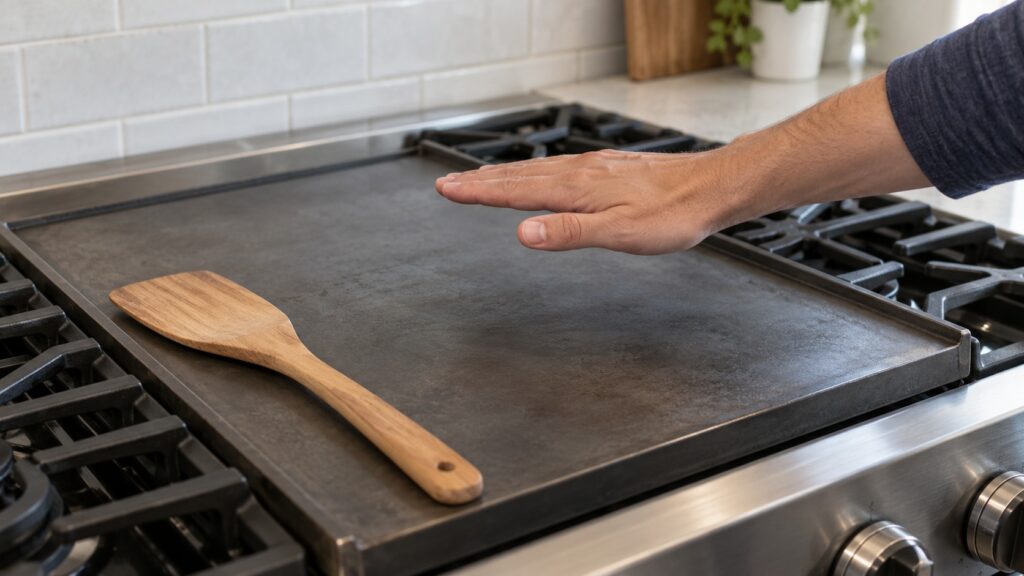
The plate is a hot cooking surface in use and stays hot after you switch it off. Keep hands, cloths and loose sleeves clear until it has cooled, and do not put anything on the plate that you do not intend to heat. Let it cool fully before you wipe it down. Because it is electric, the module shares the electrical supply of the range, and a tripped breaker will stop it. Gas smell is a different matter, and a gas module on the same range is not covered by this guide; our page on gas smell safety steps explains what to do.
Never take the module apart or reach under the plate. The element, the thermostat and the wiring carry mains voltage and are a technician’s job.
How do you get the best results from it?
Our cooking tips boil it down to a few habits. Let the plate come fully up to temperature before food goes on. Use a thin film of high-smoke-point oil, spread just before the food goes on, rather than flooding the plate. Do not crowd the plate, so food sears instead of steaming, and let food release on its own once seared. Use a flat spatula or scraper for flipping.
Group foods by cooking time and start the longest first, because a flat surface makes it easy to keep components apart. Our simmer and low heat tips cover the gentler end of the rangetop if you want to hold something warm while the plate does the searing.
When does the Teppanyaki need a technician?
If the plate stays cold, heats unevenly, shows an error, or the control feels loose or does not engage, our Teppanyaki not heating guide lists the checks: power to the range, the breaker and the control setting. Those are safe to look at. A failed element, a thermostat or a wiring fault needs professional testing. We are an independent repair company, not the manufacturer. Our La Cornue cooktop repair page explains how a visit works, and you can schedule a visit online.