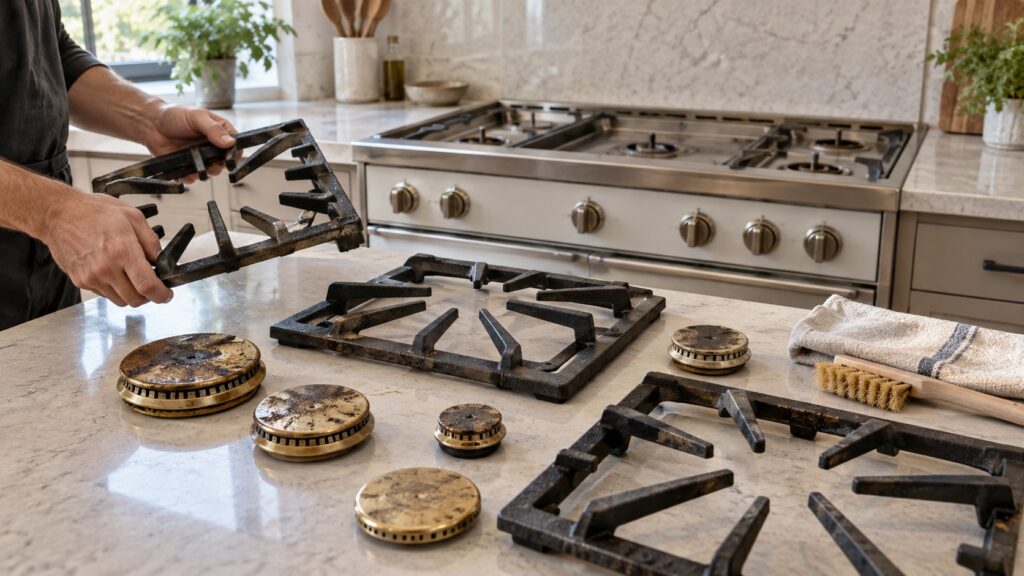
Looking after la cornue burner caps and grates is mostly about two habits: washing them by hand and drying them completely before they go back. The caps are brass or enameled metal, the grates are cast iron, and neither material forgives being left wet, run through a dishwasher, or scrubbed with the wrong abrasive. Our code pages list corrosion of the caps, crowns and grates as a real service subject, and it is one of the few faults on a La Cornue cooking surface that owners cause themselves without ever meaning to.
What are the caps and grates made of, and why does it matter?
The parts you lift off a La Cornue cooking surface are not one material. The grate is cast iron, usually with a matte finish that behaves like a seasoned pan: it resists rust while the surface film is intact and rusts quickly where that film has been scrubbed away. The burner cap and crown are brass or enameled metal, chosen for how they conduct heat and shape the flame, not for how they survive cleaning products.
That mix is why one cleaning routine cannot cover the whole top. What is safe on the stainless or enameled surface around the burners is not necessarily safe on the parts themselves, and the acid cleaners sold for cooking surfaces are exactly what brass should never meet. Our pages on stainless surface care and on cleaning and polishing brass cover the surface and the trim; this page covers the parts that come off.
How should La Cornue burner caps and grates be cleaned?
- Let everything cool. Cast iron holds heat long after a burner is off, and cold water on hot iron can crack it.
- Lift the grates first, then the caps and crowns, noting which cap came from which burner. They are not always interchangeable, and a cap on the wrong crown sits proud.
- Soak in hot water with a little dish soap. Twenty minutes does more than ten minutes of scrubbing and does not scratch anything.
- Use a soft brush or a nylon pad. No steel wool, no scouring powder, nothing that leaves a shine where there was none before.
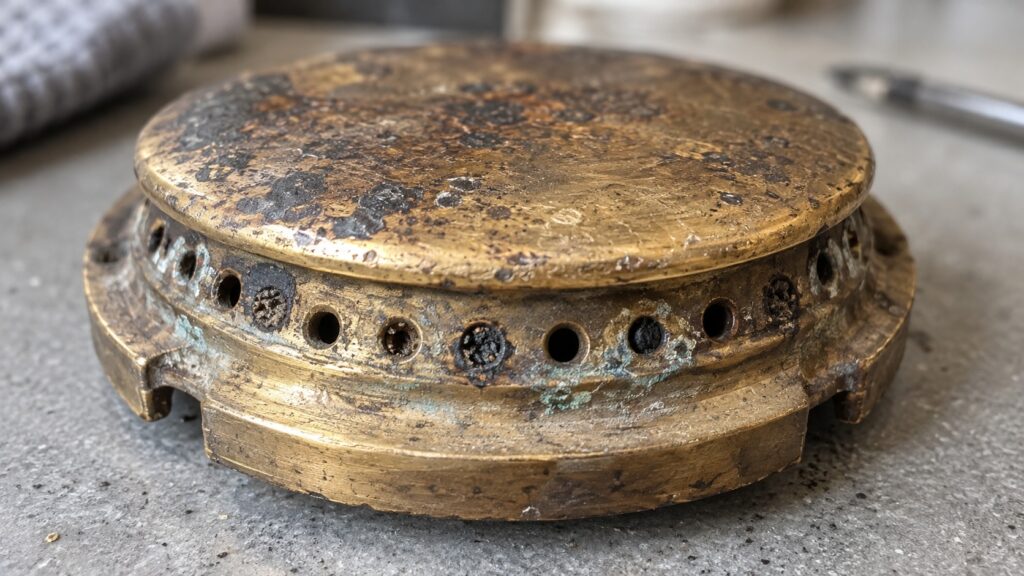
- Clear the ports with a wooden toothpick, working from the outside in. Metal enlarges a port permanently and changes the flame at that point forever.
- Dry completely, then put the grates back on a warm surface for a few minutes so the last moisture leaves them. A thin wipe of cooking oil on bare cast iron finishes the job.
Weekly is enough for most kitchens. After anything that boiled over, do it the same day: a sugar or brine spill left on a cap is a corrosion site by the end of the week.
Can burner caps and grates go in the dishwasher?
No, and this is the single most expensive mistake made with these parts. Dishwasher detergent is strongly alkaline and is designed to strip exactly the kind of film that protects cast iron. One cycle leaves a grate looking chalky and gray, and it will be showing orange rust within days. Brass fares no better: detergent and the long hot rinse dull the surface and can pit it, and once the finish is pitted it never comes back with polish.
The same warning covers oven cleaner and self-clean cycles. A grate left in a cavity during a self-clean comes out discolored and stripped. If the grates need more than soap and time, soak them longer rather than reaching for something stronger.
What actually causes the corrosion?
Three sources, in order. Salt water is first, because brine from a stock pot or a pasta pan is the most common liquid to boil over and the most aggressive one to leave behind. Acid is second: lemon juice, tomato, wine and vinegar all mark brass quickly and creep under the edge of an enameled cap. Standing moisture is third, and the most avoidable — grates put back damp, or washed at night and left to dry in place, rust from underneath where nobody looks.
Heat discoloration is a different thing and not corrosion at all. Brass darkens and takes on color where it runs hottest, and on a burner cap that is normal service wear rather than damage. Trying to polish it back is how owners thin the finish.
How does cleaning cause ignition faults?
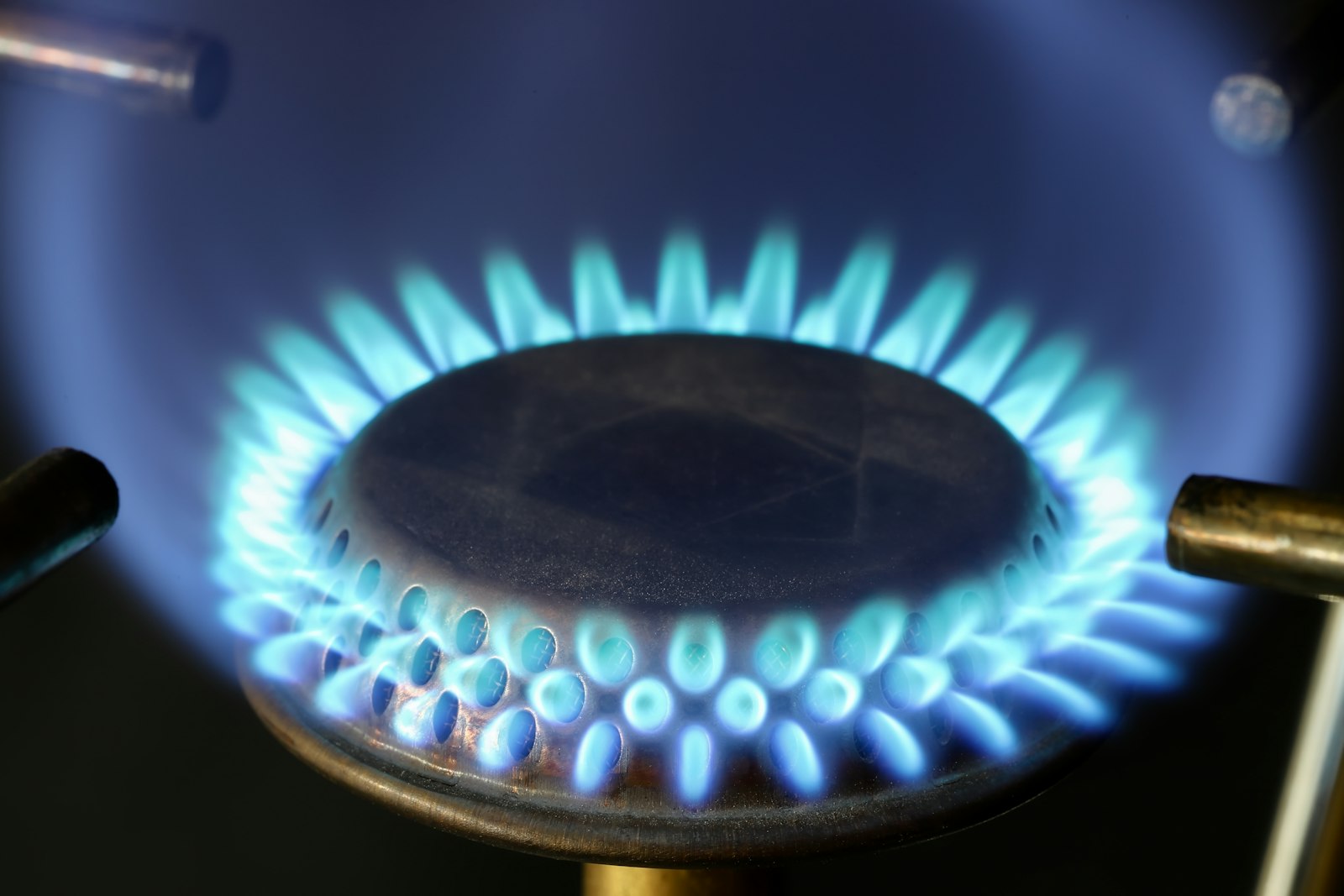
Because the caps go back wrong, or go back wet. A burner cap has to sit flat and centered on its crown for the flame to reach the electrode: a cap resting on a crumb, or seated a few degrees out of true, moves the flame path away from the spark and gives you a burner that clicks and clicks without lighting. A wet electrode does the same thing for a different reason — the spark tracks across the moisture instead of jumping the gap.
This is why ignition complaints cluster in the day or two after a deep clean. Before assuming a part has failed, lift each cap, dry it, and set it squarely back on its crown. Our pages on a clicking igniter and the range that will not light work through the rest of the sequence.
When is a cap or a grate past saving?
A grate is finished when rust has gone past the surface and left pits you can feel with a fingernail, or when it rocks on its feet after cleaning, because a grate that does not sit flat will not hold a pan flat either. A cap is finished when the rim is eaten away, when a port has been enlarged and that flame never looks like its neighbors again, or when enamel has chipped through to the metal beneath.
These are replaceable parts, and replacing one is far cheaper than living with a burner that never lights cleanly. Where a cap has been damaged the burner crown underneath is worth checking at the same time, since the two wear as a pair.
We are an independent repair company working on La Cornue equipment in all 50 states, not a factory service arm, and we will tell you when a repair is not worth doing. Pricing starts from a diagnostic visit, from $149 in most areas, and we confirm the estimate before any work begins. If a burner still will not light with clean, dry, correctly seated parts, call 1-844-579-1439, use our La Cornue cooktop repair service, or schedule a visit online.