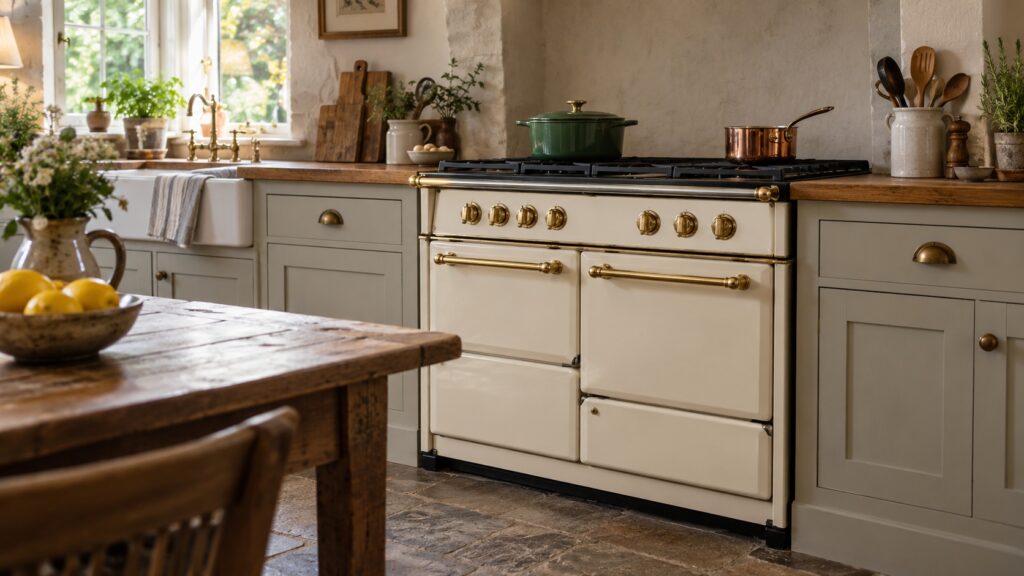
An older La Cornue range is usually worth repairing when the structure, the enamel and the oven body are sound and the problems are in replaceable parts such as igniters, valves, thermostats, gaskets and knobs. It is worth replacing when the gas train is unsafe, the oven chamber or enamel is badly damaged, or the repairs needed add up to more than the range is worth to you. The same logic applies if you are considering a used La Cornue: judge condition and parts, not just the name.
Why are older La Cornue ranges worth a second look?
La Cornue ranges are built with heavy steel, thick enamel and brass and nickel fittings, and many are expected to last for decades. An older range that has been looked after often has a sound body and a sound oven, and its faults are in the parts that wear: the ignition, the valves, the thermostats and the seals. Those are repairable. That is the reason an older range is a different question from an older appliance of an ordinary kind, and it is why our guide to whether a La Cornue range is worth it also applies to a range you already own.
It is also why the decision turns on condition, not age. A twenty-year-old range with a clean oven and a leaking valve is a better prospect than a ten-year-old range with a rusted oven chamber.
What should you check on a used La Cornue before you buy?
Do not buy blind. Ask for the full model name and the fuel type, and read the nameplate in person if you can. Our guide on decoding La Cornue model names and SKUs explains how to read it. Then inspect:
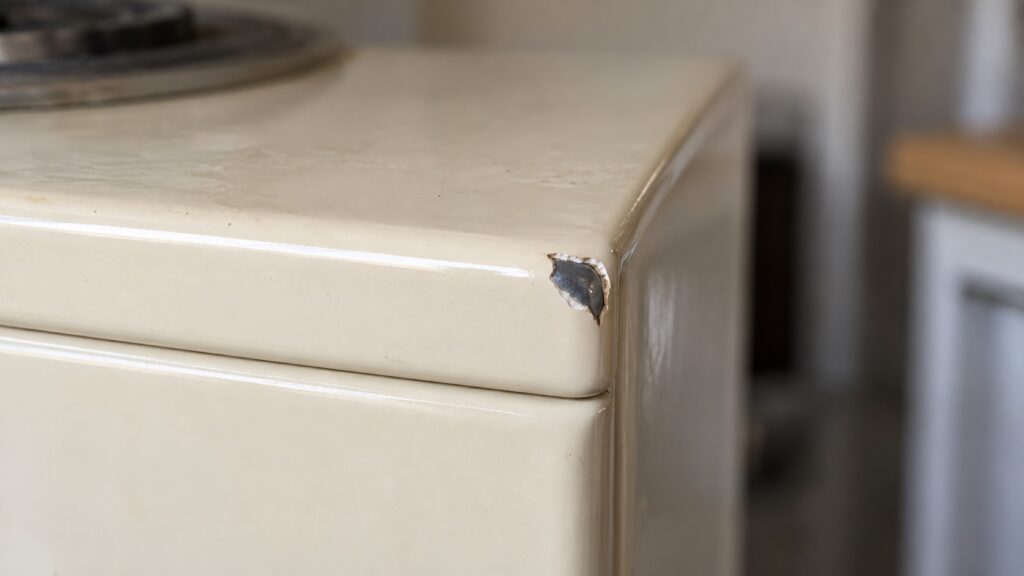
- The enamel. Chips are cosmetic, but widespread loss or rust at the edges is not.
- The oven chamber. Look for rust, warping and a door that closes unevenly.
- The cooktop. Check burners, caps and grates, and a French top for cracks.
- The gas connections. Look for old flexible connectors, corrosion and any smell of gas.
- The controls. Knobs should turn smoothly, the igniters should spark and the lights should work.
If you are buying through a private sale, arrange for a technician to inspect it before you pay. An hour of inspection can save you from a range that needs more than it is worth.
Which repairs are usually worth doing?
Most of the parts that wear are replaceable and modest in comparison with the range. Igniters, thermostats, valves, gaskets, hinges and lights fall in this group. Our guides on repairing or replacing a vaulted oven igniter, the hi-limit thermostat and replacing a gas valve explain what each involves. Brass trim that has tarnished can be cleaned, as our brass cleaning and polishing guide shows, and it rarely needs replacement.
Ask a technician what else they notice during a repair visit. A thorough inspection of an older range finds problems early, and early repairs are cheap.
When does the safety of the gas train decide the question?
Safety comes before value. If you smell gas, if a valve leaks, if a flexible connector is cracked or corroded or if a burner will not shut off, stop using the range until it is repaired. Leave the area and call the gas utility from outside if you smell gas; our gas smell safety steps list what to do. A leaking valve is repairable, but an old range with several gas components showing wear may be better replaced as a set than patched over time. A technician can tell you which case you are in.
If you are moving an older range to a home with a different fuel, the conversion matters too, and our guide to the natural gas to propane conversion shows why it is a job for a technician.
What about cracks, enamel damage and a worn oven?
These are the cases where replacement becomes more likely. A cracked French top can sometimes be repaired, but if it is badly warped or cracked in several places, our guide to repairing or replacing a cracked French top helps you weigh it. Enamel chips can be touched up, and our guide on repairing an enamel chip or replacing a panel explains the limits. A rusted-through oven chamber is the one fault that usually ends the discussion, because the oven is the heart of the range.
How do parts and service affect the decision?
Parts availability depends on the model and its generation, and an older range may need parts sourced from a specialist. Before you commit to a repair, ask which parts are needed, whether they are available and how long they will take. Our guide on where to source La Cornue parts and service explains the routes, and a used range does not carry the coverage of a new one; see our warranty explainer for how coverage works. If a repair estimate is large, compare it with the value you place on the range, and remember that a part swap is usually far cheaper than a new luxury range.