La Cornue range delivery goes smoothly when you measure the path before the truck arrives, inspect the crate before you sign, and line up the right people for the hookups: a delivery crew to place the range, a licensed gas fitter for the gas line, an electrician for the oven or induction supply, and a hood installer. Most expensive problems on installation day come from skipping one of those steps, not from the range itself.
What should you prepare before the range arrives?
Measure the path, not just the opening. A La Cornue range is heavy, often several hundred pounds, and deliveries go wrong at tight turns, narrow doorways and stairs rather than in the kitchen. Measure every door width, hallway and corner between the truck and the kitchen, and tell the delivery company about any stairs, steps or tight turns. Remove obstacles, protect the floors with boards or runners, and decide where the crate will be opened. Our installation requirements guide lists the dimensions, clearances and utilities for each model, so confirm the opening and the supply before anyone arrives.
For a large layout such as a Grand Palais, plan the order of work as well; our guide to Grand Palais 180 module layout planning explains how modules are laid out.
What should you check when the crate arrives?
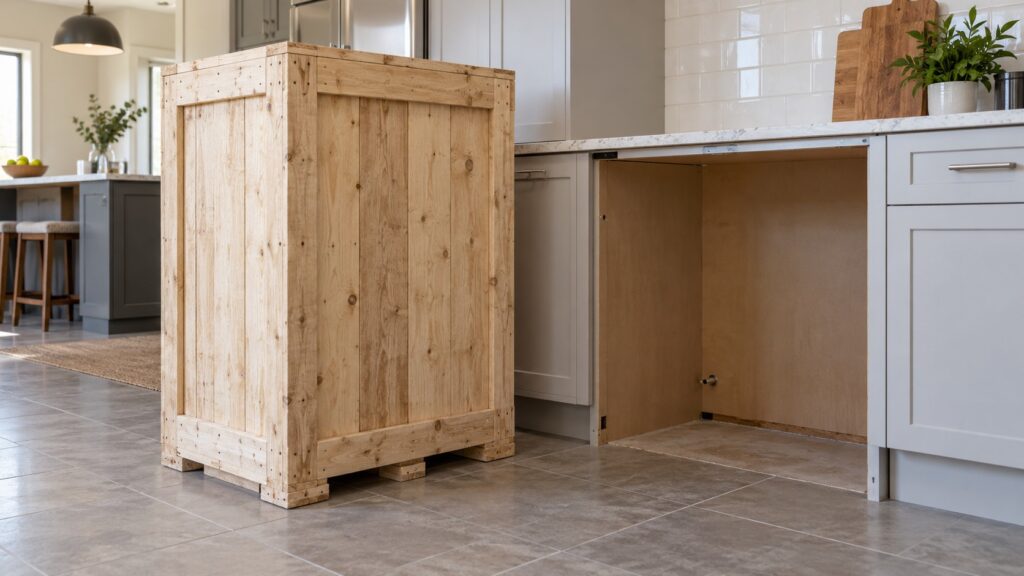
Inspect the packaging before you sign for the delivery. Look for crushed corners, holes, water stains and signs that the crate was dropped. If you see damage, photograph it and write it on the delivery receipt before the crew leaves, because a claim is much harder after you have signed a clean receipt. After the range is unboxed, check the enamel, the trim, the knobs and the doors for chips and dents. Count the parts in the accessory box against the packing list: grates, caps, trays, the anti-tip hardware and the manuals.
Do not accept a range that looks damaged and then discover the problem after installation. Sorting out a chipped panel is a replacement matter, not a service call, and our guide to repairing an enamel chip or replacing a panel shows why it is better to catch it on day one.
How should the range be moved into place?
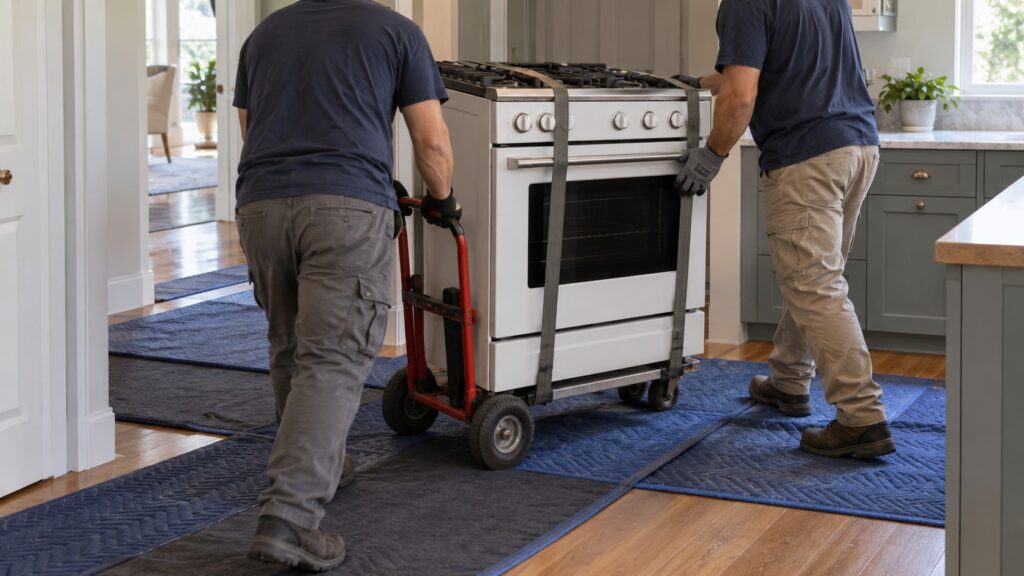
Use several people and the right equipment, such as a heavy-duty appliance dolly with straps. Never lift or pull the range by the oven door, the handle, the rail or the knobs, because they are not made to carry the weight and can bend or break. Protect the floor with plywood or hardboard, and move slowly across thresholds. Leave the range slightly forward of its final position until the gas and electrical connections are made, since you need access to the back. Do not slide it over a gas line or an electrical cable.
Who installs a La Cornue range?
No single person does everything. A typical job involves four trades. The delivery crew places the range in the room. A licensed gas fitter connects and tests the gas line, and on a dual-fuel range an electrician connects the oven and, on induction models, the cooktop supply. A cabinet maker or contractor prepares the opening and any trim. And a hood installer fits the ventilation, which is a separate installation in its own right. Coordinate them so the gas, the power and the hood are ready together, because a delay in one holds up the rest. Our guide to dual-fuel hookup and the one on induction wiring list what each connection needs.
Choose a gas fitter who has installed this kind of range, and ask them to leak test every joint. The hood is its own project; read our guide on venting a La Cornue range hood before the ductwork is done.
What happens once the range is connected?
Level the range by adjusting the feet until a level reads true on the cooktop and the oven door closes evenly, then fit the anti-tip hardware so the range cannot tip if weight is placed on an open door. Our guide to leveling and anti-tip explains how. Turn on each burner to check the flame, test the oven and the lights, and run the oven through its first heat cycle as the manual describes. The first use break-in guide explains the smoke and smell that are normal the first time.
If anything smells like gas at any point, stop, leave the area and call the gas utility from outside; see our gas smell safety steps.
What problems come from skipping a step?
Most early faults trace back to installation: a range that is not level, a gas pressure that is wrong, a supply that is undersized, a hood that cannot move enough air or a unit crowded by cabinetry. These are not faults in the range, and a repair will not fix them. Our guide to faults that are really installation problems lists the common ones, and it is worth reading before you call for service on a new range.