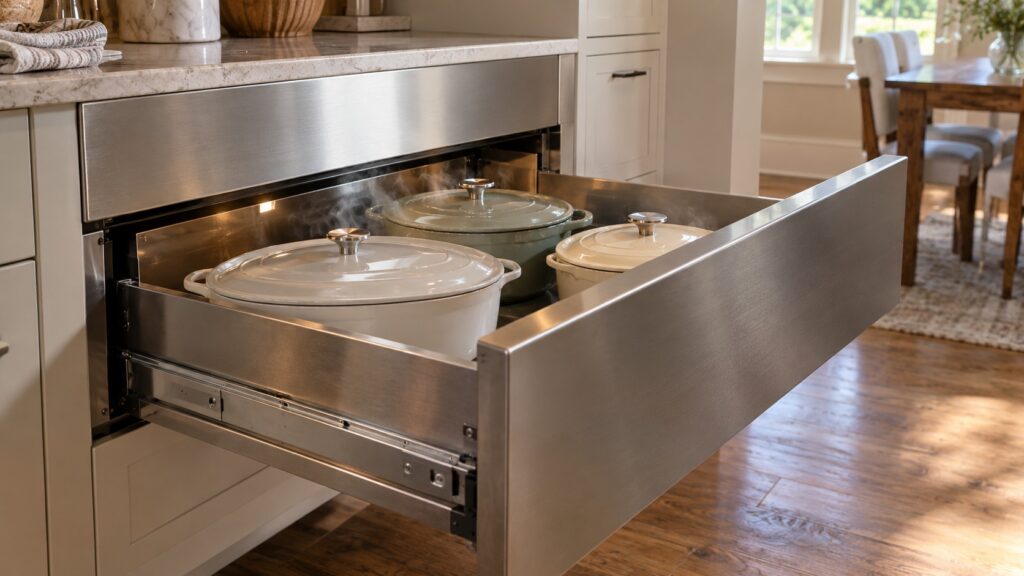
Using La Cornue warming drawer features well comes down to a simple idea: it holds finished food at serving temperature, it does not cook it. Our guide on how La Cornue warming drawers work says the drawer uses a low-output element, heavy insulation and a humidity vent, and that it is excellent at resting meat, warming plates and staggering dishes. Preheat it, load food that is already hot, choose the vent setting for the dish, and keep hot food above 140 degrees Fahrenheit. Settings and markings differ by model, so your owner’s manual is the reference for the controls.
What is a La Cornue warming drawer good for?
Four jobs. Resting meat: a roast needs to rest, and a closed drawer at a low setting holds it where you want it. Warming plates: food served onto a cold plate loses several degrees at once, and a warm plate is the single most noticeable improvement a drawer makes to an ordinary dinner. Staggering dishes: when one part of a meal is ready twenty minutes before the rest, the drawer is the difference between everything hot and a badly reheated side. Proving dough: at its lowest setting with the vent closed, our guide says it makes a reliable proving box. For the mechanism behind this, read how La Cornue warming drawers work.
How do you set it up before you load it?
Preheat the empty drawer. An empty cold drawer takes time to come up, and food put in during that period cools instead of holding. How long that takes depends on the model, so use the indicator on your control or check the inside with a thermometer rather than trusting a number from us. Load the food already at serving temperature, in covered dishes where the food will not suffer from steam. Choose the vent setting for the food, not out of habit: closed for roast meat and casseroles, open for bread and crusted dishes. Do not stack dishes so tightly that warm air cannot move between them.
How do you hold food safely?
Hot food needs to stay above 140°F, and a drawer set too low is a bacterial incubator rather than a holding cabinet. Our guide explains that the lowest settings are intended for proving dough and warming plates, not for holding a casserole through a long evening. Use a low-to-middle setting for food and keep the lowest for empty-drawer jobs. If you hold anything for more than an hour, put a probe thermometer in the thickest part of the dish once and confirm where your drawer sits at that setting. Dials drift over time, so a drawer that held food safely years ago may not now. Do not use the drawer to reheat food from cold: a large cold dish spends too long in the range where bacteria multiply. Reheat in the oven or on the cooktop, then hold.
Which vent setting for which dish?
Closed, the drawer holds the moisture the food gives off, which keeps roast meat succulent and stops a casserole from forming a skin. Open, it lets that moisture escape, which is what bread, pastry and crusty items need. The two classic complaints, soggy bread and a joint dried at the edges, usually come from the wrong vent setting; the lever matters more than the temperature dial. A drawer will keep fries hot but will not keep them crisp, whatever the vent says, so do not expect it to crisp anything. Our simmer and low heat tips are useful for dishes that wait on the cooktop before they go in.
How do you warm plates and serving dishes?
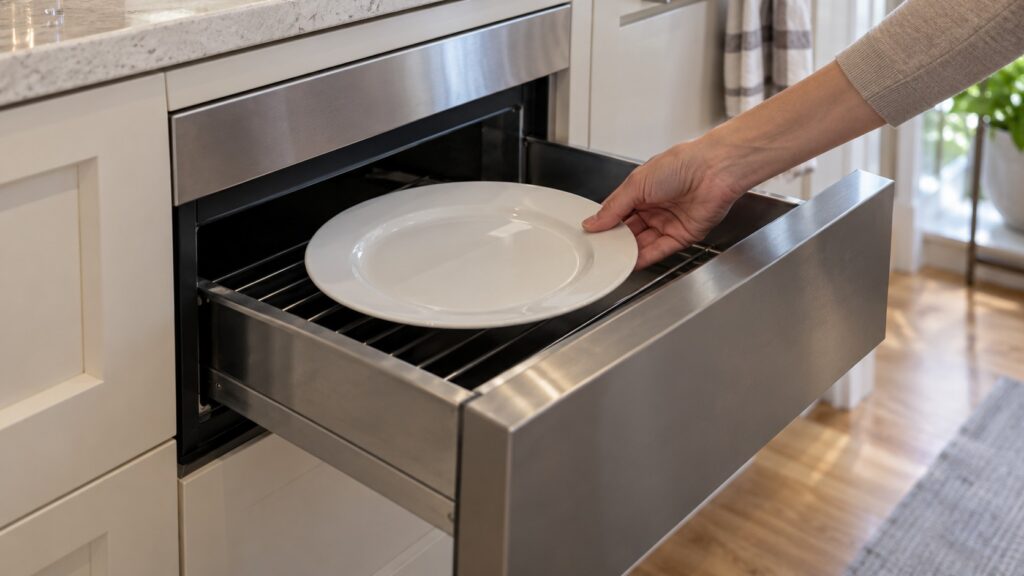
Put clean, dry plates in the drawer while you cook, and take them out when you plate. Use dishes that tolerate warmth; thin or decorated pieces vary, so check the maker’s guidance. Handle them with a dry towel, because the plates will be hot. Do not put cold, wet plates in, which creates steam and leaves smell behind. If you want to keep plates and food in at the same time, keep the food covered and give each its place.
How do you plan a dinner around the warming drawer?
Work backward from the time you want to serve. Start the drawer early enough to be hot, put the plates in first, and hold the dishes that finish early, such as a roast that needs to rest and a casserole that tolerates waiting. Keep dishes that suffer from waiting, such as fried food and delicate fish, out of the drawer and finish them last. Cover the dishes that need to stay moist and leave bread uncovered with the vent open. Take food out in the order you serve it, and open the drawer as little as you can so it keeps its temperature. For a large dinner, resting the meat in the drawer frees the oven for side dishes, which is where the drawer pays for itself.
Leave room around the drawer, too. Like every built-in appliance, a drawer needs its specified clearances to shed the small amount of heat it produces; boxed in tightly, it runs its element longer and the cabinet above gets warm. Our installation-related faults guide covers what happens when clearances are ignored.
What does it mean when the drawer will not warm, or drags?
If the drawer does not heat, the element or its control is the likely cause, and that is a technician’s job. If it drags or will not close flush, empty it and check the tracks and the range level; our misalignment guide explains. A drawer that gets too hot is a thermostat that has lost calibration, and you should stop using it for food. Do not overload the drawer with heavy serveware, because that wears the slides.