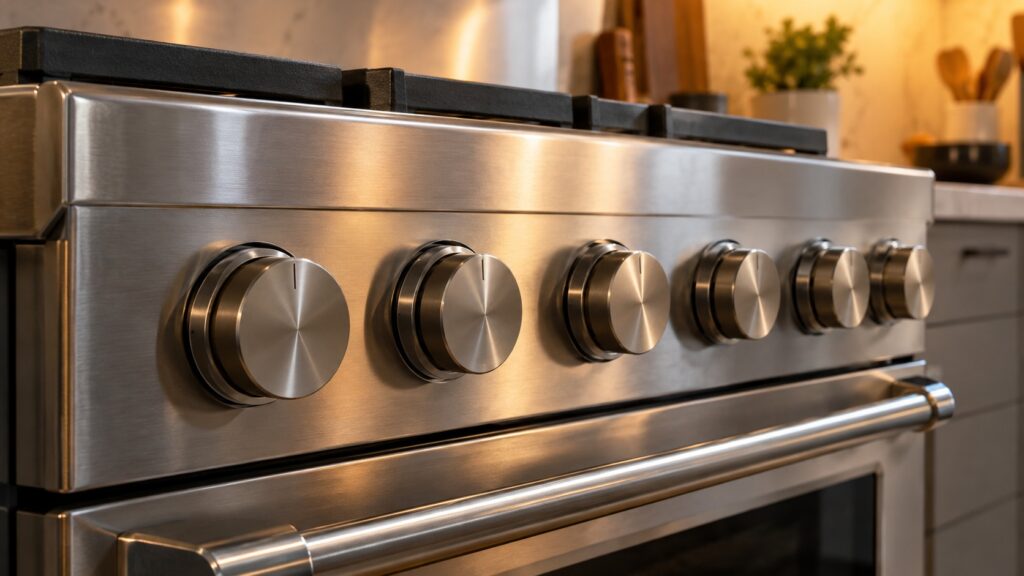
A La Cornue range cooling fan, where a range has one, moves air through the area around the controls to keep electronics and wiring from overheating. In general, ranges with electronic controls or high-output ovens often include a small fan for this, and you may hear it run during cooking and for a while afterward. What we cannot tell you is whether your La Cornue has one: our pages describe an oven convection fan on CornuFé ovens and a blower on the hoods, but they do not describe a cooling fan for the control panel. Check your owner’s manual for your model, and treat everything below as general explanation, not a statement about La Cornue.
What does a range cooling fan do?
Controls sit close to a lot of heat. A cooling fan draws or pushes air across the area behind the control panel, so that switches, electronic boards and wiring stay within the temperature they were designed for. When the fan is working you may hear a soft hum or feel a little warm air near the vents, and some fans keep running for a while after cooking ends. A cooling fan is a different thing from a convection fan, which is part of the cooking process. Our convection fan guide describes the oven fan on CornuFé multifunction ovens, mounted behind the rear oven panel, and our hood explainer describes the hood blower. Neither is the same as a control cooling fan.
Does a La Cornue range have one?
We do not know for your model, and we will not guess. The Château is a hand-built range with mechanical knobs and, depending on fuel, mechanical or electronic oven thermostats; the CornuFé uses electronic convection oven controls and, on induction models, electronic touch controls per zone, per our CornuFé 110 page. Whether any of those ranges includes a cooling fan, where it sits and how it behaves is a question for your owner’s manual or your dealer. If you read that your range has one, the manual will say whether it is meant to run after cooking.
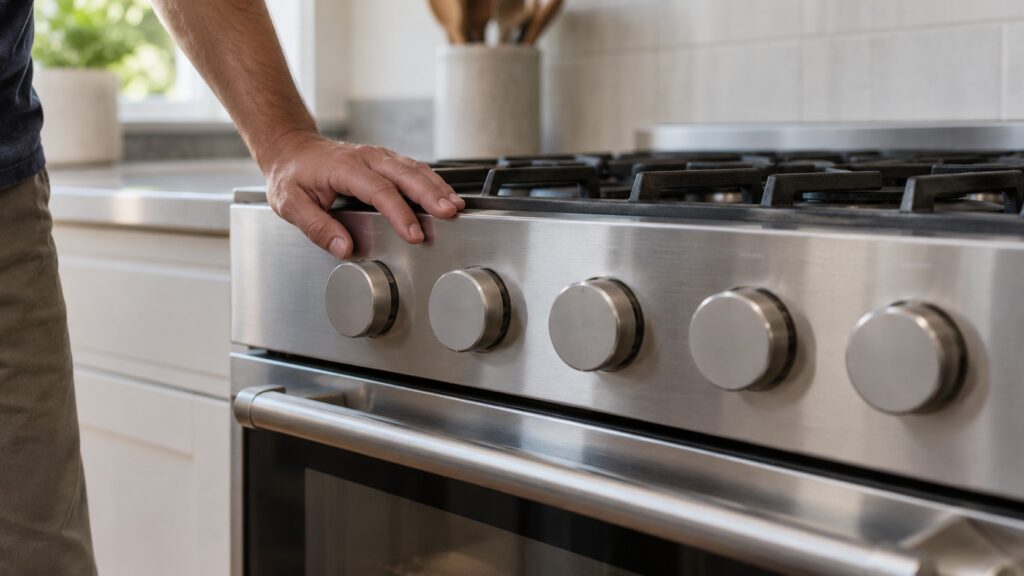
What is normal and what is not?
If your model has a cooling fan, a quiet hum while the range is in use, and perhaps for a while after it is switched off, is normal. What is not normal is grinding, rattling, a high-pitched squeal, a burning smell, or a fan that never stops even after the range has cooled. Those sounds usually point to a worn bearing, something loose, or a control that is not switching the fan properly. Our hi-limit trip guide notes that restricted airflow and cooling problems can raise temperatures enough to trip a safety thermostat, which is one reason not to ignore a fan that has failed.
What can you do to help the airflow?
Keep the vents and gaps around the control area clear, and do not cover them with towels, trays or stored items. Do not push the range tight against a wall or cabinet in a way that blocks any opening; our installation requirements guide says to allow side and rear clearances per the manufacturer’s specifications. Wipe dust from visible vent openings with a dry cloth. Do not spray cleaner into them, and do not remove the panel to clean inside, because that area holds wiring and electronics and is a technician’s work.
What if the range overheats or a fan fails?
If the knobs or the panel feel unusually hot, if the oven cuts out and a red light appears, or if you smell something burning near the controls, stop using the range. A tripped hi-limit is covered in our hi-limit guide, and the reset is model-specific and may involve removing panels, which a technician should do. If you ever see smoke, sparks or water near the controls, switch off the breaker at the panel while standing on a dry floor, and never pull a plug from a wet outlet. If you smell gas, leave the home and call the gas utility or 911 from outside.
How can you find out whether your model has a cooling fan?
Start with the owner’s manual: look in the parts diagram, the specifications and any section on ventilation or “cool-down.” Next, check the dealer’s spec sheet for your exact model. If neither mentions a fan, ask the dealer in writing. If you hear a fan and want to know what it is, note when it starts and stops, and where the sound comes from: the front panel, the back, the top or an oven wall. A technician can then tell you whether it is a cooling fan, an oven convection fan or something else. Do not open panels to look, because that area holds wiring and, on gas models, gas parts. Write the model name from the rating plate or your paperwork on a card so you have it ready for the call; our guide to decoding La Cornue model names explains how to read it, but we do not decode letters that our site does not define.
How is this related to the oven’s cooling or the door?
A sealed vaulted oven keeps its heat inside by design, and a worn door gasket loses that heat into the room, which makes the front of the oven warmer than usual. Our gasket heat loss page lists a front that is warmer than usual as a symptom. That is a gasket problem, not a fan problem. If you are not sure whether warmth near the controls is normal for your range, ask a technician with the model in front of them, and note when it happens.