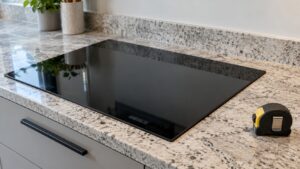
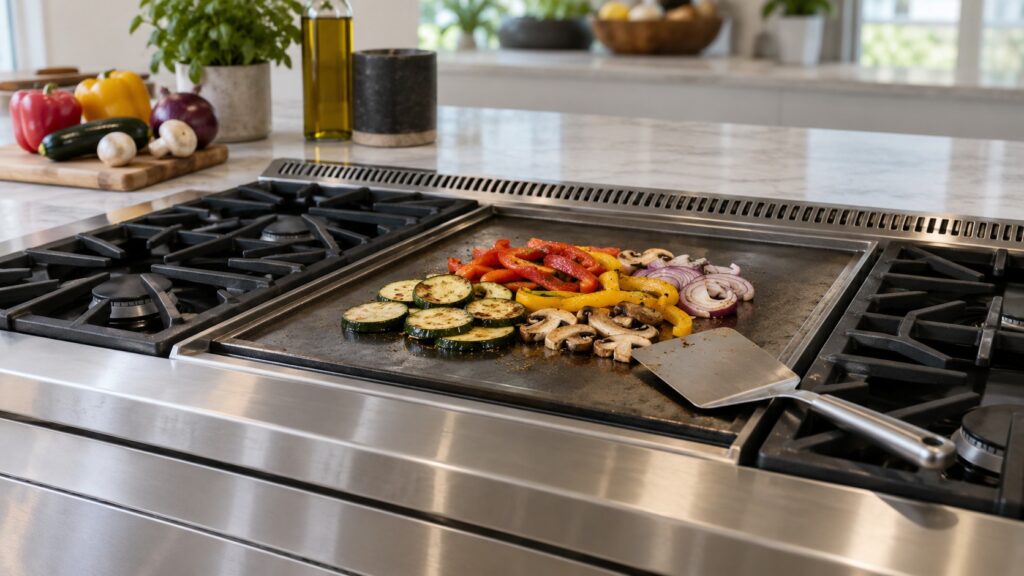
Is a La Cornue teppanyaki module worth fixing? Usually yes. Our model page describes it as an electric teppanyaki plate cooking module, and when it stops heating the cause is usually electrical: power, the control, the element or the thermostat. Those are serviceable parts, so a repair is normally the sensible route and a replacement module is a last resort. The cases for replacement are narrow: a plate that is badly damaged, or a decision to change the module in that bay. This guide shows how to tell where you stand and what a technician will look at.
What usually goes wrong with a teppanyaki module?
Our teppanyaki not heating guide walks through the order. First the power: has the breaker for the electric circuit tripped, and do other electric functions on the range work? Then the control: is the knob fully engaged to a heat setting and not in standby? A worn or loose knob may not actuate the control, as our knob care guide explains. Only after those come the heating element, which produces no heat at all when it fails, then the thermostat or control, which may not call for heat, and finally the wiring. Because there is no ignition to chase, the work follows the electrical path.
The cooktop page for the problem lists the same pattern; see cooktop teppanyaki not heating.
Which faults are worth repairing?
All of the electrical ones. The element is a serviceable part, and so is the thermostat. A tripped breaker costs nothing. A knob that no longer engages is a small part. Compared with replacing a module that is built into a hand-assembled range, a component repair is usually the more sensible course. We do not quote prices here: a technician confirms an estimate before any work begins. Our cost to repair a La Cornue range guide explains how to weigh a repair.
Element, thermostat and wiring work involves mains voltage and should be done by a technician. Do not open the module or lift out the plate to look for loose wires. If you see sparks, smell burning, or find water near the module, switch off the breaker at the panel while standing on a dry floor, and never pull a plug from a wet outlet.
What about scratches on the plate?
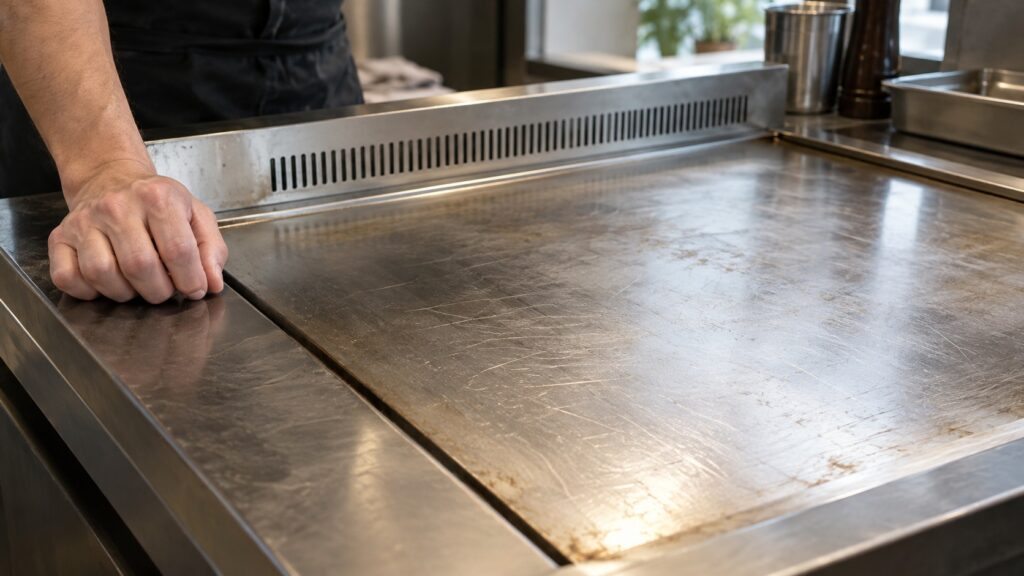
A flat griddle gets marked by spatulas and scrapers; fine scratches are part of normal use on most griddle surfaces. What matters is whether food releases and the plate heats evenly. Our teppanyaki cleaning and care guide says to match the cleaner and scraper to the plate’s actual finish, to avoid steel wool and cast-iron routines, and to keep the plate dry. We do not state what the plate is made of or how it is finished, so check your owner’s manual. If a plate is deeply gouged, warped, cracked or flaking, a technician can tell whether it can be treated.
How do you compare repair and replacement sensibly?
Ask three questions. What exactly has failed, and is that part a standard, serviceable item? Is the plate itself sound, meaning flat, intact and heating evenly once power returns? And does the module still do the job you bought it for? If the answers are a failed element or thermostat, a sound plate and yes, repair is the clear choice, because you keep a module that is fitted to your range and pay only for the part and the visit. If the plate is damaged and you are not fond of the module anyway, replacement or a change of module becomes a design decision rather than a repair. Our induction cooktop repair or replace guide uses the same logic for a different module and is a useful comparison.
When does replacing the module make sense?
Replacement belongs in three situations. The plate is damaged in a way that cooking and cleaning cannot fix. A repair is no longer possible because parts for your model are not available. Or you simply want something different in that bay: our rangetop configuration guide explains how to choose among a French top, gas burners, a grill and a teppanyaki plate. Whether a replacement module is available for your range, and how it is fitted, is a question for your dealer or a technician, and not something our site describes. Do not buy a part on your own before you have confirmed what fits.
What should you tell the technician?
Give a clear picture before the visit. Say whether the plate does not heat at all or heats slowly or unevenly. Say whether the other electric parts of the range work, and whether a breaker has tripped. Note whether the control knob feels loose, stiff or different from before. Say how old the module is and whether anything was spilled near the controls or under the plate edge. Mention scratches or discoloration on the plate and what cleaners you have used. If you can, take a short video of the knob being turned and the plate staying cold. This makes the visit shorter and helps the technician bring the right parts. Do not try to test the element yourself, and do not lift the plate to look underneath.
Finally, ask for a clear estimate before work starts. A good technician will say what failed, what the repair involves and whether a plate or module replacement is even on the table. If the answer is a simple element or thermostat swap, you will usually be glad you repaired rather than replaced.
How can you prevent the problem?
Scrape and wipe only when the plate is cool enough to touch safely, and keep it dry between uses. Use the right cleaner and scraper for the finish, and preheat the plate fully before cooking. Avoid slamming heavy pans on the plate or dragging them across it. Our teppanyaki cooking tips cover preheating and oiling. Wipe up spills near the controls promptly so liquid does not creep into the knob area.