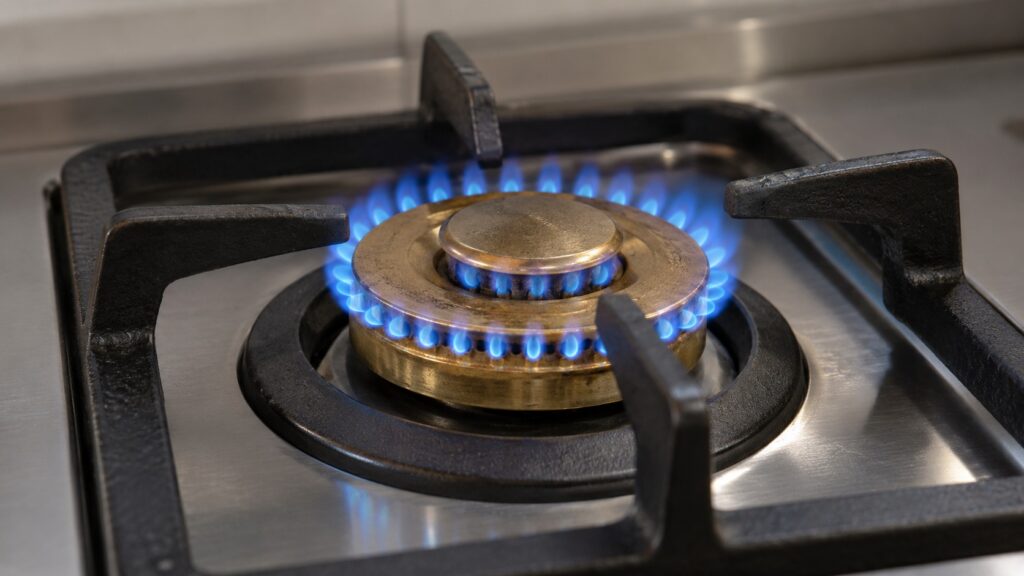
How La Cornue burner flame failure safety works depends on whether your burners have a flame failure device, and our site does not say that they do. We can explain the general idea. A flame failure safety device senses whether a burner’s flame is lit and keeps the gas valve open only while it is. If the flame goes out, because of a draft or a boil-over, the sensing part cools or loses signal, the valve closes and gas stops flowing, so unburned gas does not keep leaking into the room. Whether your La Cornue rangetop has one, and how it behaves, is in your owner’s manual. If you ever smell gas, leave the home and call the gas utility or 911 from outside.
What is flame failure protection on a gas burner?
It is a safety function. A gas burner is simple: gas flows, a spark lights it, and the flame burns on the crown. The danger is when the flame goes out and the gas keeps flowing. Flame failure protection prevents that. A small sensing part sits in or next to the flame and responds to it; while it senses the flame it keeps a safety valve open, and when the flame goes out it lets the valve close. The general idea is used on many gas appliances, but the parts and their behavior differ from maker to maker and model to model, and we do not state which of them your rangetop uses.
What does our site say about La Cornue oven safety?
For the oven, our gas oven igniter guide explains that on a gas vaulted oven, setting a temperature starts a glow-bar igniter, and that the igniter has to draw enough current to open the gas safety valve before gas flows and lights. That is a safety valve that stays shut until the igniter is working. It is a different arrangement from a rangetop burner, and a weak igniter can mean the valve never opens, so the oven does not heat. For the burners on a rangetop, our guides describe a spark igniter, a cap and a crown, and do not mention a flame sensor.
What happens if a burner flame blows out?
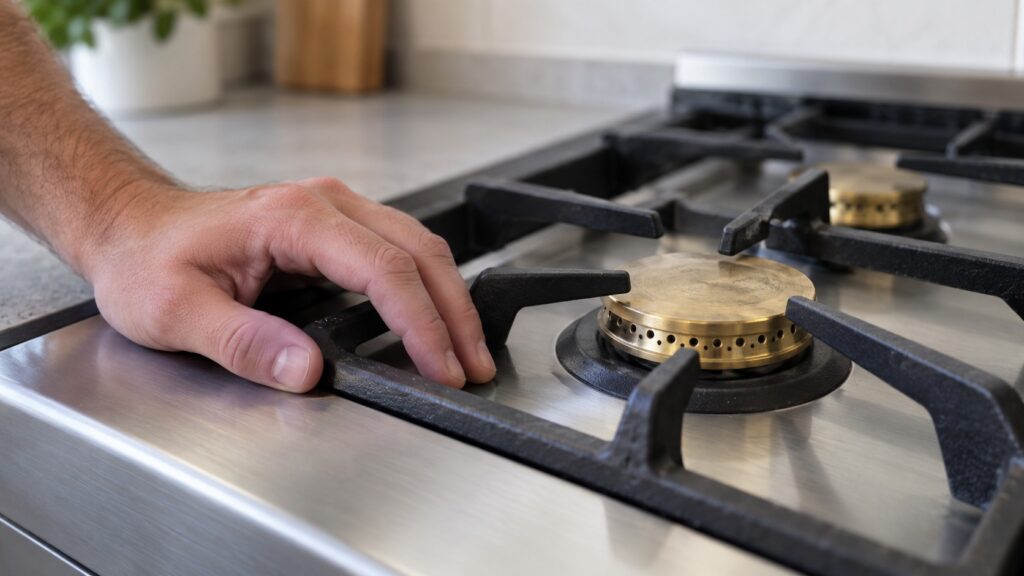
If the flame goes out and you do not smell gas, turn that knob to off. If the burner has no flame failure device, gas can keep flowing until you do, so do not walk away from an unlit burner. If you smell gas at any point, do not turn anything on or off and do not light anything: leave the home and call the gas utility or 911 from outside, as our gas smell safety steps explain. How a burner is relit is specific to the model, so we do not describe it; use your owner’s manual, and never hold a match to a burner. If a burner keeps going out, leave it off and read the next section.
Why would a burner keep going out?
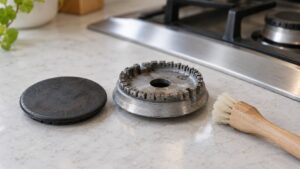
Drafts, boil-overs, a cap that is not seated flat, blocked ports and moisture can all disturb a flame. Our burner caps and grates guide says a cap resting on a crumb moves the flame away from the spark and gives you a burner that clicks without lighting. A weak or lazy flame can be a port problem; see our yellow flame guide. If a single burner goes out repeatedly with a clean cap and ports, a technician should look at it.
What should an owner never do?
Never defeat or bypass a safety device, never test for gas leaks with a flame, and never use a gas valve or regulator you have adjusted yourself. Gas parts, valves and regulators belong to a licensed technician. Do not take off the burner base or the control panel to look at the sensing part. Do not rely on a flame failure device as an excuse to leave a lit burner unattended; it limits the danger and does not remove it. Keep the area around the burners clean and dry, because moisture on the igniter is a common reason for failures to light. Our range won’t light checklist lists the safe checks.
What is the difference between ignition and flame failure safety?
People often mix up the two. Ignition is how the burner is lit: a spark from the igniter, which makes the clicking sound when you turn the knob to the light position. Flame failure safety is what happens afterward: whether the gas keeps flowing if the flame goes out. A burner can have a very reliable spark and no flame failure device at all, or it can have both. When a burner clicks and does not light, that is an ignition problem, and our clicking igniter guide covers it. When a burner lights but goes out in use, that is a flame problem, and whether the gas shuts off is a safety question. Keep the two separate when you describe the problem to a technician, because they point to different parts.
Also keep in mind that safety devices are not maintenance-free. Sensing parts and valves wear, get dirty or go out of adjustment over years. If a burner has begun to behave differently, for example lighting more slowly, going out more easily or staying lit after the knob is turned off, do not keep using it; have a licensed technician check it. A burner that stays lit when it should be off is a valve or control problem, and it is serious.
How can you find out what your range has?
Read the owner’s manual for words like flame failure, flame supervision, automatic shutoff or safety valve, and check the spec sheet from your dealer. If the manual is silent, ask your dealer in writing whether your burners include flame failure protection and how a relight works. A technician can confirm on a service visit. Our installation requirements guide reminds you that gas connections must be made and leak-tested by licensed professionals, which is also when the safety features should be checked.