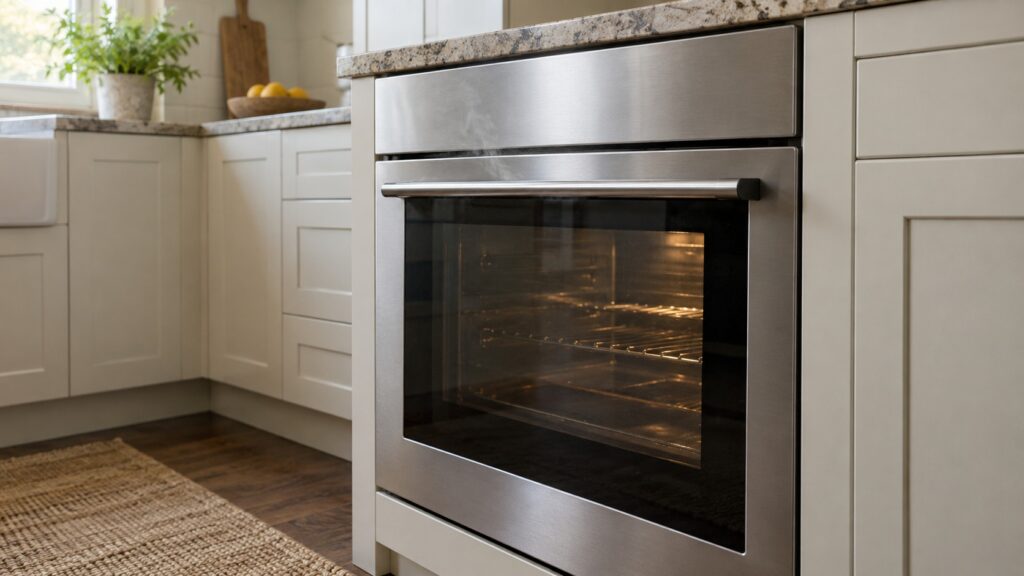
A La Cornue oven smoking usually has a simple, harmless cause: new-oven protective oils burning off, a spill or grease on the floor of the cavity, or a roasting pan too full for the heat. Stop, turn the oven off, open a window and let the smoke clear before you do anything else. If you smell gas, see flames or the smoke does not stop when the oven is off, leave the room and call for help.
Why is my La Cornue oven smoking?
Smoke from an oven means something is burning, and the first job is to work out what. In a clean, used oven the most common source is food residue: grease that has dripped to the floor, a spilled sauce, or a coating of old splatter on the walls. In a brand-new oven the source can be the protective oils and coatings left from manufacturing, which burn off on the first few uses. A third cause is the cooking itself, such as roasting at a high temperature with fatty meat or a pan with a small base. In each case, the smoke is a sign, not a fault in the oven.
The cases that are not normal are different in kind. Smoke with a smell of gas, a burning smell like hot plastic or electrical insulation, or smoke that continues after the oven is switched off should be treated as an emergency and handled as described below.
What should you do first?
- Turn the oven off and leave the door closed to starve any small flame of air.
- Open nearby windows and run the range hood to clear the smoke.
- Do not use water on a grease fire. Keep the door shut, and if flames continue, leave and call the fire department.
- If you smell gas, do not touch switches or light anything. Leave the house and follow our gas smell safety steps.
- Let the oven cool fully before you open the door and look inside.
Is it the new-oven burn-off?
A new oven often smokes lightly and smells for the first one or two uses. The protective oils on the metal and the binders in insulation burn off as the cavity gets hot. This is brief and should fade quickly. Our guide to the first use break-in of a La Cornue explains how to run the first heat with good ventilation. Run the empty oven at a moderate temperature with the hood on and the windows open, until the smell fades. If the smoke gets worse instead of better, or if it continues after several sessions, something else is going on.
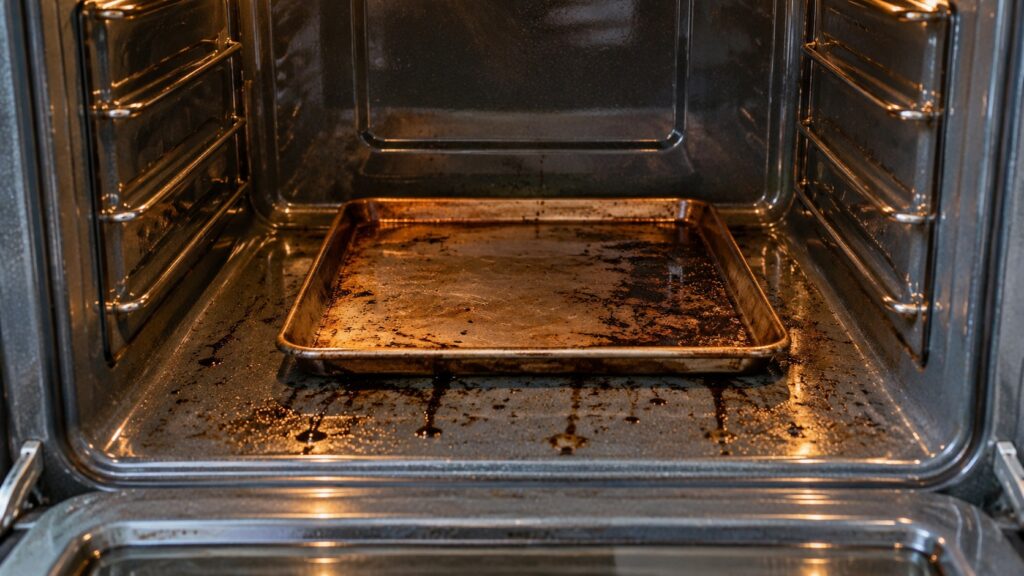
Is it a spill or grease buildup?
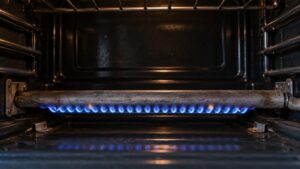
Look at the floor of the cavity, the burner area and the walls once the oven has cooled. Dark patches, sticky residue or a layer of old drippings burn each time the oven heats up and produce smoke. Clean the cavity with a method the manual allows, starting with a damp cloth and warm soapy water for light soil. Our guides to vaulted oven interior care and cleaning vitreous enamel explain what is safe. If your oven has catalytic panels, check their condition against the catalytic panel maintenance guide, because worn panels stop absorbing grease.
Is smoke coming from around the door?
Wisps along the door seam usually come from the cavity but escape where the seal is weakest, or from spills that landed on the gasket or the front frame. A gasket that is damaged or dirty lets smoke out and heat out, and our door gasket care guide shows how to check it. Smoke from the vent at the back of the cooktop is normal when the oven is very hot with a fatty roast, since the vent releases moist, hot air. Smoke that comes out near the control panel or the knobs is not normal and calls for the oven to be switched off.
What cooking habits cause smoke?
- Lining the floor of the oven with foil, which traps grease and blocks airflow.
- Roasting very fatty cuts in a shallow pan at high heat.
- Overfilling a dish so it bubbles over.
- Using a pan that touches the walls or the burner.
Use a deep pan with a rack, put a baking sheet on a lower rack to catch drips and wipe small spills when the oven has cooled. These habits keep the oven cleaner and the air clearer.
When should you call a technician?
Call when the smoke continues after the oven is clean, when you smell gas or electrical burning, when smoke comes from the controls or when the oven runs very hot. The cause may be a fault in a thermostat or a burner, and our oven repair page explains how a visit works.
Cleaning up afterward. Once the oven has cooled, remove the racks and wipe the floor and walls with warm soapy water, then rinse and dry. Do not use a spray oven cleaner unless the manual allows it for your enamel, because harsh chemicals can damage the finish and leave fumes. Wash the racks in the sink. Air out the kitchen and wash the filters of the range hood so the smell does not linger. Run the oven empty at a moderate temperature for a short time to burn off any remaining residue, with the hood on. Then you can start fresh, and a cleaner cavity makes it much easier to notice if smoke returns.