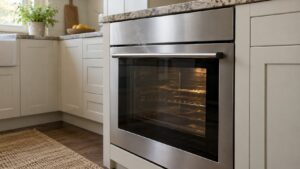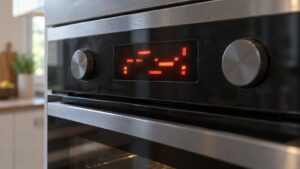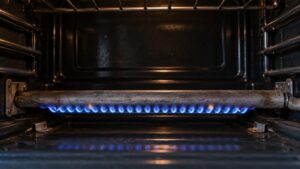
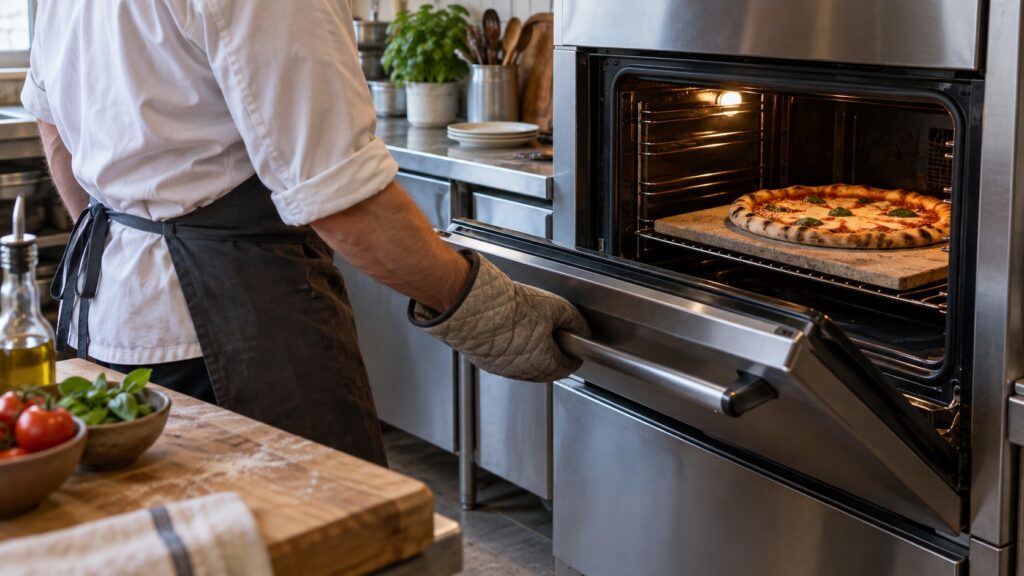
La Cornue oven preheating tips begin with patience and a thermometer: a vaulted gas oven stores a lot of heat in its enamel and stone-like cavity, so it can take longer to reach temperature than a small electric oven, but once it is there it holds that heat steadily. Preheat with the door shut, trust an oven thermometer over the first beep, and give the cavity a few extra minutes before baking anything that depends on a strong start.
Why does a La Cornue oven take its time to preheat?
A vaulted oven is a heavy, enameled cavity with thick insulation, and heating it means warming every wall, the floor, the racks and the air in between. A small oven with thin walls reaches its target quickly but also loses heat the moment you open the door. The La Cornue cavity does the opposite: it takes longer to come up and then recovers well after the door opens. That steady heat is a feature for roasting and baking, as our guide to roasting in a vaulted oven explains. Plan your cooking around a preheat that may be longer than you are used to, and start early.
How do you tell when the oven is really ready?
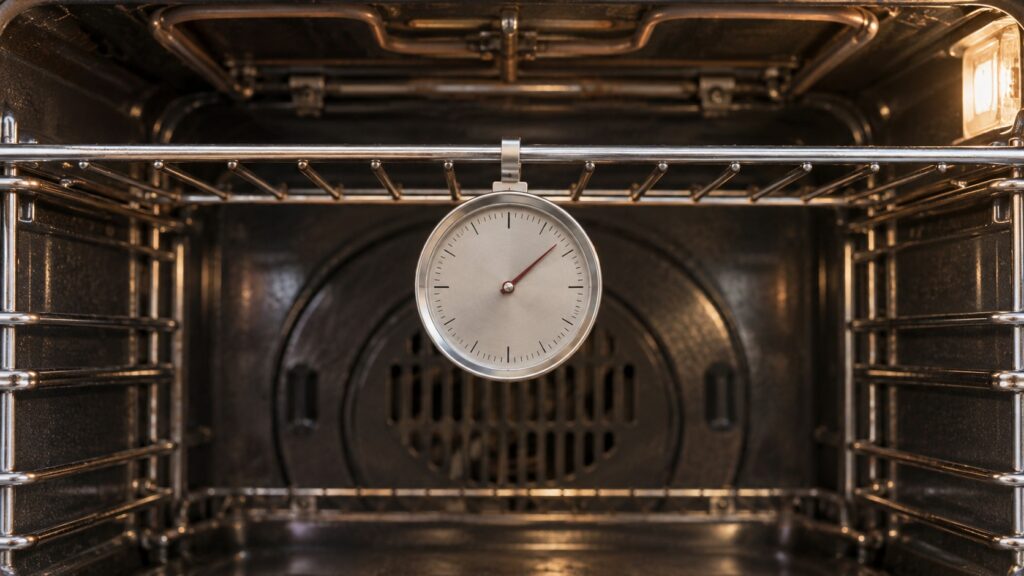
The signal that tells you the oven has reached its set temperature measures the air near the sensor. The walls and the floor may still be catching up, which is why a loaf or a pizza can bake unevenly if it goes in right at the signal. Hang an oven thermometer in the center of the middle rack and watch it. When it matches the setting, wait another ten minutes or so for the heat to even out, then bake. If the thermometer and the oven disagree by a large margin, the oven may need calibration, and our guide to oven temperature drift and calibration explains the next step.
What small habits shorten the wait?
- Remove racks and pans you do not need, since they absorb heat.
- Arrange the racks first, because adjusting them in a hot oven lets heat out.
- Keep the door closed and use the oven light to look.
- Start the oven before you prepare the food, not after.
- Choose the right mode for the dish. Our guide to the CornuFé multifunction oven modes shows which mode warms the cavity fastest and which suits each cooking task.
Do not try to speed things up by setting the temperature far above what the recipe needs and turning it down later. The cavity will overshoot, the food will meet a harsher heat than planned and the control will have to work to bring it back.
What about stones, steels and heavy cookware?
A baking stone or steel needs time to soak up heat, usually longer than the oven itself. Place it on the rack in the cold oven and let the oven and the stone rise together, then give it extra time at the set temperature. Heavy cast iron and thick enameled pans behave the same way. If you cook pizza or bread at high heat, the extra soak is what produces the crust you want. Using a stone also lowers the swings in oven temperature when you open the door, so the oven recovers quickly.
Could a slow preheat mean something is wrong?
If the oven used to preheat faster and now takes much longer, look for a cause. A worn door gasket lets heat escape, and our door gasket care guide shows how to check it. A weakening igniter can delay lighting or limit the flame, as explained in the guide on a La Cornue oven not heating. A blocked burner port, low gas pressure or a failing thermostat can also slow the climb. Note how long the preheat takes with a clock and a thermometer so you can describe the change to a technician. Our oven repair page explains how a visit works.
How do you keep heat in once the oven is hot?
Open the door only when you need to, and work quickly when you do. Use the oven light and the window if there is one. Load the oven in one go if you can, and keep the cavity from becoming crowded, since packed shelves block the airflow that spreads the heat. If the oven bakes unevenly even when it is fully preheated, rotate the pan halfway through, and see our guide to uneven baking in the vaulted oven for more ideas. Over time you will learn how long your own oven needs, and that knowledge is worth more than any chart.
How does preheating differ for baking, roasting and grilling?
Each task wants a slightly different start. Bread and pizza want the strongest, most even heat, so give them the longest soak. Roasts are forgiving, and a short preheat is enough since the food is in the oven for a long time. Delicate bakes such as cakes and custards benefit from a fully even cavity, so use the thermometer and wait for it to settle before the pan goes in. Broiling or grilling modes heat from the top and are fast, but the oven still benefits from a minute or two for the element or burner to reach full intensity. Matching your patience to the dish is the simplest way to get consistent results from a vaulted oven.