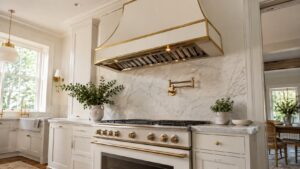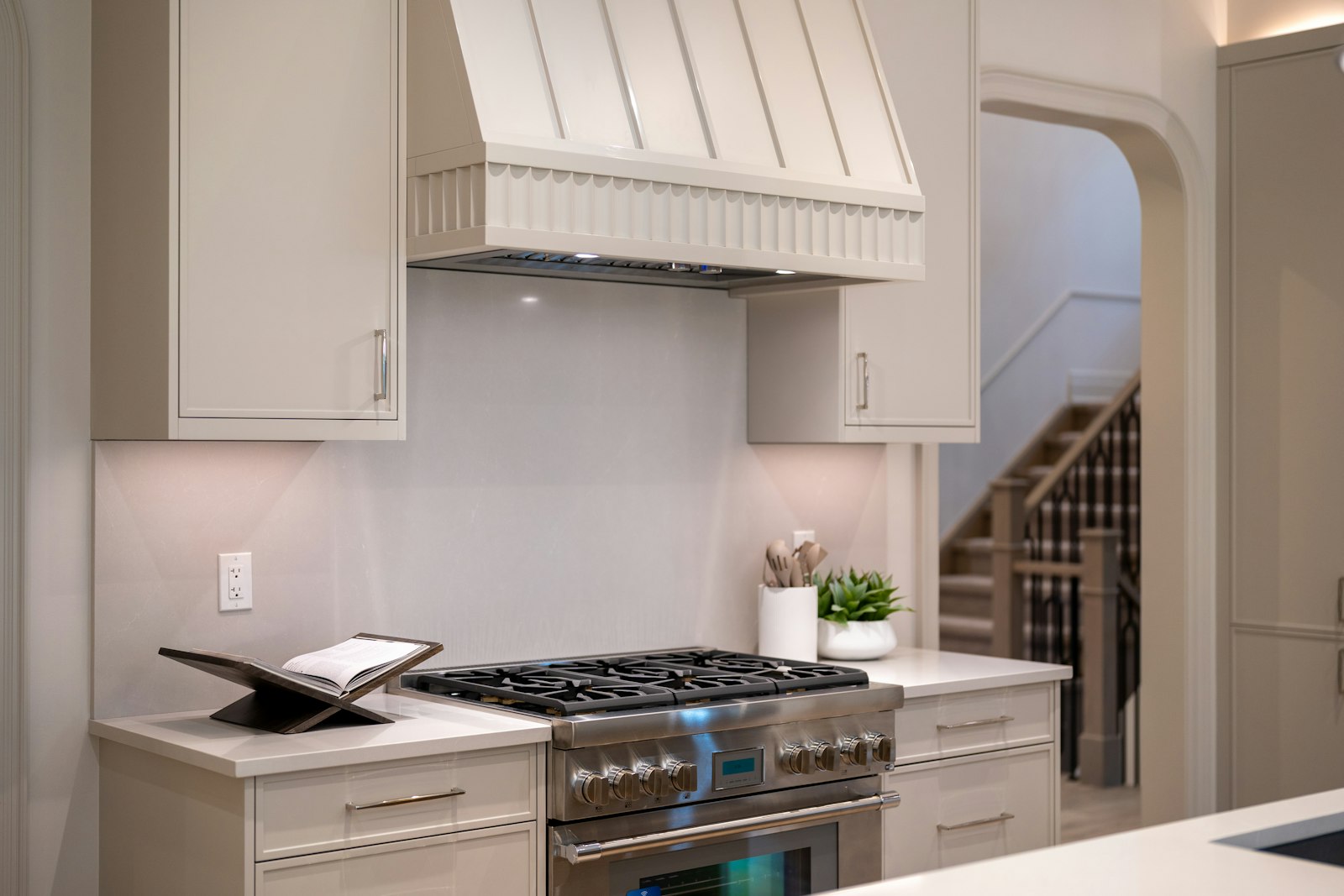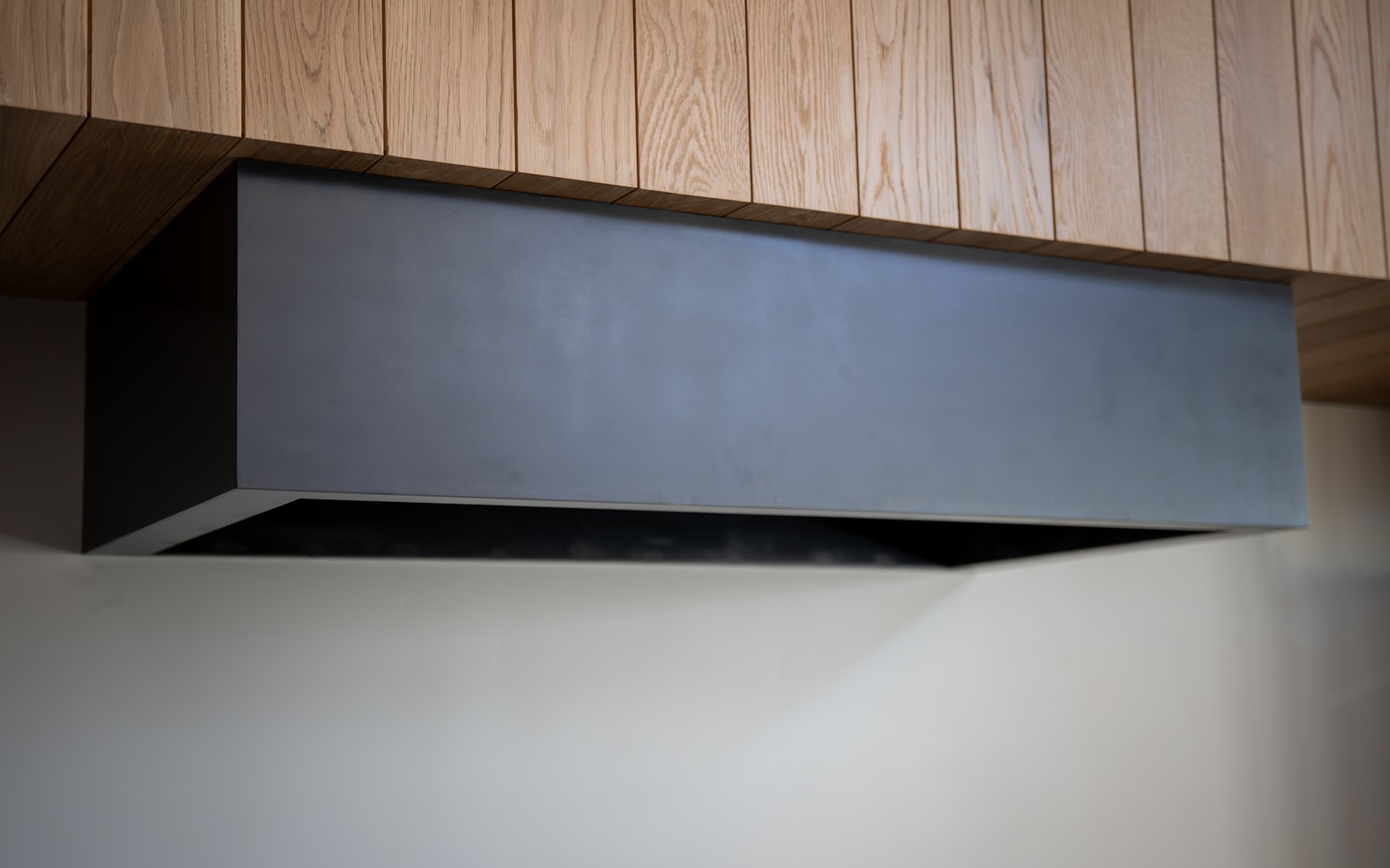
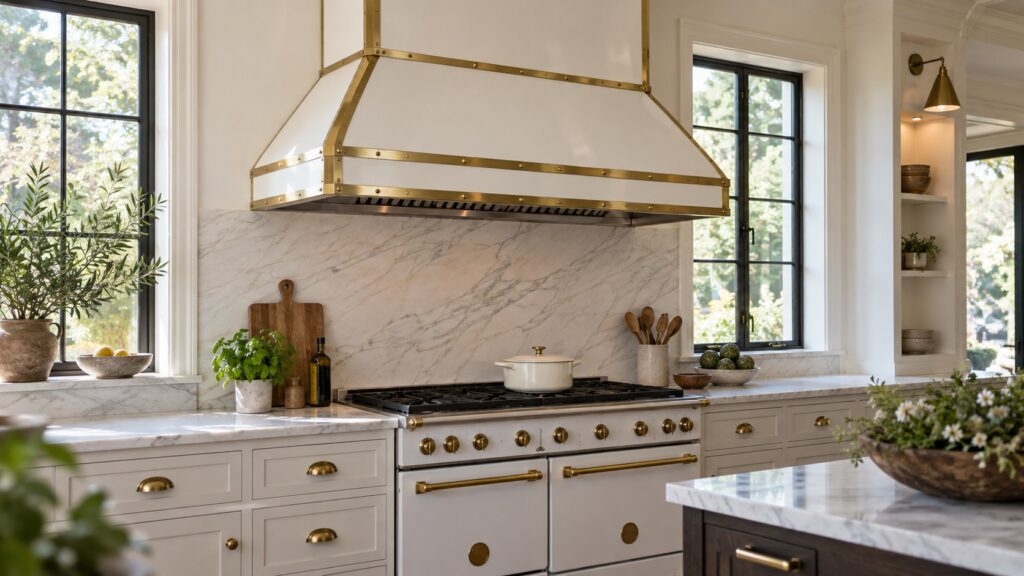
La Cornue hood styles are a design decision with mechanical consequences, and the two are usually discussed separately when they should not be. The Marquee and the Loge are different shapes with different presence in a room, and they also present differently to the duct, to the wall and to the person who has to clean them. Choosing on looks alone is how people end up with a hood they like the appearance of and resent the upkeep of.
Start with the number, then choose the shape
Whatever the style, a hood is sized against the total output of the burners under it and the length and shape of the duct run — not against the width of the range and not against the look of the kitchen. Get that number first, confirm the model you like is available at that capacity, and only then decide between profiles. Doing it the other way round produces the most common disappointment in this category: a beautiful hood that cannot keep up with a professional range.
Our hood sizing guide covers how to arrive at the figure, and the venting guide covers why every elbow in the duct costs you part of it.
What the Marquee does to a room
The Marquee is the assertive choice. Its profile projects forward and reads as a single strong horizontal, which suits a kitchen where the range is deliberately the focal point — an island-facing wall, a tall ceiling, a room with enough width that a bold object does not crowd it.
The trade is presence. In a compact kitchen, or one with a low ceiling, the same profile that looks confident in a large room feels close overhead. Measure the height from the cooktop to the underside of the hood against the model’s specification, then stand at the range and imagine that volume above you, because a drawing never conveys it.
What the Loge does instead
The Loge reads as a mantel — a piece of joinery that happens to ventilate. In a traditional or transitional kitchen it disappears into the architecture, which is precisely the point. It suits a room where the range should be present but not dominant, and where the surrounding cabinetry already carries the detail.
Its trade is the opposite of the Marquee’s: it asks more of the wall behind it and of the surrounding finish work. A mantel style sitting against a wall that is not flat, or meeting cabinetry that was not planned around it, shows the mismatch in a way a projecting hood hides.
Cleaning is the part nobody asks about
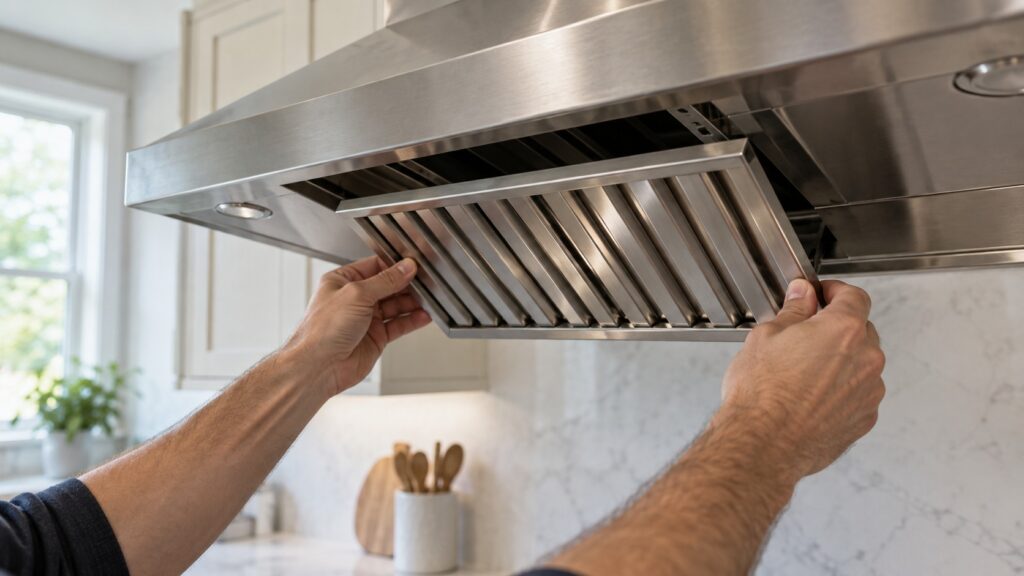
Both styles filter the same way and both need the same attention, but they do not offer the same access. A projecting profile puts the filter bank lower and further forward, which is easier to reach and easier to wipe. A mantel style set higher and tighter to the wall asks you to work overhead at arm’s length.
- Filters come out and go in the dishwasher on a schedule, whatever the style.
- Enamel and brass want a damp cloth and nothing abrasive. Harsh cleaners mark both permanently.
- The lamps are a consumable. Access differs by style and is worth checking before buying — see our halogen replacement guide.
- The blower is the same class of part in either, and it is the item most likely to need service.
Matched hoods, and when to break the set
CornuFé 90 and CornuFé 110 have hoods built to match the range exactly in width and finish, and a matched pair is the easiest way to get a coherent result. Where people break the set deliberately is when the room wants a different visual weight than the range suggests — a 110 in a large room sometimes carries a bolder hood well, and a 90 in a small room is often better with the quieter one.
Breaking the set is a design decision, not a technical one, provided the capacity is right. What it must not become is a capacity compromise dressed up as a style preference.
Installation consequences of each
Both styles need the same things from the duct: the shortest, straightest route available, rigid duct rather than flexible, and a termination with a flap rather than a mesh screen. What differs is the structural side. A heavier projecting hood wants blocking in the wall behind it; a mantel style wants a flat, plumb wall and cabinetry that was measured around it.
Neither is difficult, and both are far cheaper to get right before the wall is finished. Our guide on faults that are really installation problems covers what an undersized or badly ducted hood looks like from the kitchen afterwards.
Lighting, and the detail that dates a kitchen
Hood lighting is the most-used light in most kitchens and the one people think about least when choosing. Both styles light the cooktop, but the position of the lamps relative to the front edge decides whether you are working in your own shadow. A lamp set well forward lights the front of the pan where you are actually looking; one set back lights the back burner and leaves the front dim.
Ask to see it switched on, at the height it will be installed, before deciding. It is the single detail that most reliably produces regret, because it cannot be adjusted afterwards without opening the hood.
Before you replace an existing hood
A hood that has become noisy, weak or unresponsive is often a blower, a switch or a filter bank rather than a hood at the end of its life. The blower in particular is a replaceable part, and on these hoods it is usually worth replacing — see our repair or replace guide for the blower and the weak suction page.
We are an independent repair company, not a dealer, so we have nothing to sell you on the buying side. La Cornue range hood repair starts with a diagnostic visit, we confirm the estimate before any work begins, and you can schedule a visit online.