
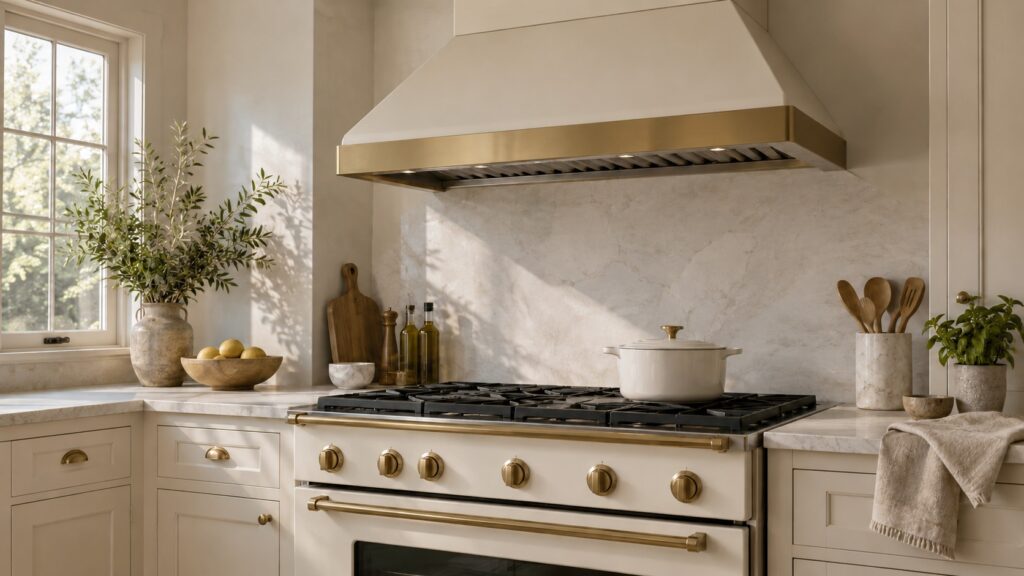
Clean La Cornue range hood exteriors the way you would care for the rest of the range: with the hood off and cool, a soft cloth, warm water and a little mild dish soap, and a dry cloth to finish. Our model pages describe Château hoods as enamel with trim metal to match the range, so the enamel, brass, nickel and chrome care rules in our guides apply. Spray any cleaner onto the cloth, never onto the hood, keep water away from the controls and lights, and leave the chimney’s inner parts, the blower and the wiring to a technician. This guide covers the exterior, the chimney cover and the canopy, and leaves the filters to their own page.
How do you clean a La Cornue range hood exterior?
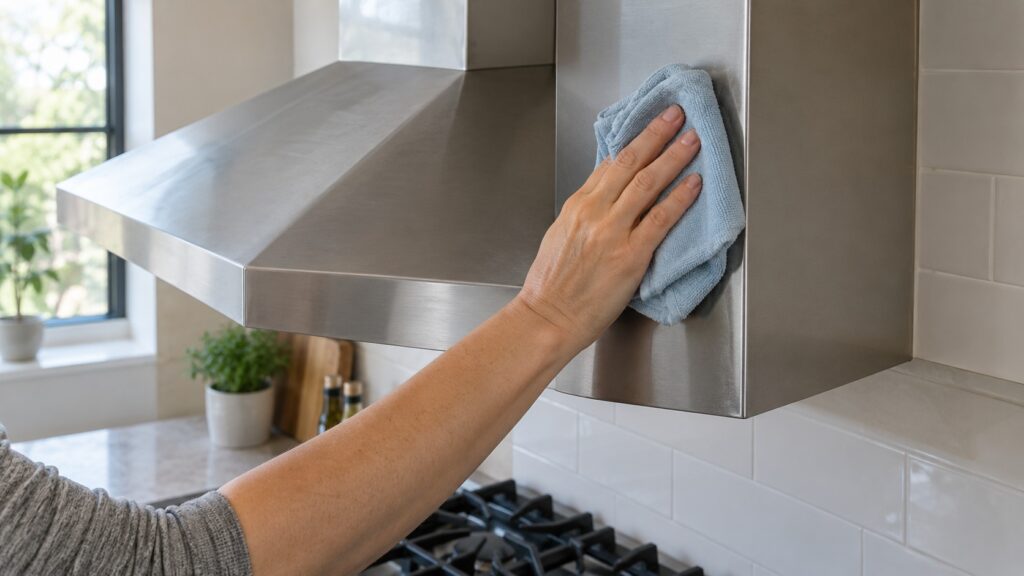
Switch the hood off and let everything cool. The lights are halogen, and halogen bulbs run very hot, as our halogen replacement guide notes. Fold a soft cloth, dampen it in warm water with a drop of mild dish soap, wring it nearly dry and wipe the surface in even strokes from the top down. Follow with a clean damp cloth to remove soap, then dry with a soft cloth so there are no water spots. Never spray cleaner on the hood, because overspray finds the controls, the lights and trim you were not cleaning; put it on the cloth. Work on a small area at a time, and use a light touch around the switch and light fittings.
Grease on a hood comes from cooking vapor that was not captured and settles over time, so the lower edge, the front and the underside of the canopy collect the most. A film that has built up softens best under a warm damp cloth left on it for a short while; patience beats scrubbing. We do not set a soak time because it depends on the soil.
What should you use on enamel?
Our enamel care guide describes La Cornue enamel as glass fused to steel: it is not paint. Warm water, mild soap and a soft cloth are all it needs. Abrasive pads, scouring powder, magic-eraser sponges and oven cleaner are the mistakes to avoid, because they dull the surface permanently. Check the edges and corners for chips, since a chip exposes the steel underneath, which can rust if left damp. Keep a chip dry and clean, and mention it at your next visit. The enamel is the largest surface on most hoods, so most of your cleaning time goes here.
How do you clean brass, nickel and chrome trim on the hood?
Treat the trim as you would on the range. For brass, our brass cleaning guide says to wipe with a soft damp microfiber cloth, use a drop of mild dish soap for light grime and dry immediately. Check first whether your brass is raw or lacquered: lacquered brass must not be polished with abrasive products. For nickel and chrome, our trim care guide says to wipe with a soft damp cloth, dry immediately and avoid abrasives, bleach, acids and ammonia. On brushed finishes wipe along the grain. Matte or black finishes need a gentle touch, and our site does not give a special cleaner for them, so check your manual.
What about the chimney?
The chimney is the vertical cover that hides the duct above the canopy. Clean its outer face the same way as the rest of the enamel: a soft damp cloth, mild soap, dry. Reach up from the floor or a stable step stool, and do not lean out. Wipe the seams gently, where dust and grease collect, with a cloth wrapped around your finger. Do not remove the chimney cover to clean inside it, and do not push a brush into the duct. The duct and the blower are part of the ventilation system, and our venting guide explains that duct design, grease buildup and the outside damper are professional matters.
What should you do about the filters and the underside?
Dirty filters make the whole hood greasier, so look at them when you clean the exterior. Our baffle filter cleaning guide shows the routine, and our hood pages note the filters are reusable and dishwasher-safe. Wipe the underside of the canopy with the same damp cloth after the filters are out and the hood has cooled. If grease has dripped or leaked from the hood, rather than just settling on it, stop and call, because that points to a problem inside the unit.
How do you keep the hood clean for longer?
Most of the grease on a hood comes from vapor the hood did not catch, so the best protection is good capture. Run the hood on a speed that suits the cooking and start it before you turn on the burners, so the plume is pulled up from the start. Keep the baffle filters clean, since clogged filters are the top cause of weak suction and a greasier hood. Match the hood to the range: our hood sizing guide explains that the hood should be at least as wide as the range, and a hood that is too small lets grease escape around its edges. Wipe splashes when you see them, because a fresh film comes off with a damp cloth and an old one does not. A quick wipe of the lower edge and front now and then is far easier than a once-a-year battle.
Avoid putting anything on top of the canopy that holds dust or grease, and keep tall items away from the chimney. If you cook with a lot of fat, a grill module or a French top, expect more to settle on the hood and plan to wipe it more often.
When should you stop and call?
Call a technician if a light stops working after cleaning, if the controls behave oddly after getting damp, or if a smell of burning appears. If water has got into the controls or the lighting, switch off the breaker at the panel while standing on a dry floor, and do not pull a plug from a wet outlet. Do not take the hood apart to clean inside. Our range hood repair page explains how a visit works.