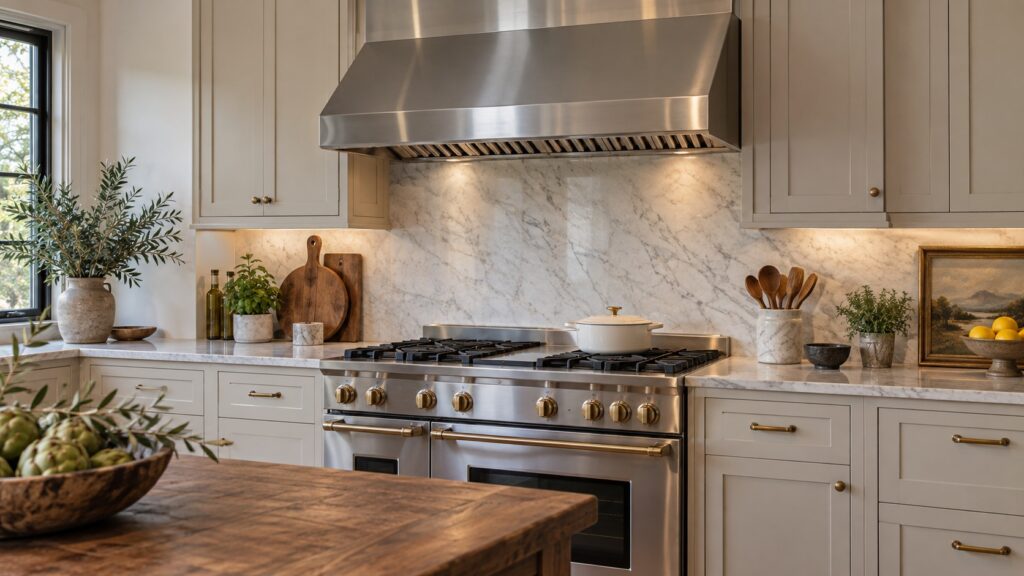
La Cornue Euclid hood installation follows the same order as any heavy wall hood: confirm the model and its installation sheet, mark the mounting height above the cooking surface, locate the studs or add blocking in the wall, plan the duct run and the electrical supply, then lift, fasten and seal. The Euclid is one of the CornuFé hoods, and because the hood is large and heavy, the wall and the duct decide how well it works, not the hood alone.
What do you need before the Euclid hood arrives?
Start by finding the installation sheet for your exact hood, because it governs everything below. Search the model number printed on the label or the carton, and keep the sheet beside you. Our library lists the Euclid hood alongside the other CornuFé hoods, and our guide to hood styles shows how they differ in shape, which affects how the hood meets the wall and the ceiling. The Euclid’s lines are architectural and the body is substantial, so plan for the weight and the visible duct cover.
Decide the size of the hood against the range below it. A hood should cover the full cooking surface and, ideally, extend slightly past it. Our guide to sizing a La Cornue range hood explains how width and airflow relate, and you should check it before the wall is closed.
How high should the hood sit above the range?
The installation sheet gives a minimum and a maximum distance from the cooking surface to the bottom of the hood. Too low is a fire and heat risk and may violate the instructions. Too high and the hood captures less smoke and grease. Pick a height inside the stated range that suits the cook, bearing in mind that a taller range or a tall pot needs room. Mark the height on the wall, then mark the center line on the range’s center. Use a level and measure twice, because the hood must hang square to be right.
How do you support the weight?
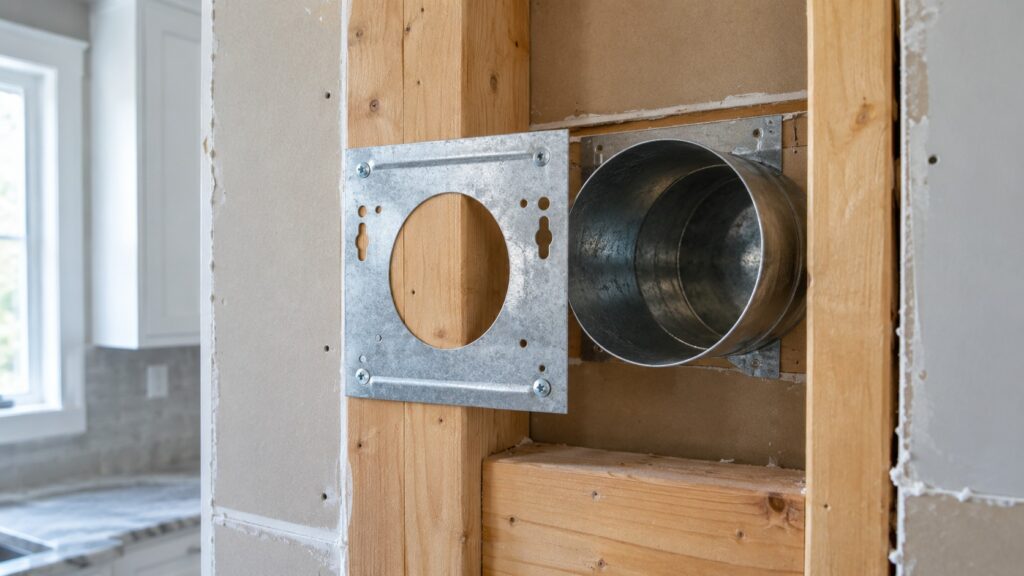
A decorative hood with a stainless or metal body can be heavy, and the wall that holds it must be rated for the load. Locate the studs behind the finished wall and mark them. If the mounting points do not line up with the studs, add solid blocking between them before the wall is finished, or use the support plate if the hood ships with one. Never rely on drywall anchors alone for a heavy hood. If the wall is already finished, a professional can open it, add blocking and repair it. Take the time to get this right, since a hood that sags or pulls away from the wall is a safety issue and a repair that is hard to do later.
What does the duct need to look like?
A hood is only as good as its duct. Use the size specified, keep the run as short and straight as possible and vent to the outside, never into an attic or a wall cavity. Every elbow adds resistance, so use as few as you can and keep the bends gentle. Seal the joints with metal tape, not cloth tape, and make sure the damper at the outlet opens freely. Our guide to venting a La Cornue range hood goes through the options in detail. A hood that is correctly installed pulls better and runs quieter than the same hood with a long, bent duct.
If you later find that the hood has weak suction, a duct that is too long or too narrow is a common cause. Our guide to a La Cornue hood with weak suction lists the other causes.
How should the electrical supply be handled?
The hood needs a power supply that matches the sheet, usually a dedicated circuit with a switch within reach of the cook. Have a qualified electrician make the connection if you are not trained, and turn off the breaker before anyone reaches into the wall. Keep the wiring clear of the duct and the blower. After the hood is up, restore power and test every function: the blower at each speed, the lights and any remote or controls that come with it. If the blower does not start, our guide on a La Cornue hood blower that will not start lists the checks, and if the lights do not work, the halogen light replacement guide explains how to replace a bulb.
What should you check when it is up?
- The hood is level in both directions and tight against its mounting points.
- The duct is sealed at every joint and the damper opens.
- The blower runs smoothly at each speed without rattling.
- The lights and controls work.
- The finish is protected until the other trades are finished.
For help with a hood that is already installed and not performing, see our range hood repair page.
What common mistakes should you avoid?
The mistakes that cause the most trouble are all made before the hood goes up. Hanging the hood before the duct is finished leaves no room to work, so run the duct and the wiring first. Using a duct smaller than the sheet calls for chokes the blower. Placing the hood at the wrong height creates either a hazard or a weak capture. Skipping the blocking means the hood hangs from drywall. Forgetting that the hood will be heavy until it is fixed means someone ends up holding it for too long, so use a support or a helper. Taking a little extra time with the layout, the duct and the wall prevents most of these errors and makes the hood look as good as it is.