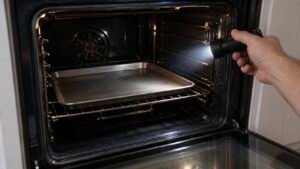
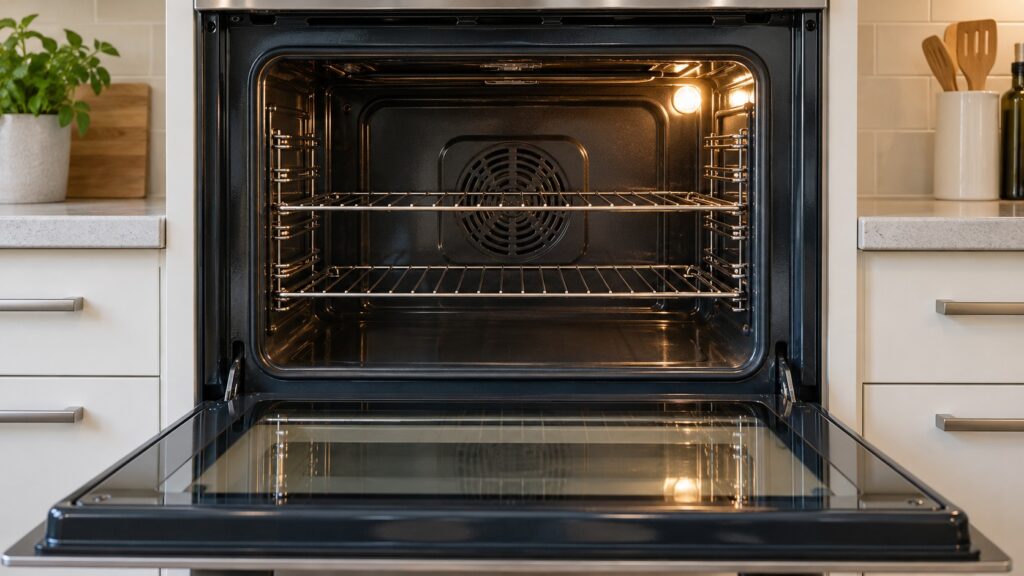
The safe way to clean a La Cornue oven door glass is to wait until it is fully cool, wipe it with a soft cloth and warm water with a drop of mild dish soap, treat baked-on spots with a paste of baking soda and water, and dry it with a microfiber cloth. Keep oven cleaner, abrasive pads and razor blades off the glass, and keep every product away from the gasket and the enamel edges. Haze between the panes or a crack is not a cleaning job.
How do you clean the outside of a La Cornue oven door?
Switch the oven off and wait until the glass is cool all over, since cold water on hot glass can crack it. Dampen a soft cloth with warm water and a drop of mild dish soap, wring it nearly dry and wipe the glass from top to bottom. Use a second cloth with plain water to remove soap, then dry with microfiber in long strokes. Treat the enamel around the glass and the handle separately; our guide to cleaning La Cornue vitreous enamel explains what is safe there.
Fingerprints on a door usually come off with the same soap solution. If they do not, use a slightly stronger solution rather than a stronger chemical. Spraying cleaner directly on the door lets it run into the gasket, the hinge and the seams, so spray the cloth, not the door.
How do you remove baked-on grease and splatter?
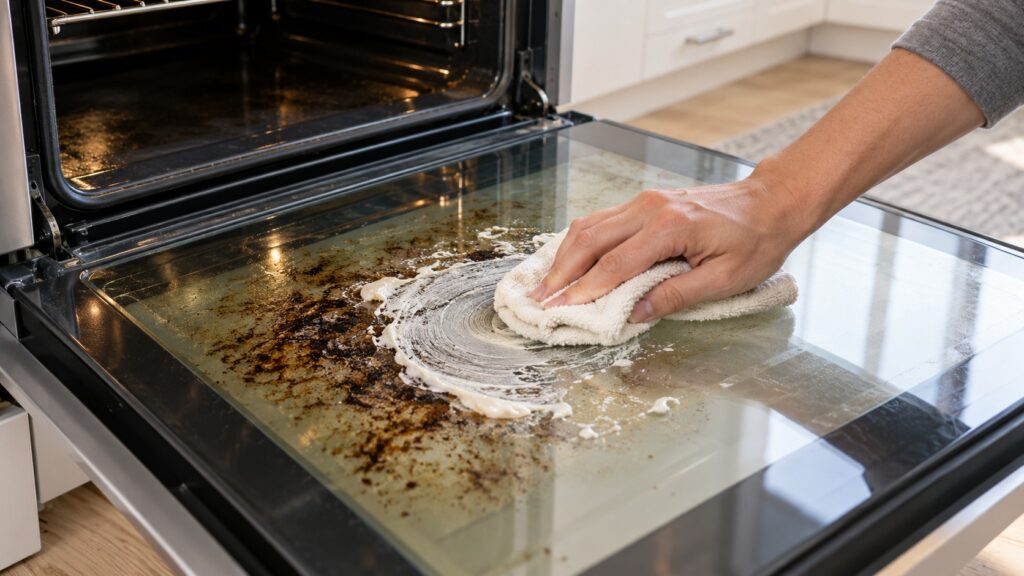
Mix baking soda with a little water to make a thick paste, spread it over the stained area with a soft cloth and let it sit for ten to fifteen minutes. Wipe it away with a damp cloth, repeating if needed. Baking soda is a gentle abrasive that lifts grease without scratching the glass. For a stubborn patch, use a plastic scraper held flat, never a metal blade, which can scratch the glass and leave a weak point that can crack under heat.
Do not use commercial oven cleaner on the door glass or the interior glass. These products are strong alkalis, they can damage the gasket and the catalytic panel and they leave fumes in a closed oven. Our guide to catalytic panel maintenance explains why chemicals and catalytic surfaces do not mix.
What about the inside surface of the glass?
The inside of the glass gets the most grease, and it is cleaned the same way when the oven is cold: soap and water, baking soda for stubborn spots and a dry microfiber finish. Open the door fully and support it as you work, and avoid pressing hard on the glass. If the door is designed to come apart for cleaning between the panes, the manual will say so, and it is a job to follow step by step. Most owners should not take it apart. If you cannot reach a spot, leave it, because a small stain does no harm.
For the oven cavity itself, our guide on vaulted oven interior care covers the walls, the floor and the racks.
What does haze between the panes mean?
A cloudy or misty film that you cannot wipe away, because it is on a surface you cannot reach, means moisture or grease has found its way between the layers of glass. It is not dirt on the outside. Cleaning will not remove it, and attempting to open the door yourself risks damage and injury. It usually indicates that a seal has aged or that the door has been exposed to moisture. It is a reason to book a technician, and it is worth acting on, because trapped moisture does not clear by itself.
Moisture inside an oven can also appear for an ordinary reason after cleaning, as water used in the process evaporates; it clears after the first heat cycle. If it persists for days, do not ignore it.
When is a crack or chip an emergency?
Stop using the oven. A cracked or chipped door glass can fail suddenly under heat, and the door carries tempered glass that can shatter. Switch the oven off, let it cool, keep children and pets away and call a technician. Do not tape or glue the glass and do not use the oven until it is repaired. The door glass is a replaceable part, and the repair is a modest fraction of the cost of the range.
How does the door gasket fit into the routine?
The glass and the gasket share a job: they hold the heat in. Wipe the gasket with a damp cloth each month, and check it for flat spots, tears and burned patches. A gasket that does not seal lets heat escape, stains the glass with smoke and makes the oven slow to heat. Our guide on oven door gasket care shows how to test it, and if the door will not seal, the oven door won’t seal guide covers the next steps. A door that has dropped on its hinges can cause the same trouble; see our guide to repairing or replacing an oven door hinge.