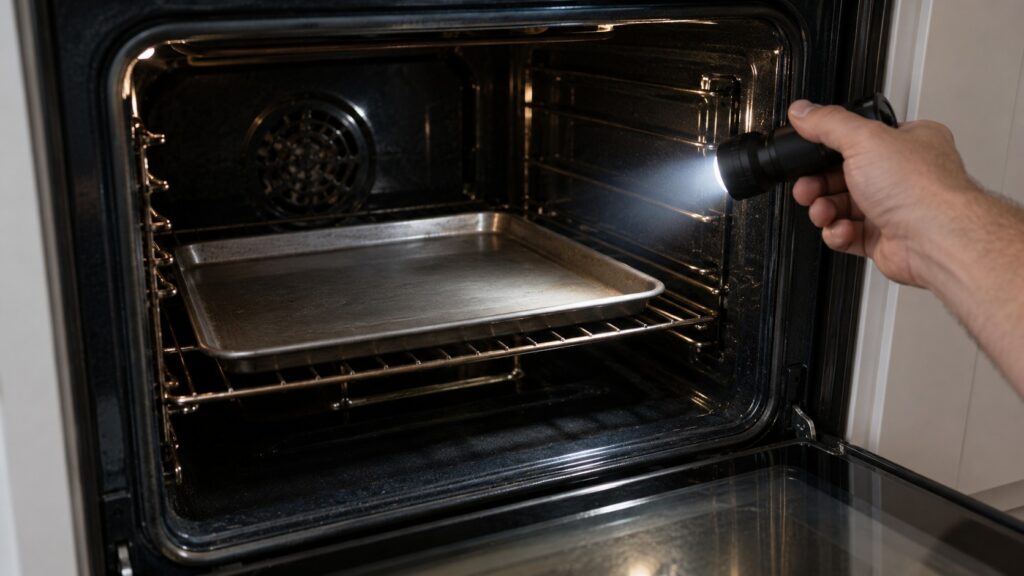
If your La Cornue oven light is not working, the likeliest place to start is the lamp itself, and the problem rarely affects how the oven cooks. This guide covers the practical side: which lamp your oven takes, how to change it safely by the owner’s manual, and how to tell when it is not the lamp at all. For the fault itself and the parts that can sit behind it, see our oven light page, which we do not repeat here. Because an oven lamp has to survive high heat, it takes a specific high-temperature bulb, so a household bulb is not a substitute. Whether your oven has an interior light at all, where it sits and how its cover comes off depends on the model, so use your owner’s manual for those details.
Why is my La Cornue oven light not working?
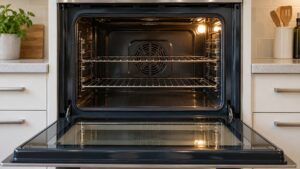
The light is a minor part, and a dark lamp is easy to spot: it does not come on when the door opens, or it stays off whichever mode you use. Our oven light page sets out what can be behind that, and a bulb that looks blackened or shows a broken filament once it is cool is a strong hint that it is simply spent. What this guide adds is the owner’s side: finding the right lamp, changing it by the book, and knowing when to stop.
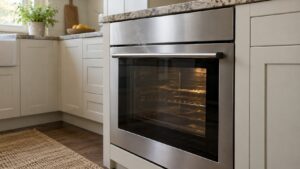
Note that a La Cornue Château vaulted oven has no window, so you would not normally watch the oven by light from outside; our guide to the vaulted oven explains why. If you are unsure whether your oven has a lamp, check your manual rather than assuming.
Is the oven itself working?
Before you look at the light, make sure the oven is heating. An oven that does not heat is a different problem, and the light is a distraction. If the oven is not heating, see our gas oven not heating guide and the control board lockout guide. If everything else works and only the lamp is dark, you can continue with the bulb. If power to the whole range seems off, check the breaker first.
Which lamp does your oven take?
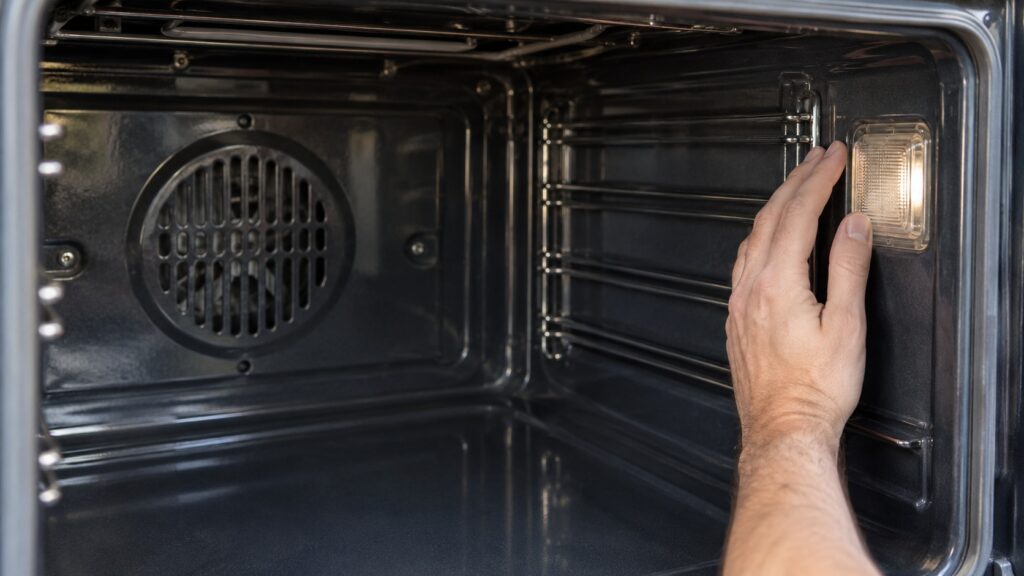
The exact lamp type and rating are in your owner’s manual or on the parts list for your model, and the right one is the one the manual names, not one that merely fits the socket. If the manual is lost, your dealer or our service line can help you find the right document when you give them the model name. Do not assume a lamp from another appliance will do: our hood pages list halogen bulbs for the hood, but that says nothing about your oven, which has its own high-temperature lamp. Buy the exact type, keep the packaging, and note the date you fitted it so you can tell how long it lasted.
How do you replace the bulb safely?
Switch the oven off and let it cool completely, including the lamp, which stays hot long after the oven is off. Then switch off the power to the range at the breaker, because you will be working near the socket. Use the owner’s manual to find the lamp and see how its cover comes off; the method differs by model, so we do not describe a single sequence. Take out the old bulb, fit the exact high-temperature bulb the manual specifies, and refit the cover. Handle the new bulb with a clean cloth or its packaging rather than bare fingers, since skin oils can shorten the life of some bulb types. Restore power and test.
If you are not comfortable working near the socket, or the cover will not come off without force, stop. Our oven repair page explains how a visit works.
What if a new bulb does not light?
Check that the bulb is fully seated and that the cover is back properly. If it still does not light, the cause is outside the lamp, and our oven light page lists where a technician will look. These are electrical parts, so this is where you hand over. Do not poke at the socket with tools, and do not remove interior panels to look for wiring. If the light flickers and you also notice a burning smell, sparks or any sign of water near the lamp or wiring, switch off the breaker at the panel while standing on a dry floor, and never pull a plug from a wet outlet.
What should you tell the technician?
You can help a visit go quickly without touching anything electrical. Note whether the light is dark every time or only sometimes, whether it came back after you bumped the door or after the oven warmed up, and whether it behaves differently with the door open and closed. Write down when you last changed the lamp and which type you fitted, and keep the old bulb. Take a photo of the lamp cover with the oven cold, and have the model name from your paperwork ready; our guide to decoding La Cornue model names helps you read it. A clear description means the technician can arrive with the right parts and the visit stays short.
Could the oven light problem be a sign of something bigger?
Usually not. It is a low-severity item. But if the oven has also been slow to heat, cut out, or shown an error, tell the technician, so they can look at the whole picture; our door gasket care guide and temperature drift guide describe the common companions. The light and the heat usually fail independently, so one does not predict the other.
Should you cook without the light?
You can. The light is a convenience, and the oven heats the same without it. That said, do not rely on a dark oven to judge doneness, and do not open the door repeatedly to check, because that lets heat out. A vaulted oven in particular holds an even temperature because it stays sealed, so use timing and an independent oven thermometer, as in our temperature drift guide, until the light is fixed. Replacing a burned-out bulb is a routine job, and it is worth doing so you can check food quickly.