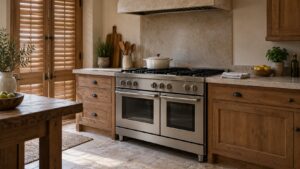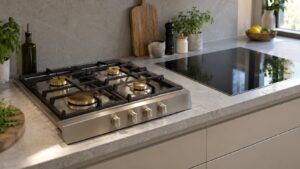
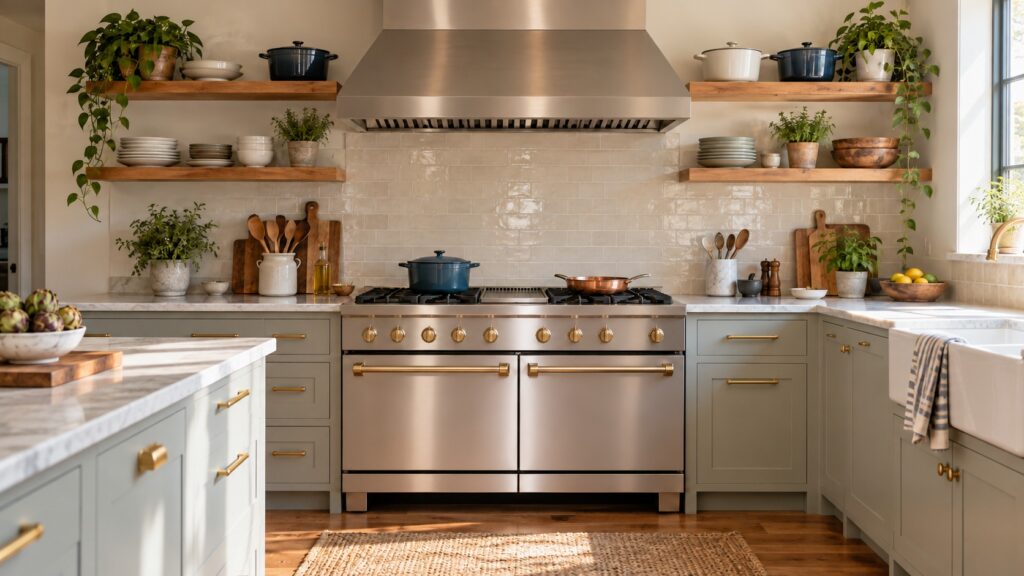
La Cornue appliances, as listed on this site, are built around the range: the made-to-order Château family with its vaulted oven, the largest Grand Palais 180, and the factory-built, pro-style CornuFé. Around those ranges sit rangetop modules, induction cooktops, ovens and matching range hoods. Our model directory lists ranges, stoves, range tops, cooktops, ovens and range hoods, and it does not list refrigerators or dishwashers. This guide maps the lineup so you can see what exists before you read the comparison guides. It names no prices and no delivery times, because the site gives neither, and every detail should be confirmed against the model page and the installation drawing for the exact unit.
What does La Cornue make besides ranges?
The range is the center of the line, but our model directory groups the rest into categories. Stoves are the hand-built French ranges themselves. Range tops are the configurable cooking deck, and the directory also lists a CornuChef professional rangetop. Cooktops include the CornuFé 90 and 110 induction cooktops and the Château modules for French Top, grill and Teppanyaki. Ovens are the Château vaulted ovens. Range hoods are the CornuFé hoods and the Château hoods. Our guide on stove, range, rangetop and cooktop terms explains how those category names relate, and the names do not always line up with the product.
The one thing the lineup does not include on our site is refrigeration. If you are planning a kitchen, La Cornue here means cooking and ventilation.
How do Château and CornuFé differ?
Our guide on Château vs CornuFé describes the Château as the made-to-order flagship with a vaulted oven, called the voûte, and the CornuFé as the factory-built, pro-style family with a conventional multifunction convection oven. The Château comes in six widths, from the 60 to the 165, plus the Grand Palais 180. The CornuFé has two models, the 90 Albertine and the 110. Our range sizes at a glance puts every width and its ovens in one table. Do not plan a cutout from a rounded number; the model names are widths in cm, so a 90 is about 35.4 inches and not a standard 36.
If you want the lineup in one sentence: choose a Château for the vaulted oven and custom configuration, a CornuFé for convection ovens and a factory-built range.
Which fuels and rangetop modules are available?
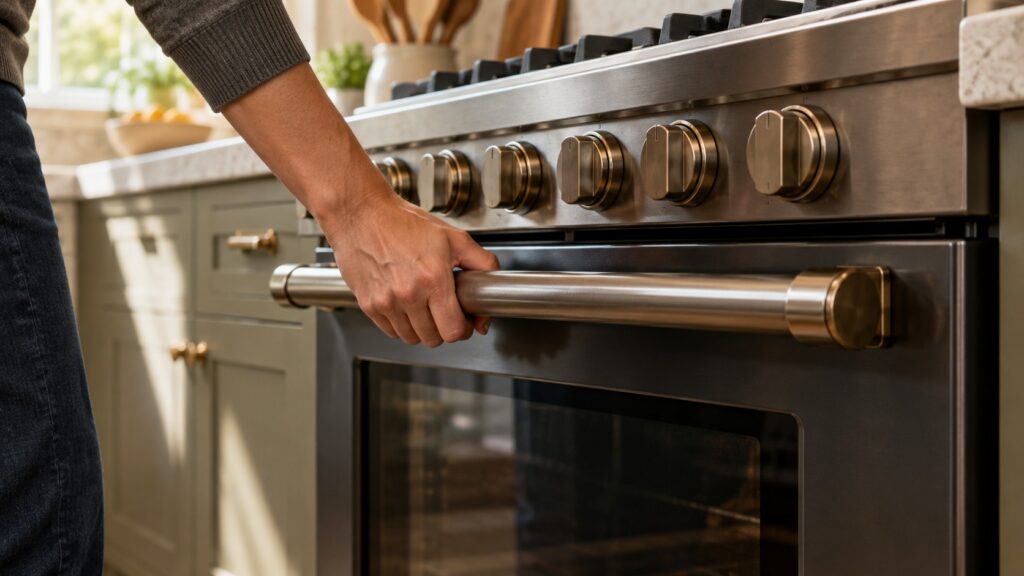
Our model pages list Château ranges in gas, dual-fuel and induction versions, depending on the size, and the Grand Palais 180 as dual-fuel. The CornuFé models are listed as dual-fuel or induction. The rangetop is assembled from modules chosen when the range is ordered: brass gas burners, a cast-iron French Top, a lava-rock grill, induction, a Teppanyaki plate and the Flamberge rotisserie. Our guide on choosing a rangetop configuration explains the modules, and gas vs dual-fuel vs induction compares the fuel choices.
Gas modules need a gas line, and induction and Teppanyaki need electrical service. Mixing fuels means planning both. Gas and electrical connections are for qualified installers, and the installation requirements are on the model’s drawing.
Which range hoods go with which range?
Our hood names glossary says the four CornuFé hood styles are Marquee, Loge, Cascade and Euclid, and that Château hoods are sized by range width instead of named by silhouette. The names describe the look, not a difference in performance for a given size. CornuFé 90 and 110 have hoods built to match the range width and finish. Our guide on Marquee vs Loge explains how the two styles differ in the room, and sizing a hood explains how to match it to the burners and the duct.
Ventilation is part of the purchase, not an accessory. Plan the duct and hood height with the same care as the range.
How do you read a model name?
Château models are named by their width in cm, and rangetop configuration codes follow the size. Our guide on decoding La Cornue model names and SKUs shows how to read them, which helps when you compare a model page with a quote or a service call. Keep the full model name and serial number from the data plate with your purchase records.
If you already own a La Cornue and are deciding what to do next, our is a La Cornue range worth it guide takes a longer view. For service, we are an independent repair company, not the manufacturer or a distributor. Our La Cornue range repair page explains how a visit works, and you can schedule a visit online.
How should you start planning a La Cornue kitchen?
Work from the cooking surface outward. Decide the fuel first, because it drives the gas and electrical work. Then choose the range family and width for your wall, and only then pick the hood, whose size depends on the burners and the duct run beneath it. Leave the finish and trim for last, since they do not change what the range does. Our enamel colors and trim guide covers that part.
Keep the documents that come with the order: the installation drawing, the data plate details and any configuration code. They are the reference for a later service call, and they settle questions that a lineup overview like this one cannot.