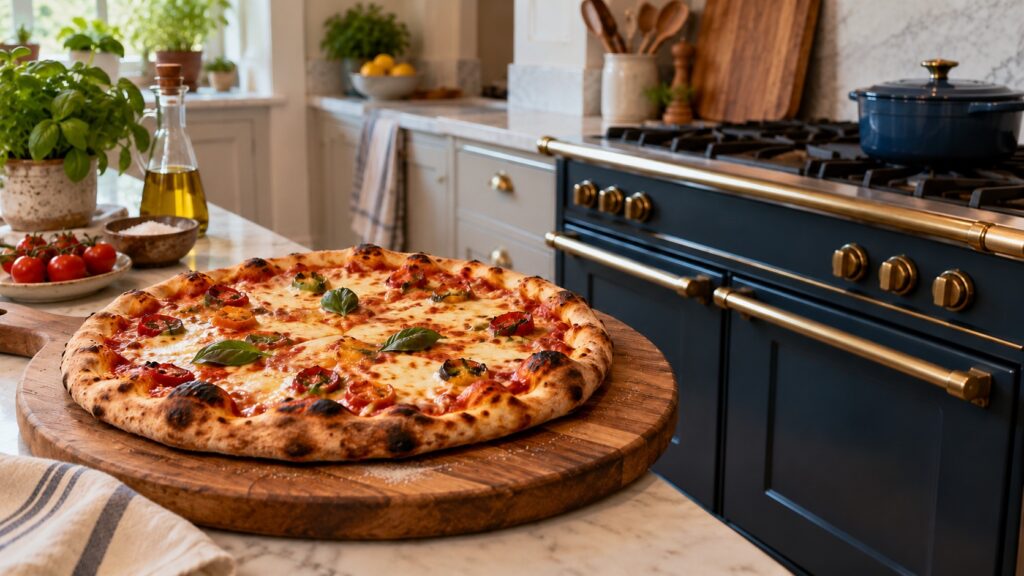
Baking pizza in La Cornue oven works best when you treat the oven as what it is: a heavy, enameled cavity that takes its time to heat and then holds that heat steadily. Preheat with the door shut, trust an oven thermometer over the first signal, give the cavity extra time to even out, and start any baking stone or steel in the cold oven so it heats along with the cavity. This guide covers the habits that help a pizza or flatbread bake well, how the Château vaulted oven differs from the CornuFé convection oven, and what to avoid. It gives no temperatures or times, because the right numbers depend on your model and your recipe.
How does a La Cornue oven suit pizza and flatbreads?
The Château vaulted oven surrounds food with radiant heat reflected from a sealed dome, with no fan, which suits roasting and baking where even, gentle heat matters. Our guide on how the vaulted oven works explains the design. Pizza and flatbreads are not the dish our pages describe in detail, but the principles carry over: a well-heated cavity, a tight door seal and sensible rack position. The CornuFé uses a multifunction convection oven instead, and our guide to the seven cooking modes lists a bottom-heat mode among the typical functions, for crisp bases like pizza. Exact mode names are in your manual.
Whichever oven you have, read your manual before using a baking stone or steel. We cannot say that every model suits one, and the manual is where that is settled.
How should you preheat?
Patience is the main tool. Our oven preheating tips explain that a vaulted oven takes longer to come up than a small electric oven but holds heat steadily, and that the signal measures the air near the sensor while the walls and floor may still be catching up. A pizza that goes in right at the signal can bake unevenly. Hang an oven thermometer in the center of the middle rack, watch it, and give the cavity several minutes past the signal to even out. We do not give a number of minutes because it depends on your oven.
Set the racks before you light the oven, not after, because adjusting them in a hot oven lets heat out. Remove racks and pans you do not need, since they absorb heat.
What about a baking stone or steel?
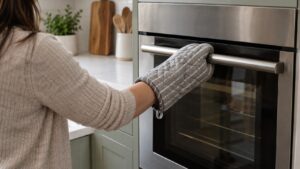
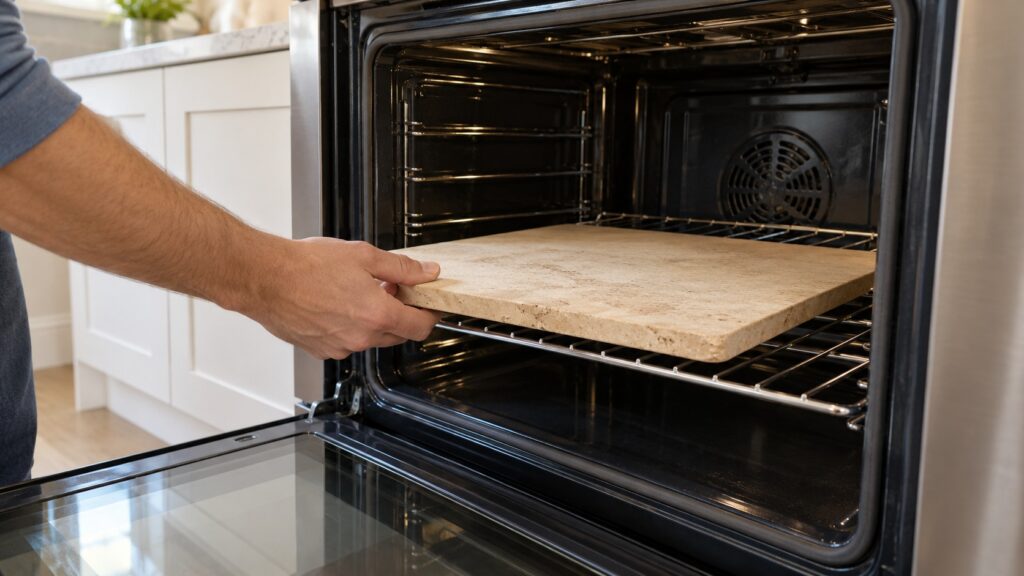
Heavy items need longer to heat, so our preheating tips say to start stones and steels in the cold oven. Place the stone on its rack before you light the oven. When you load the pizza, keep the door open as briefly as you can, because every opening costs heat, and our roasting guide notes that opening the door repeatedly drops the dome temperature in the vaulted oven. Use a peel or a tray and an oven mitt, and keep your hands away from the hot stone. Never put a stone or steel into a hot oven by hand.
Do not line the oven floor with foil. Our oven smoking guide lists foil on the floor and overfull pans among the causes of smoke and uneven heat, along with grease and spills on the floor of the cavity.
Where should the rack go, and how do you get even browning?
Our vaulted oven roasting guide recommends the center rack for the most even radiant exposure, lower for more bottom browning and higher for more top color. The same logic applies to a flatbread. Our uneven baking guide adds that rack position matters more in a vaulted oven than in a fan oven and suggests rotating a tray halfway through for uniform browning. Do not overcrowd the oven; too many trays block the radiant heat paths.
If results are uneven even with good technique, check the door gasket. A leak on one side makes one side bake differently. Our gasket care guide shows how to test it.
What changes for flatbreads?
Flatbreads follow the same oven habits with less weight on the stone. They are thin, so they bake on whatever you set them on and finish quickly once the cavity is properly heated. Because the vaulted oven has no fan, keep an eye on the first one, note which rack gave the browning you wanted and use that rack for the rest. Rotate the tray halfway through if one edge colors faster, as our uneven baking guide suggests, and keep the door closed except to turn or remove the bread.
Work in small batches rather than crowding the oven. Each time the door opens the dome loses some heat, so it is better to have everything ready and shaped before the first one goes in. Let the oven recover before the next batch; the thermometer will tell you when it has.
How do you keep the oven clean afterward?
Let the oven cool completely, then wipe the cavity following our vaulted oven interior care guide. Scrape away anything that dropped from the pizza before the next heat, because spilled food on a hot floor is what smokes. Run the hood while baking. If the oven smokes, switch it off, ventilate and let it cool; if you smell gas, follow the steps in our oven smoking guide and leave. Do not use oven cleaner on the door glass; our glass care guide lists it among the things to avoid.
We are an independent repair company, not the manufacturer. If the oven struggles to hold temperature, our temperature drift guide explains the next step, and our La Cornue oven repair page describes a visit. You can schedule a visit online.