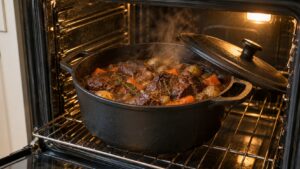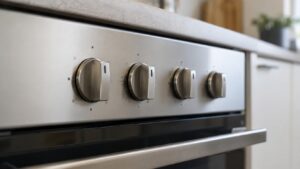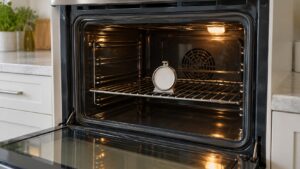
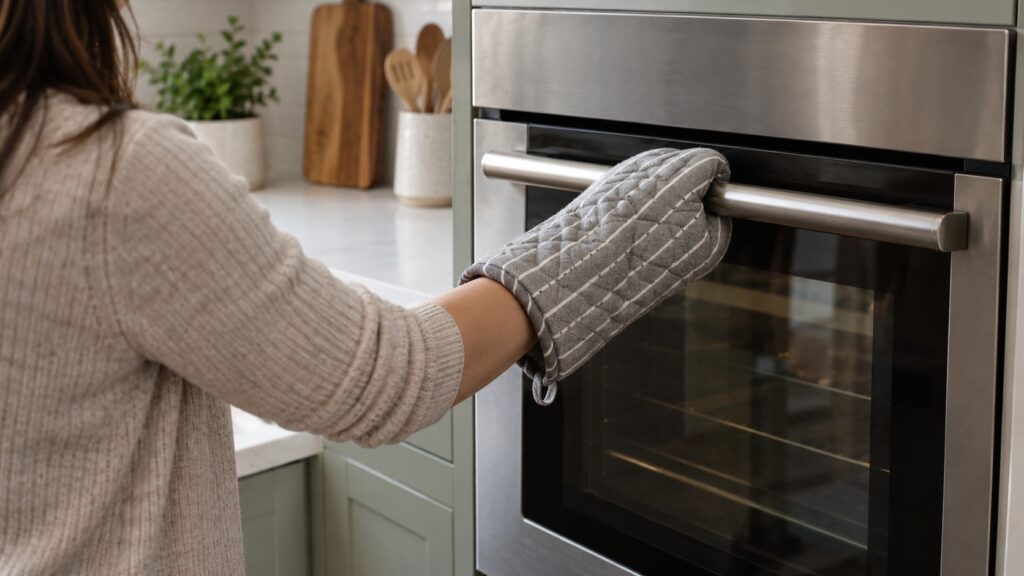
A La Cornue oven door that is too hot on the outside is worth taking seriously because of the burn risk, but some warmth at an oven door is normal. This guide is about what normal looks like, how to compare the door with your own oven’s history, and how to keep people safe around it. If the door has become noticeably hotter than it used to be, what can be behind it, usually heat escaping around the door, is covered on our oven heat loss page, and we do not repeat that list here. Keep children and pets back, use a mitt on the handle, and call a technician if the door is much hotter than it used to be. We do not give temperatures, because we have no source for them.
Why is my La Cornue oven door too hot?
An oven door always gets warm; it holds the heat in. What matters is a change from your own normal. If the door has become noticeably hotter, the usual reason is that the seal is leaking, and our oven heat loss page explains the fault. Our gasket care guide adds that the gasket is what lets the sealed vaulted oven hold its even heat, so a leak undermines the design. If your oven has also been slow to heat, our slow preheat guide covers what is normal for a vaulted oven and how to measure it.
How do you check the gasket?
Do it with the oven off and fully cool. Run your fingers along the gasket: it should feel resilient and intact, not brittle or flattened, and you should see no cracks, tears, gaps or sections pulled out of their channel. Then close the door on a slip of paper at several points around the frame, and try to pull it out; if it slides out with no resistance, the seal is weak at that spot. A pattern of weak spots on one side often explains uneven results on that side. A dirty gasket can be wiped with a soft damp cloth, dried fully, and tested again. A hardened, cracked or flattened gasket needs replacement, and gaskets are model-specific, so have a technician fit the right one.
Could the door itself be the problem?
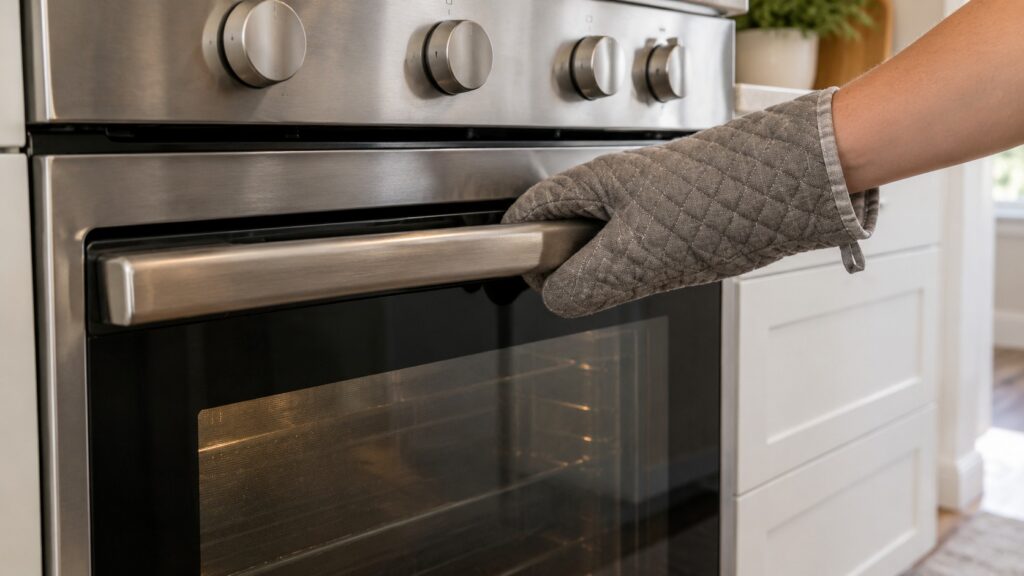
Yes. A door that sags or has shifted leaves a gap even when the gasket is good. Look at how it sits: does it close squarely, does the latch engage, are there uneven gaps around the edge? Our door won’t seal guide explains that worn hinges stop the door pulling square. Do not adjust the hinges, and do not lift the door off; the door is heavy and the hinge springs are under tension. A technician can adjust or replace them. If the door looks bent or the glass or frame is damaged, stop using the oven until it is checked.
Is some warmth normal?
Yes. A hot oven warms its front, especially at high temperatures and over long cooks. What is not normal is a door you cannot touch comfortably when it used to be fine, a front that has begun to discolor or smell, or heat you can feel rising from the seam. We do not have a figure for how warm an oven door should be, and we will not invent one. Compare with how the oven behaved when it was new, and with another oven in your home if you have one. Remember that the handle can be hot in a long cook, so wear a mitt, as a rule.
How do you keep children and pets safe?
An oven front that is too hot is a burn hazard, especially for small children. Keep them back from the oven while it is on and while it cools, and do not let them lean on the door. Do not leave towels or oven mitts hanging on the handle. Keep flammable items away from the door and from the vents. If you cannot touch the door without a mitt for a long time after the oven is off, take that as a sign to have the oven checked. If the oven has a child lock in your model, your manual explains it; we do not describe a sequence.
What can you do in the meantime?
Keep the door shut while the oven is on and avoid opening it more than you must, since every opening lets out heat and makes the oven cycle harder. Cook at the temperature you need and no higher, and do not use the oven to heat the room. Wipe the gasket gently with a soft damp cloth and let it dry fully if it looks dirty; do not use abrasives or strong chemicals, which degrade the material. Do not run the oven empty at high heat to test it. If you have to keep cooking, put a heat-safe barrier such as a sturdy gate in front of the oven if small children are around, and use the back burners of the range for hot pans when possible. Note when the door feels hotter, for example only during long cooks or only in one mode, and share that with the technician.
Also think about the kitchen around the oven. Heat escaping around the door can warm nearby cabinets, so check whether anything next to the oven looks discolored or feels warm to the touch. That is a sign to stop using the oven and call.
When should you call a technician?
Call if the door is much hotter than it was, if the gasket is flattened, torn or hard, if the door will not close flush, or if you smell burning. A technician can test the door fit, the hinges and the gasket, and look at the insulation, which our slow preheat page lists as another source of heat loss. If you see sparks or smoke, or water near electrical parts, switch off the breaker at the panel while standing on a dry floor, and never pull a plug from a wet outlet. If you smell gas, leave the home and call the gas utility or 911 from outside. Our oven repair page explains the visit.