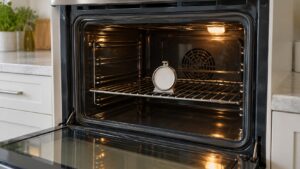
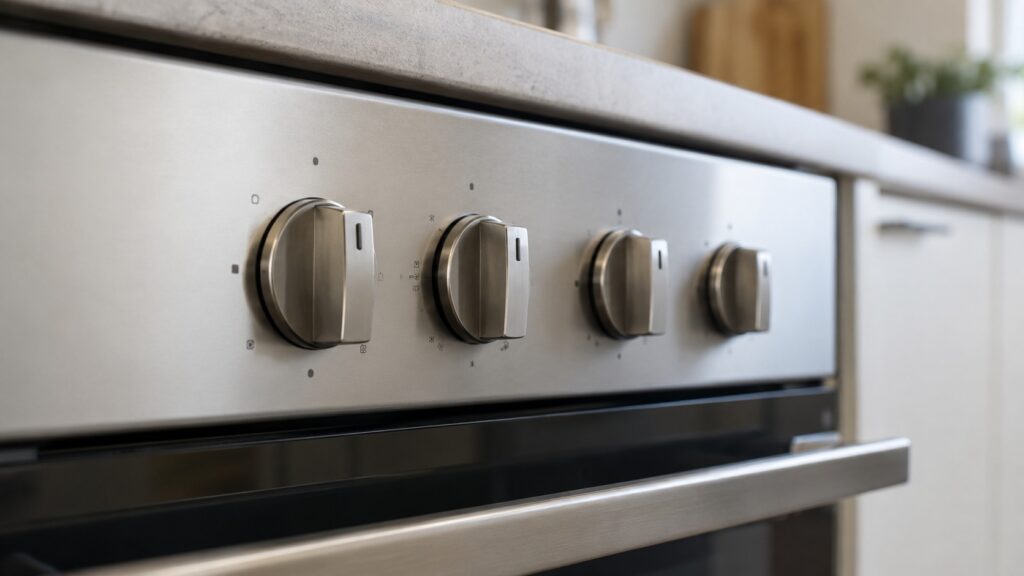
La Cornue oven setting symbols are the small pictures on a multifunction oven’s mode selector, each one standing for a way of heating. Our page on the CornuFé multifunction oven lists seven typical functions: conventional bake, convection (fan) bake, convection roast, bottom heat, top heat or browning, broil (grill) and defrost or gentle warm. A symbol, then, tells you which elements run and whether the fan moves air. We do not reproduce your oven’s exact artwork here, because it differs by model; your owner’s manual shows every symbol and its name. Below we explain what each mode does in plain English, and how to read a selector when the pictures are small.
What do the symbols on a La Cornue oven mean?
On a multifunction oven, each symbol is shorthand for a pattern of heat. A picture that shows lines at the top and bottom of a box usually points to elements at both places; a picture with a fan shape points to air being moved by the convection fan; a zigzag or wavy line near the top usually means strong top heat. Those drawing conventions are common across oven makers, but they are conventions, not rules, and a given model can differ. That is why we send you to the manual. Our guide to the seven CornuFé oven modes gives the plain-language meaning of each function, and says exact mode names and symbols for your model are in your manual.
What does each mode do, and when should you use it?
Use conventional bake for delicate single-rack items such as custards and some cakes: top and bottom elements, no fan. Use convection bake for faster, even multi-rack baking: a rear element and a fan circulate hot air. Use convection roast for meats you want browned and evenly cooked. Use bottom heat for pizza and tart bases that need a crisp bottom. Use top heat or browning to finish a dish. Use broil for strong top heat to sear, melt or crisp the surface, and read our gas oven broiler guide if your oven is gas. Use the gentle defrost or warm mode for thawing or holding food. Learning your oven means trying each mode with a simple dish and noting the result.
Does the Château vaulted oven have the same symbols?
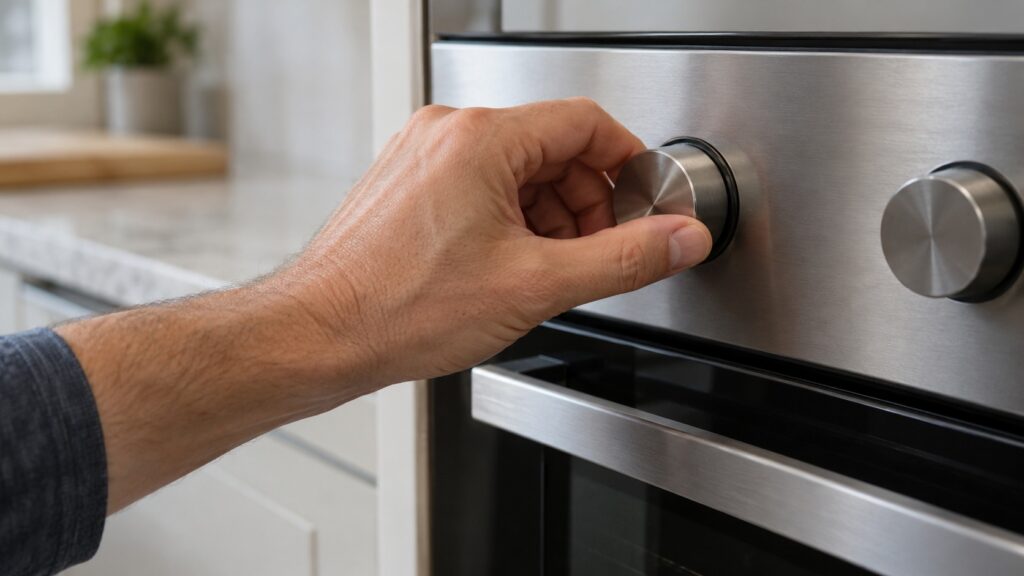
Not in the same way. The Château vaulted oven is a sealed dome that cooks with radiant heat; our vaulted oven guide says it uses mechanical or electronic thermostats depending on the fuel. Its controls are a thermostat dial and, on some configurations, a selector, and our model pages list mechanical knobs. The marks on those knobs differ from the multifunction CornuFé’s pictures. If you own a Château, expect a dial of temperatures and your manual’s key to any other marks, and do not assume the seven-mode list applies to you.
What about symbols for the light, the fan and other functions?
Many ovens also show a symbol for the oven light, and the convection modes show a fan. We do not have a page that describes every symbol on a La Cornue panel, so we do not guess at those. If a mark on your panel is not explained in your manual, ask your dealer for the documentation for your exact model, and do not experiment with an unknown mode while food is in the oven. Write down the symbol and what it does once you learn it, and stick the list inside a cabinet door.
How do you pick a mode for a given dish?
A short guide helps if you are new to a multifunction oven. For a cake, a custard or a casserole on one rack, choose conventional bake: top and bottom elements without a fan give a gentle, traditional result. For cookies or trays on two or three racks, choose convection bake, because the fan evens out the heat between racks. For a chicken or a joint of meat that you want browned all over, choose convection roast. For a pizza, a tart or a pie that needs a crisp base, choose bottom heat for at least part of the bake. To brown the top of a gratin or melt cheese, choose top heat or the broil mode at the end. To thaw food or hold a finished dish, choose the gentle defrost or warm mode. If you are ever unsure, start with conventional bake and adjust, since it is the most predictable.
Remember that temperatures and times in recipes assume a certain kind of oven. When you switch from conventional to convection, the oven may cook faster, and recipes often suggest an adjustment. We do not give a number because it depends on the recipe and the model; follow the recipe and your manual, and check the food earlier than usual the first time.
What should you do if a symbol or mode misbehaves?
If a mode produces results that do not match its description, for example a convection mode with no air movement, the problem may be the fan: see our convection fan guide. If the temperature seems off, check with an independent thermometer, as our temperature drift guide explains. If the selector does not engage, feels loose or stays on one mode, it may need service. Do not take the control panel apart. If the oven shows an error, see our error code section rather than guessing.
How can you learn the symbols quickly?
Take the manual to the oven and go through the selector with the oven off, matching each symbol to the page in the manual. Then run a single, simple test in each mode, such as toast under the broiler, a tray of vegetables on convection roast and a pizza on bottom heat, and write down what you see. After a few uses you will not need the manual. If your selector marks are worn or have rubbed off, tell a technician at the next visit.