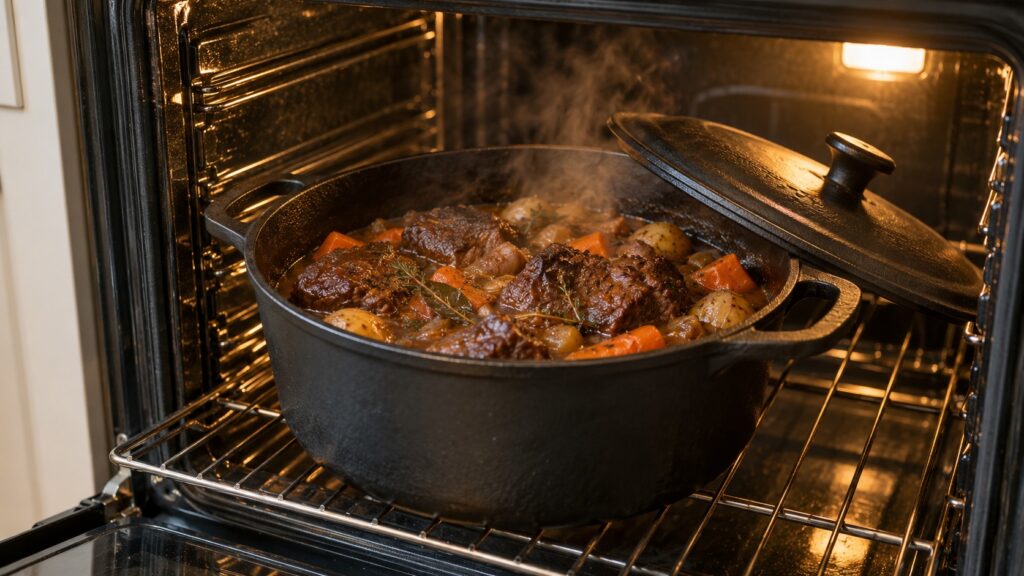
Braising in La Cornue oven cavities is a natural match. Our guide to the vaulted oven says the sealed dome surrounds food with gentle radiant heat, and that the design excels at roasting meats, baking bread and pastry, and slow-cooking, wherever uniform, gentle heat improves results. Braising and slow roasting are exactly that. Use a heavy pot with a lid, follow your recipe for temperature and time, confirm the oven with an independent thermometer, keep the door shut, and handle hot cookware with dry oven mitts. We do not give temperatures or times, because they depend on the recipe and the oven.
Is a La Cornue vaulted oven good for braising?
Yes. A braise is a slow job where moisture and even heat matter more than speed, and the vaulted oven is built for even, gentle heat. Our vaulted oven guide explains that the dome reflects radiant heat down and around the food from all sides, without the drying air movement of strong convection, so meats stay moist. A covered pot adds its own protection by trapping steam. Together they suit cuts that need long, gentle cooking. The oven’s steadiness also means you can set it and leave the pot alone for most of the cooking time.
If your oven is a CornuFé, the convection fan is also available, but for braising you may prefer a mode without strong air movement; our oven modes page explains the choices, and your manual shows the exact names for your model.
What cookware should you use?
A heavy pot with a tight-fitting lid, rated for use in the oven at the temperature your recipe needs. Enameled cast iron is the classic choice, but use any pot that the maker says is oven-safe, and check the limits for the lid knob and handles, because some plastic or wooden parts are not. The pot should fit on the center rack with room around it so heat can reach all sides, and you should be able to lift it safely when it is full. Preheat the oven fully first, as our vaulted oven guide recommends, so the dome heat-soaks before the pot goes in.
How do you set up the oven?
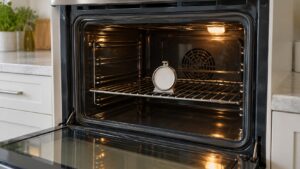
Place the rack in the center position before you heat the oven, because moving a rack in a hot oven is awkward and risky. Preheat fully. Put an independent oven thermometer in the center, let the oven stabilize and compare the reading with the setting; our temperature drift guide explains how, and says to take several readings because ovens cycle around the target. If the oven runs hot or cold, adjust your temperature or have it checked rather than relying on the dial alone. A slow braise is forgiving, but an oven that runs far from its setting will change the result.
How do you manage the door and the timing?
The Château vaulted oven is sealed, with no window, and our guide says to open the door as little as possible to preserve the sealed environment. Seasoned owners rely on timing and feel. That suits braising: you set a time, leave the pot alone, then check near the end. When you do open the door, do it briefly, and step back from the rush of hot air. Because the door gasket is what keeps the heat in, keep it clean and healthy; our gasket care guide shows a simple paper test. A leaking gasket lets the heat drift, and a long braise will show it.
How do you take the pot out safely?
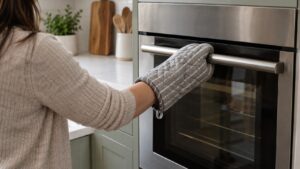
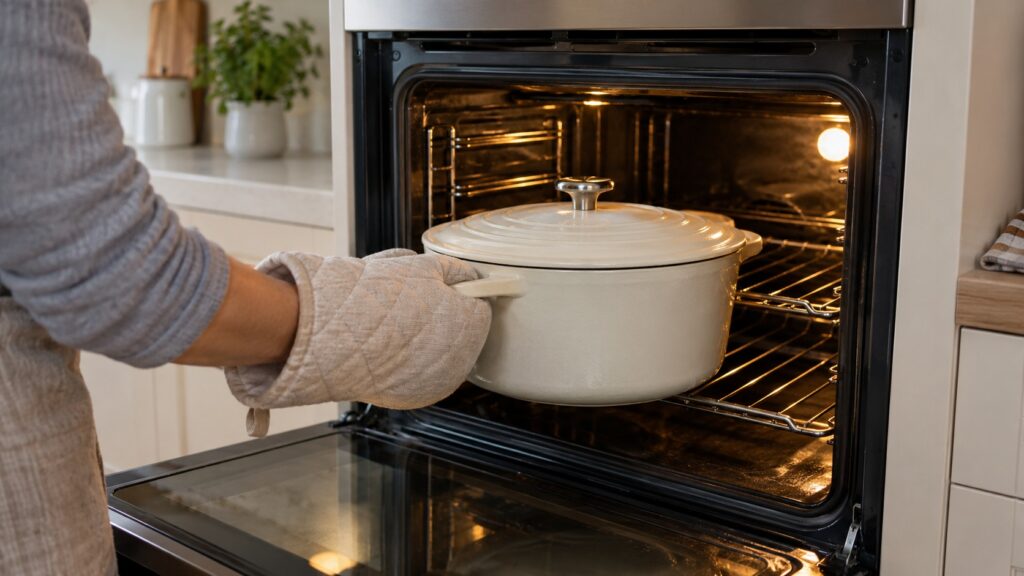
Clear a landing spot first, a trivet or a heat-safe counter next to the oven. Use thick, dry mitts, because a wet mitt conducts heat. Slide the rack out gently if it allows, hold the pot by both handles and keep the lid on until it is on the counter. Lift the lid away from your face because steam escapes fast. Keep children and pets away. Do not carry a heavy pot across a room; set it down near the oven. Let the pot rest before you serve, which also helps the juices settle. A hot pot can mark a countertop, so use a trivet.
What suits a braise, and what does not?
Tough, flavorful cuts and robust vegetables are the classic braising subjects: they need long, gentle cooking in a little liquid until they become tender. Slow roasting, which uses a lower heat for a longer time without much liquid, suits larger pieces of meat where you want an even interior and a browned surface. Delicate fish, thin cuts and quick-cooking vegetables are poor candidates for long cooking, and do better under high heat for a short time. A vaulted oven’s gentle radiant heat suits both braising and slow roasting; our vaulted oven roasting guide explains how to use it for roasting. For stovetop stages such as browning the meat first, the simmer and low heat tips are useful.
Brown the meat on the rangetop before it goes into the pot if your recipe calls for it, then deglaze and bring the liquid to the recipe’s starting point before the pot goes into the oven. This saves oven time and gives better flavor. Keep the pot covered unless the recipe says otherwise, and do not lift the lid more often than you need to.
What if the oven behaves oddly during a long cook?
If the oven cuts out and a red light appears, it may be the hi-limit; see our hi-limit guide and do not try to defeat it. If food is browning unevenly, check the rack and gasket, and see the uneven baking guide. If you smell gas, do not touch a switch or light anything; leave the home and call the gas utility or 911 from outside. If a grease fire starts, keep the door closed, turn the oven off and do not pour water on it. For a lasting problem, you can book a visit.