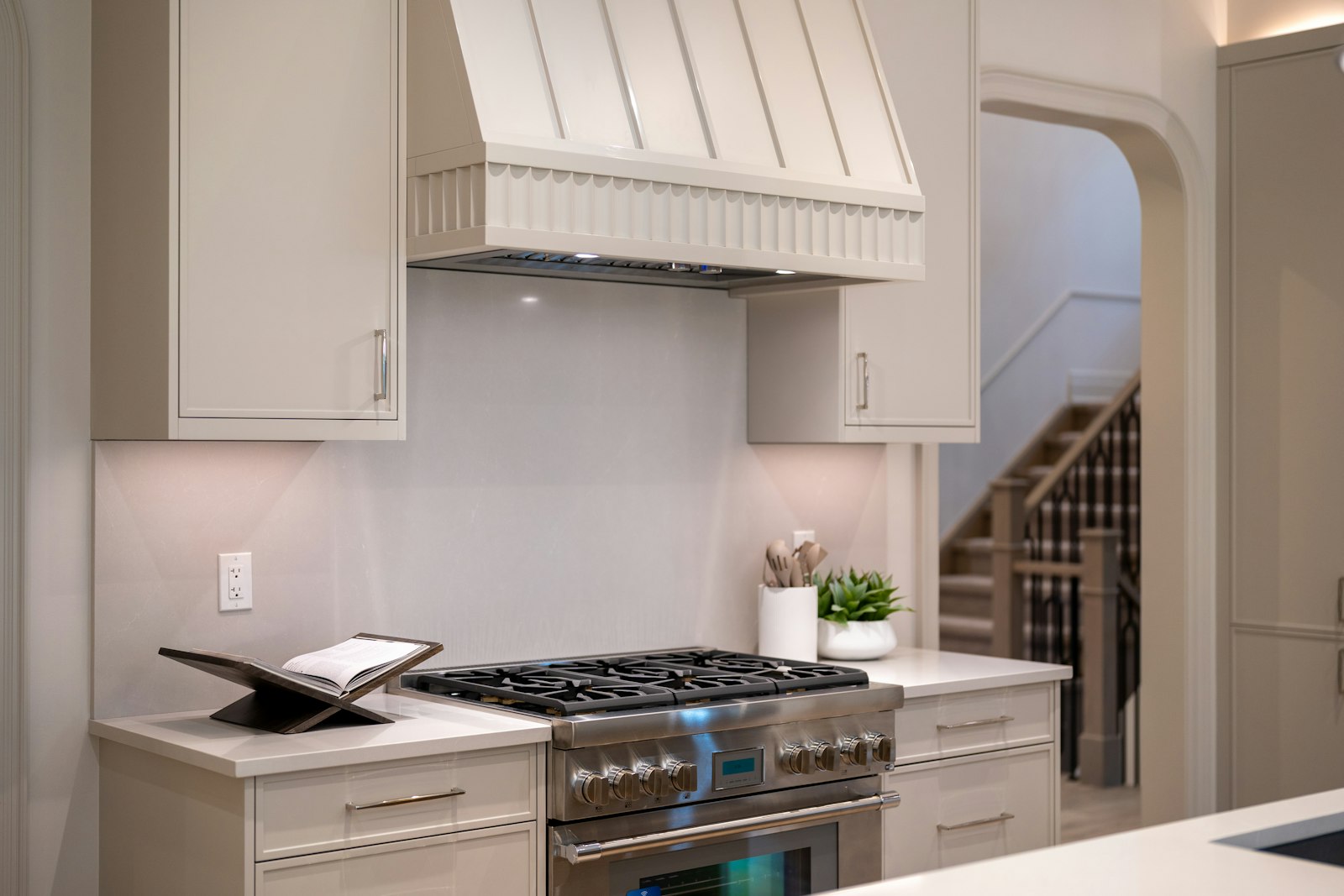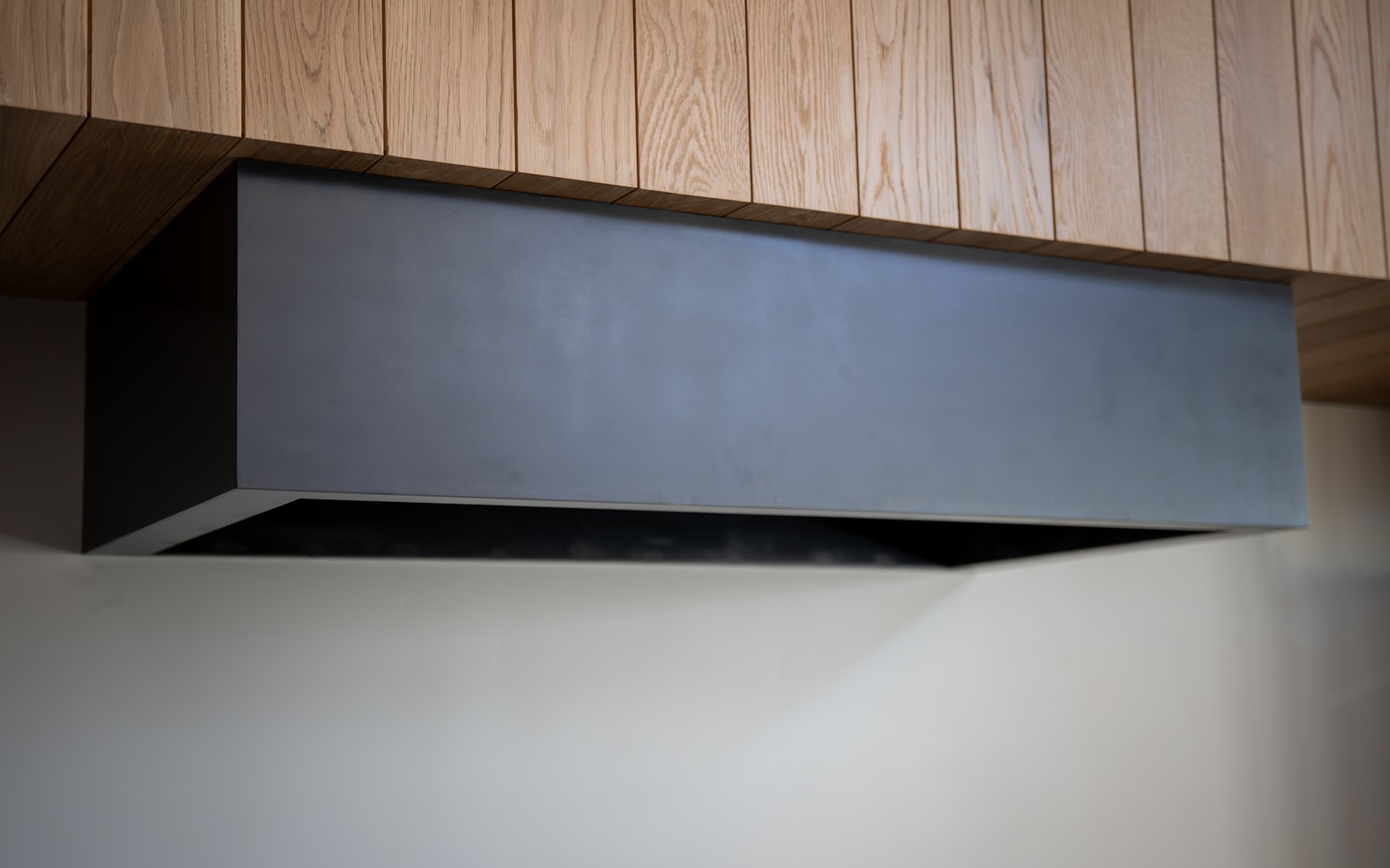
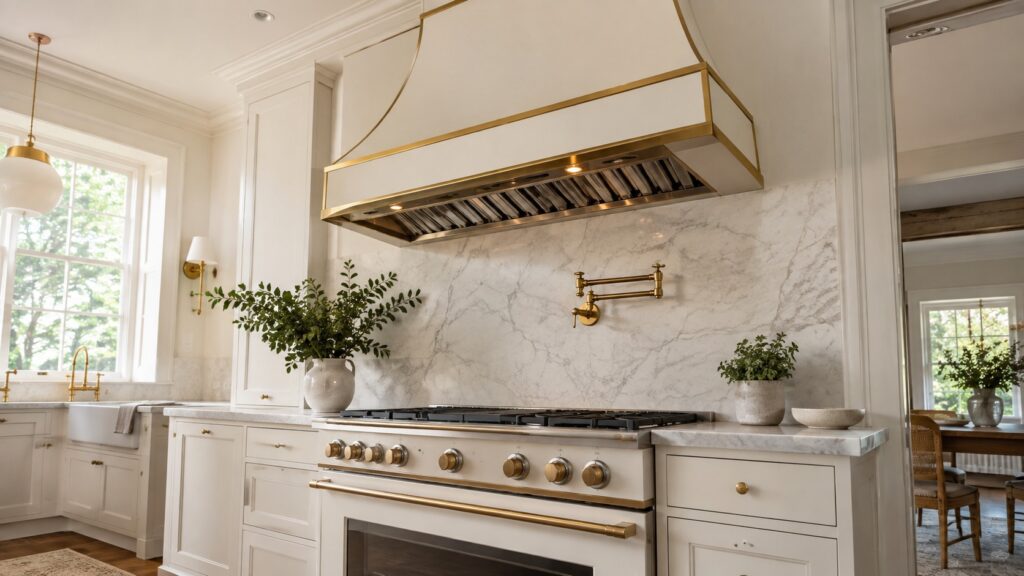
A cornufé hood repair is not the same job as a repair on the wide canopy that sits over a Château. The CornuFé hoods are built to match one range each — the 35.4-inch hood for the CornuFé 90 Albertine and the 43-inch hood for the CornuFé 110 — in the same enamel color and the same brass or nickel trim. They are narrower, they carry a smaller blower, and the faults that bring them to a stop are concentrated in three places: the blower and its capacitor, the baffle filters and the grease path behind them, and the switch or remote that asks for a speed.
What makes a CornuFé hood different from any other range hood?
Three things, and all three change how it is serviced. First, it is a matched appliance rather than a generic canopy: the width, the color and the trim are ordered against a specific range, so a replacement is not a trip to a supplier for any hood of the right size. Second, the canopy is shallow compared with a chimney-style hood, which puts the blower, the wiring and the light circuit close together behind one removable section. Third, the duct run above a CornuFé is usually short and straight, because these ranges are normally placed on an outside wall or under an existing chase.
That last point is the useful one for diagnosis. On a long, elbow-heavy duct, weak suction can be a ducting problem. Over a CornuFé it usually is not, which means a hood that has lost pull is telling you about its filters or its motor. If you are choosing between canopy shapes rather than fixing one, our guide to La Cornue hood styles covers the difference.
Which hood matches a CornuFé 90 or a CornuFé 110?
The matched hood is the one sold at the same width as the range: 35.4 inches over the Albertine, 43 inches over the 110. La Cornue also offers the CornuFé canopy in the same finishes as the range body, and there are separate Marquee, Loge, Euclid and Cascade shapes for owners who want the hood to read as a piece of furniture rather than as equipment.
Owners sometimes ask whether a wider hood is better. Over these two ranges it is not automatically so. A canopy that overhangs the range by more than a few inches on each side collects cooking vapor that never rose from the range at all, and on a short duct that shows up as a hood that seems to run hard and clear the room slowly. Sizing is a system question rather than a width question, and our page on sizing a La Cornue range hood works through it.
What actually goes wrong with a CornuFé hood?
In service records the order is consistent. Filters come first, and they are not really a fault: baffle filters saturate on a schedule set by how you cook, and a hood over a range used for searing and frying needs them cleaned far more often than one over a range used for simmering. Second is the start capacitor, a small and inexpensive part that fails long before the motor does and produces the classic signature of a motor that hums but will not turn. Third is the speed switch, which sits in a warm, greasy environment and eventually stops making a clean contact on one position.
Motor failures are real but are the least common of the four, and they almost never arrive without warning. A blower that has been getting louder for months, or that runs at a different pitch on the same setting, is a motor on its way out. Our pages on a blower that will not start and on weak suction carry the full sequence for both.
What can you check before booking a CornuFé hood repair?
- Test the lights. If the lights work and the blower does not, the hood has power and the fault is in the motor circuit — switch, capacitor or motor. If nothing works, start at the breaker.
- Try every speed. A hood that runs on high but not on low has a switch problem, not a motor problem.
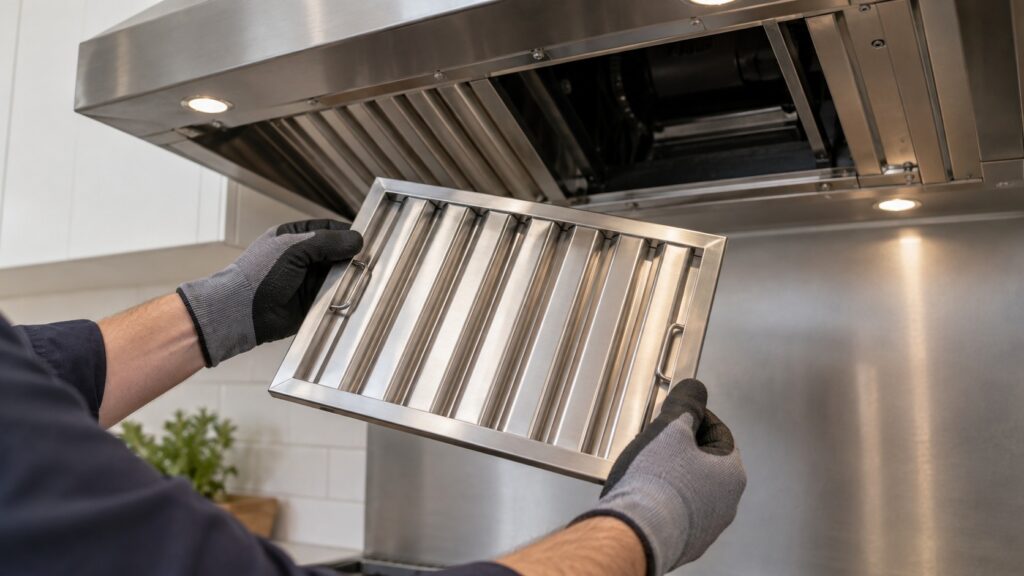
- Pull the baffle filters and hold them up to the light. If you cannot see daylight through the channels, they are the reason for the lost suction. Our guide to cleaning baffle filters covers washing and reseating them.
- Reseat the filters squarely. A filter sitting at an angle leaves a gap that grease uses instead of the channel, which is where seam staining comes from.
- Listen. A hum with no rotation points at the capacitor. A rumble or scrape points at bearings. Silence points at power reaching nothing.
Stop before removing the blower housing or opening any wiring compartment. The motor circuit is line voltage, it sits directly above a cooking surface, and the housing is heavy enough to fall awkwardly when it comes free.
Is a CornuFé hood worth repairing?
Usually yes, and more often than with a generic hood, because the value in the appliance is the matched enamel shell rather than the motor inside it. Capacitors, switches, lamp holders and filters are all replaceable with the shell in place. A motor replacement is more work but still leaves the canopy untouched.
The case for replacement is narrower: a canopy that has been damaged, a hood that was never the right width for the range, or a motor failure on a hood that is already a generation behind the range it serves. Where the decision is close, our page on repairing or replacing the hood blower lays out the numbers that matter.
What happens to the hood when the range is replaced?
This catches people out. A CornuFé hood is matched to a range by width and by finish, so replacing a CornuFé 90 with a 110, or moving from a CornuFé to a Château, leaves the old hood the wrong size, the wrong color, or both. Plan the hood and the range together, and check the duct at the same time: a wider range with a bigger blower over an old, undersized duct produces a hood that is noisy and still slow to clear.
We are an independent repair company working on La Cornue equipment in all 50 states, not a factory service arm, and we will tell you when a repair is not worth doing. Pricing starts from a diagnostic visit, from $149 in most areas, and we confirm the estimate before any work begins. Call 1-844-579-1439 with the hood width, the finish and what the lights are doing, or book online — our La Cornue range hood repair service covers both CornuFé sizes, and you can schedule a visit in a couple of minutes.