A La Cornue oven slow to preheat is not always a fault: a vaulted oven is built to heat-soak its dome, so it can feel slower than a thin-walled box. This guide is about what is normal for a vaulted oven, how to measure your own oven so you can tell a real change from a feeling, and how to plan a preheat around it. If the oven really is slower than it used to be, our long preheat page sets out what can be behind it, and we do not repeat that list here. We do not state a normal preheat time for any model, because it depends on the model and the fuel; the measure that matters is your own oven against its own history.
What counts as normal for a vaulted oven?
The Château’s sealed dome works by radiant heat, with no window and no strong fan, and our vaulted oven guide says to give it a full preheat so the dome heat-soaks. A dome that stores heat takes its time and then holds an even temperature, so a longer preheat than you would expect from a thin-walled box can be part of the design. The oven’s own indicator and an independent thermometer, not the clock, tell you when it is ready. A CornuFé multifunction oven works differently, with a convection fan and elements, per our oven modes page, so compare it with its own history rather than with a Château. What is not normal is a preheat that has clearly become longer than yours used to be, or a front and door that have become much warmer than usual.
Is the La Cornue oven really slow, or does it just feel slow?
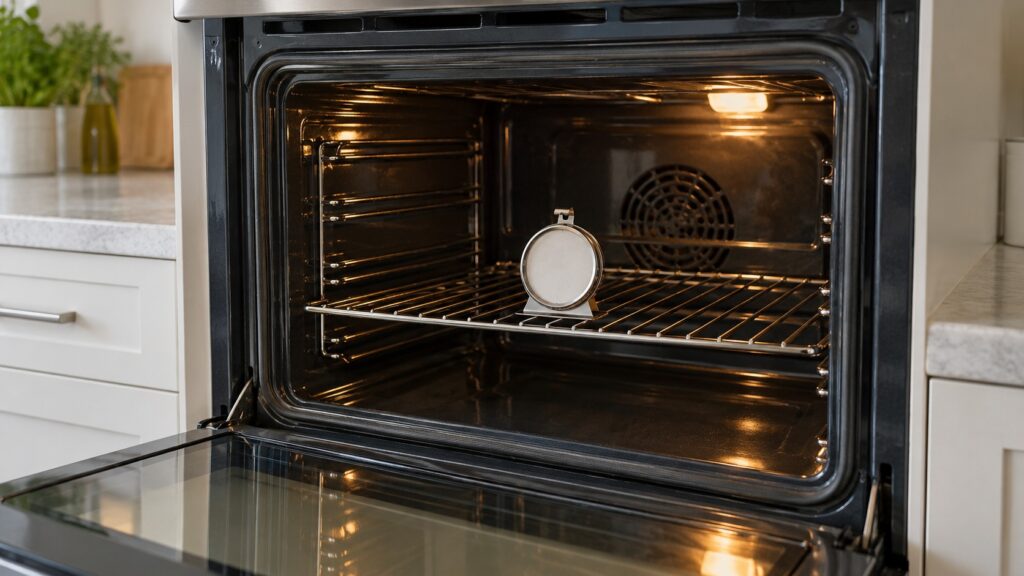
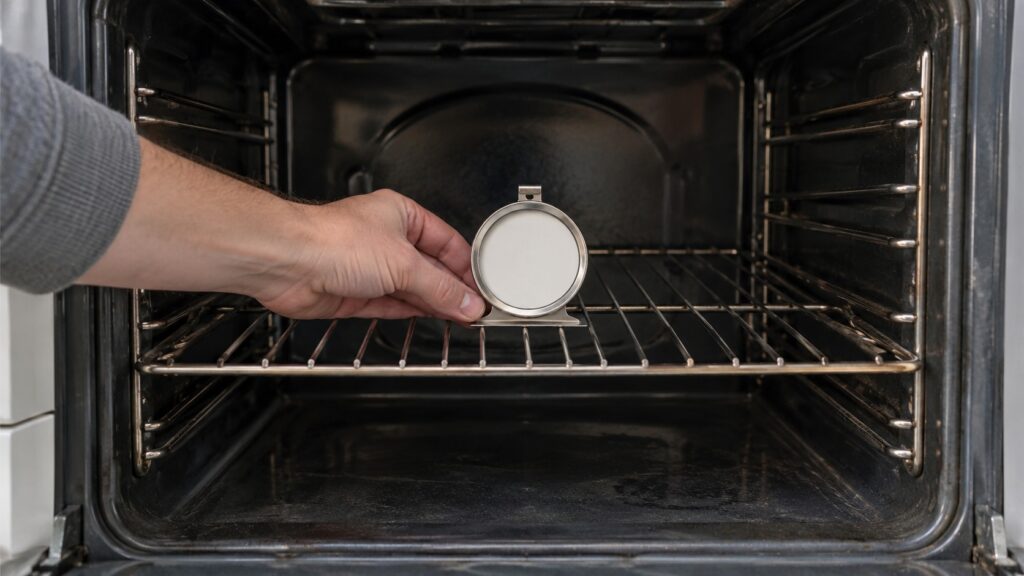
Start by measuring. Put an independent oven thermometer in the center of the oven, set a temperature, and let the oven fully preheat and stabilize, as our temperature drift guide recommends. Take several readings, because ovens cycle around the target. Compare how long it takes now with how long it used to take, and write the two down. A vaulted oven is designed to heat-soak its dome, and our guide to the vaulted oven says to give it a full preheat; a dome that stores heat may simply feel slower than a thin-walled box, so what matters is a change from your own normal. We do not state a normal preheat time for any model.
What can you check yourself on the door and gasket?
These are the checks an owner can make safely, with the oven off and fully cool. Our gasket care guide describes them: run your fingers along the gasket, which should feel resilient and intact, not brittle or flattened, and look for cracks, tears or sections pulled out of their channel. Then close the door on a slip of paper at several points around the frame and try to pull it out; if it slides out with no resistance, the seal is weak there. A dirty gasket can be cleaned with a soft damp cloth and dried fully, while a hardened, cracked or flattened one needs replacement by a technician, because gaskets are model-specific. The point of these checks is only to rule the door in or out before you call.
What if the door does not close flush?
A door that sags or has shifted leaves a gap even with a good gasket. Look for a door that sits crooked, a latch that does not engage, or a handle that feels loose. Our door won’t seal guide explains how worn hinges stop the door pulling square. Do not take the door off or adjust the hinges yourself; the door is heavy and the hinges are under tension. A technician can adjust or replace them.
What is for a technician?
If the gasket and door look fine and the preheat is still clearly longer than it used to be, the remaining checks involve the heat source, the thermostat and the cavity insulation, and those belong to a technician. Our long preheat page says what they will look at, and our gas oven not heating guide is the place to go if the oven does not heat at all. Do not remove panels to reach anything, and do not try to light a gas oven by hand. If you smell gas, do not touch any switch or light anything; leave the home and call the gas utility or 911 from outside.
What else can slow things down?
Opening the door often, loading heavy cold cookware before the oven is up to temperature, a thermostat or sensor that reads wrong, or a hi-limit that trips and interrupts the heat. If the oven cuts out and a red light appears, see the hi-limit trip guide and call a technician. Keep the interior clean, because heavy carbonized spills do not help, and let your oven’s own indicator and thermometer decide when to start cooking.
What can you do while you wait for a repair?
Plan around the slow preheat instead of fighting it. Start the oven earlier and use the thermometer, not the clock, to decide when it is ready. Keep the door shut while it heats; every opening costs recovery time, and a sealed vaulted oven depends on its seal. Keep the door and gasket clean with a soft damp cloth and no abrasives. Do not run the oven empty at high heat to compensate, and never use a gas oven to heat the room. If the oven has begun to bake unevenly, our uneven baking guide helps you tell technique from a fault. Write down how long the oven takes and what the thermometer says each time, because those notes help a technician.
Keep in mind that heat loss is not only an annoyance. An oven that struggles to hold its temperature uses more fuel, stresses its parts and can cook unevenly, so it is better to have it looked at than to wait for a part to fail outright.
When should you call a technician?
Call if the preheat is clearly longer than it used to be and the gasket and door look fine, if the oven cycles heavily, if the temperature does not match the thermometer, or if there is a smell of burning or gas. A technician can test the igniter, element, thermostat and door fit, and quote the part that needs attention. If you see sparks or water near electrical parts, switch off the breaker at the panel while standing on a dry floor, and never pull a plug from a wet outlet. Our oven repair page explains the visit.