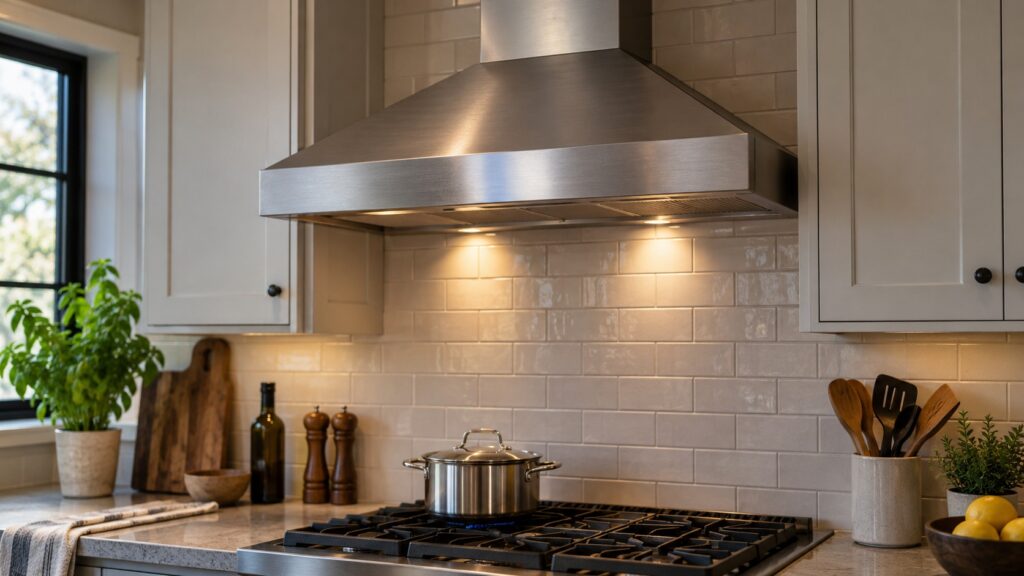
A La Cornue hood rattling noise or vibration is worth a few minutes of listening before you do anything else, because not every sound from a hood is a fault. This guide is about telling everyday blower sound from a change worth acting on, and about what an owner can safely check from the outside. For the fault itself and what can be behind it, see our hood rattling page and our hood vibration page; we do not repeat those lists here. A blower moving air makes some sound at every speed, and it normally rises as you turn the speed up. A rattle at one speed, a buzz that is new, vibration you can feel in the canopy or a sound that is getting worse is different, and a noise that has turned to grinding is a reason to stop and call.
Why is my La Cornue hood rattling?
Start by listening. Run the hood at each of its speeds and notice when the sound appears, and whether it is steady or comes and goes. Airflow noise that grows smoothly with the speed is what a working blower sounds like. A rattle that appears at one speed only often means something light, such as a filter or panel, resonating at that airflow. A new sound that was not there before, or one that gets louder over weeks, is a sign to act. Our hood rattling page is the place to read about the possible causes of noise that changes with fan speed.
What can you check yourself?
Switch the hood off at its control, make sure the lights and the cooktop below are cool, and look at the baffle filters. They should sit snugly in their frames; a filter that is slightly out of its seat or has a bent edge will buzz. Take them out and put them back, and clean them while you are there, because clogged filters affect airflow as well; our baffle filter cleaning guide shows how. Check any visible trim or lower panel for obvious looseness by pressing gently with your hand. Do not remove the canopy, the chimney cover or any panel that hides the blower. If you feel the hood body moving against the wall, note it and leave the fasteners to an installer.
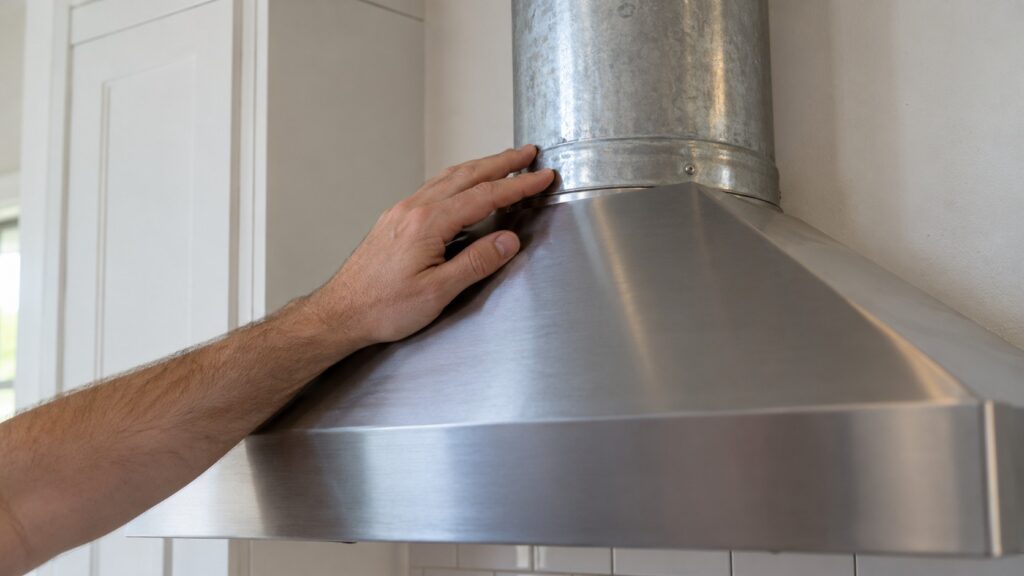
Pay attention to timing as well. A noise that started right after you replaced a filter, or after someone cleaned the hood, points to a part that was not seated properly. A noise that has crept in over months, getting louder in step with how much you cook, fits grease building up or a bearing wearing. A noise that appears only when the range below is also running may be vibration passing through the wall or cabinets. Keep notes for a few days, because a clear pattern can save a visit.
Why should you not open the hood to look for the cause?
Because what sits behind the panels is the blower, its wheel and the wiring, and none of that is an owner’s job. Our hood vibration page covers what can be behind a shaking hood. What you can do from outside is keep the baffle filters clean, since they catch grease before it reaches the blower, and describe the vibration clearly: where you feel it, at which speed and whether it is getting worse. Do not remove the canopy, the chimney cover or any panel to look, and do not run the hood with a panel off.
Is the duct or the outside cap involved?
Sometimes. A backdraft damper that flaps against its frame, or a duct that is loosely supported, can add noise that seems to come from the hood. From the inside you can only listen: if the sound seems to come from above or from the wall rather than the canopy, tell the technician. Do not take duct sections apart, and do not climb to inspect an outdoor cap unless you can do so safely from the ground. Our weak suction guide explains the damper and its role.
When is it more than a rattle?
Stop using the hood if the noise becomes a grinding or screeching sound, if you smell burning, or if the hood vibrates hard enough to shake. If you ever see sparks or smoke from the hood, or water near its controls, switch off the breaker at the panel while standing on a dry floor, and never pull a plug from a wet outlet. A worn bearing is a repair, not a reason to replace the hood, as our repair or replace guide explains: tightening the assembly or replacing the blower motor resolves it. A technician can tell which one you need.
What should you tell the technician?
Describe the sound as precisely as you can. Does it rattle, rumble, grind or buzz? Does it change with the fan speed? Did it begin suddenly, perhaps after you cleaned the filters, or has it grown gradually? Is the vibration felt in the canopy, the chimney or the wall? Is it there on every speed, or only on high? Does the hood still move air normally? A short video taken with your phone, with the hood running, helps a lot, because noises are hard to reproduce on a visit. Tell us the hood style if you know it, such as Marquee, Loge, Cascade or Euclid for a CornuFé, or the width for a Château; the hood names glossary explains how to tell. Having the name ready helps identify the right blower and filter parts.
How can you prevent rattles?
Keep the filters clean and seated, run the hood at a speed that suits the cooking and avoid pulling on the canopy or leaning on it. A hood that is properly installed and supported on a short, straight duct runs quieter. If the hood was noisy from the day it was installed, check the mounting and duct with your installer. Our venting guide explains why a smooth rigid duct helps.