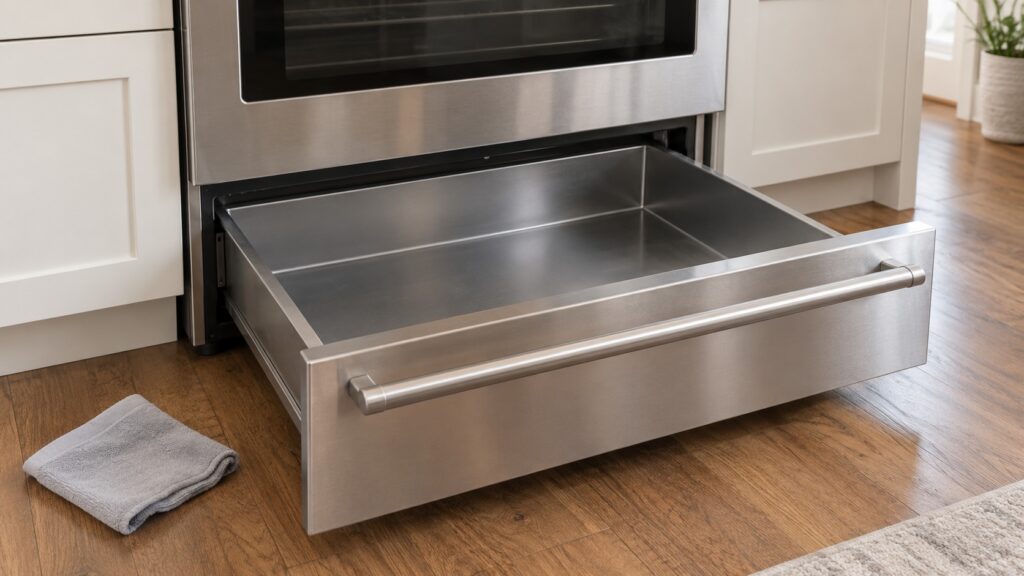
Clean La Cornue warming drawer surfaces gently: turn it off, let it cool, take everything out and wipe the inside with a soft cloth dampened with warm water and a little mild dish soap, then dry it. Clear the slide tracks with a vacuum fitted with a narrow attachment, followed by a dry cloth. Keep water away from the heating element and controls, avoid abrasives and sprays, and make sure the drawer is dry before you use it again. Our site does not have a model-specific cleaning procedure for the drawer, so if your owner’s manual lists approved products or says how to remove the drawer, follow that.
How do you clean the inside of a warming drawer?
Switch the drawer off and let it cool; a warming drawer is designed to hold food warm, so the inside may be hot to touch even when it feels gentle. Take out all dishes, then slide the drawer out as far as it goes. Wipe the floor and sides with a soft cloth wrung almost dry, using warm water with a drop of mild dish soap. Spills of sauce or juice are easiest to lift when they are fresh. Then go over the surfaces again with a clean damp cloth to remove soap, and finish with a dry cloth. Do not pour water into the drawer, and do not flood it with spray: the element and its wiring sit in the same assembly, and water has no business near them.
The drawer is a holding appliance, not a cooking one, as our guide on how La Cornue warming drawers work explains. That means spills are usually food that was held, not baked on, and a gentle clean is almost always enough.
How do you clean the slide tracks?
The drawer runs on two parallel slides, one on each side, and debris in them is the most common cause of a drawer that drags or will not close flush. Our misalignment guide suggests a vacuum with a narrow attachment, followed by a wipe with a dry cloth, which clears most debris without taking anything apart. Do it on both sides. Crumbs, a dropped utensil or packaging left from installation are the usual finds. Do not oil the slides unless your manual says so, and do not use sprays that leave a film where crumbs will stick.
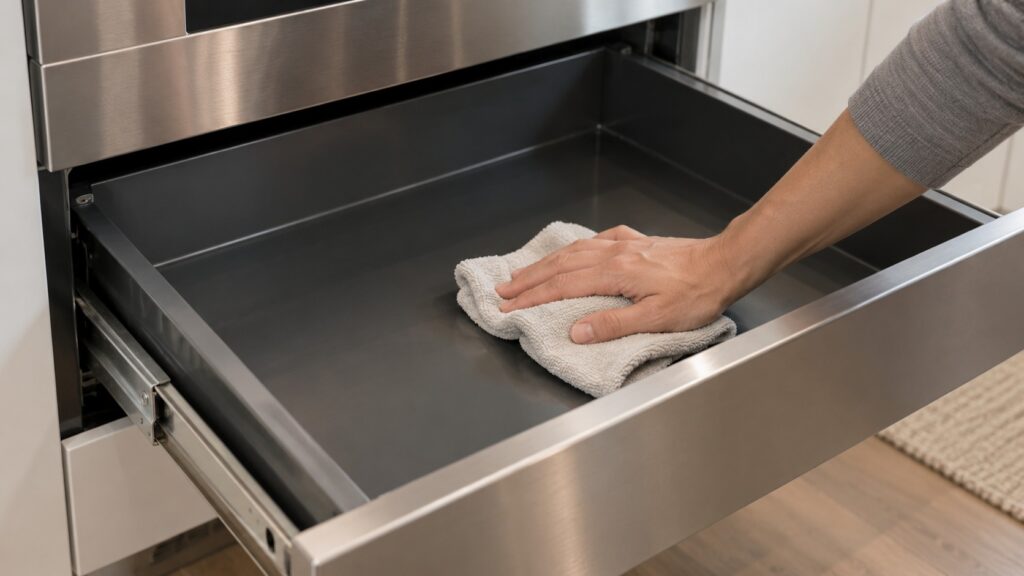
What if food has spilled and dried on?
Do not scrape with metal. Lay a cloth wrung out in warm soapy water over the spill so it softens, then lift it with a soft cloth or a plastic scraper that will not scratch the finish. Repeat rather than pressing hard. A spill that has run toward the back or underneath the drawer floor is a different matter: if you cannot reach it with a cloth, leave it, and mention it at your next service visit rather than flushing it with water. Sugary spills and anything with acid, such as tomato or wine, should be wiped up the same day, because they mark finishes and leave a sticky film where crumbs gather. Cover dishes you hold in the drawer so juices stay in the dish and not on the floor of the drawer.
What should you avoid when cleaning it?
Avoid soaking, harsh cleaners, oven cleaner sprays, scouring pads and steel wool. They damage finishes and can leave residue that smells when the drawer warms. Do not use a pressure of water or steam on the drawer, and do not take the base panel off to clean behind it, because the base panel gives access to the element and wiring; that is a technician’s job. The same warning applies to the whole base of the range. If something has spilled through or you see liquid dripping from the drawer’s underside, switch off the breaker at the panel while standing on a dry floor and call for service, and never pull a plug from a wet outlet.
What about the humidity vent and smells?
The vent decides whether the drawer keeps moisture in for roast meat or lets it out for bread and anything with a crust. A vent clogged with grease or dust can leave the drawer damp, so keep it clear with a dry cloth. If smells linger after cleaning, leave the drawer open and empty for a while to air out. A smell of burning that does not go away, or smoke, is not a cleaning issue; turn the drawer off and call a technician.
Once everything is dry, slide the drawer shut and open it again slowly to check that it moves evenly on both sides. A drawer that drags only after cleaning may have a crumb or a utensil still in the track; check again with the vacuum attachment. Run the drawer empty at a low setting for a short spell to let any last trace of damp go, then check that nothing smells of burning. Only then put dishes back in. Keep an eye on the range level too, because if the range has shifted, the drawer will feel as if it sticks even when it is clean.
How often should you clean it, and how do you test it afterward?
Wipe up spills when they happen, once the drawer has cooled, and give the inside a fuller clean whenever it starts to look or smell like it needs one. Vacuum the slides now and then, especially if the drawer has begun to catch. We do not set a schedule in weeks, because it depends on how you use the drawer. If you hold sauces or juicy dishes often, cover them so the vent and floor stay cleaner. Our leveling guide is worth a look as well, since a range that is out of level can make a clean drawer drag.
When should you call a technician instead?
Call if the drawer still drags after the tracks are clear, if it no longer heats, or if it gets hotter than its setting. Hot food needs to stay above 140°F, so a drawer that is too cool is not safe for holding food for long; our guide to how drawers work says to check with a probe thermometer once if you rely on it. Our range repair page explains the visit.