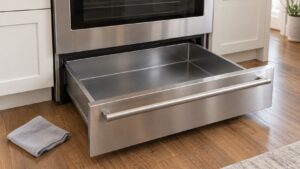

La Cornue range weight floor planning comes down to one rule: get the weight for your exact model from its spec sheet, then make sure the floor is ready. Our site does not publish weights, and a hand-built La Cornue is heavy, so any figure we guessed would be worthless. What our installation guide does say is that you should verify the floor can support the range’s weight and that the surface is level, with anti-tip provisions in place. This guide turns that into a plan you can hand to your builder and your installer.
How heavy is a La Cornue range?
Heavy enough to plan around, but the exact figure depends on the model, the fuel and the configuration. A Château is hand-built with a vaulted oven, enamel and trim metal; the Le Château 120 page lists a width of 47.2 inches and two vaulted ovens, one gas and one electric. A CornuFé 110 is 43 inches wide with two electric convection ovens, per its model page. Size and configuration change the weight, so ask your dealer for the spec sheet for your model in writing. If you have a Grand Palais or one of the widest Châteaus, the planning matters even more. We do not list a weight for any model, and we recommend you do not trust one you cannot trace to a spec sheet.
What should you know about the floor?
The two questions are whether the floor can carry the range and whether it is level where the range will sit. Our installation requirements guide says to verify the floor can support the weight. Whether that is easy or not depends on what is underneath: a concrete slab, wood framing, a stone or tile finish. We cannot judge your structure from here, so ask your builder or a structural professional if there is any doubt, for example in an older house, over a crawlspace or in a renovation where framing has been altered. Give them the spec sheet weight, not an estimate.
Stone and tile floors need protection during delivery, because a heavy crate on a dolly can crack tile or chip stone. Ask the delivery team how they will protect the route and the final position.
Why does level matter so much?
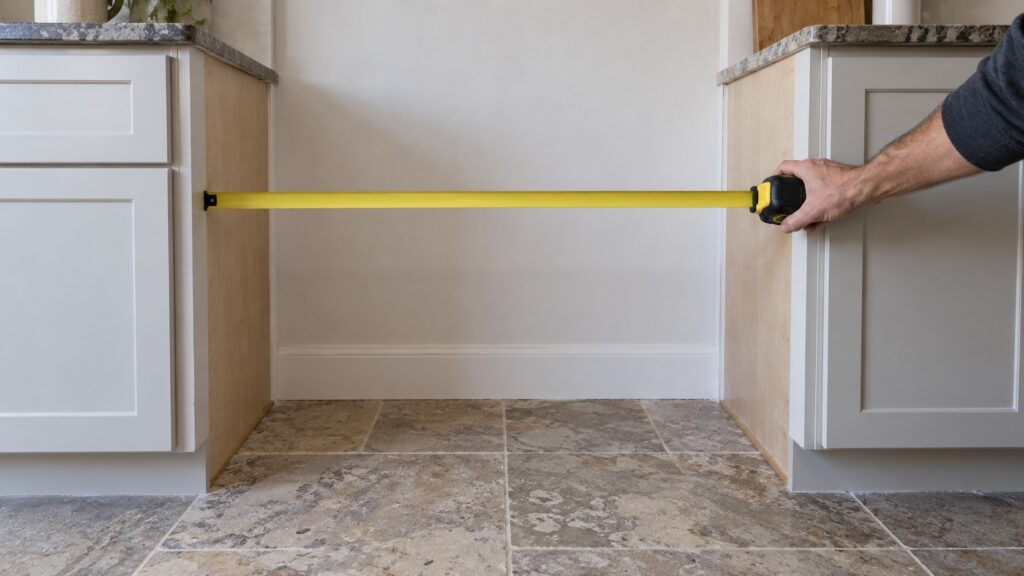
A range that is out of level can cook unevenly, can make a warming drawer drag, and can affect how liquids sit in pans. Our leveling and anti-tip guide explains how to check it, and our installation-related faults guide lists symptoms that trace to level rather than to a part. Check level in both directions, front to back and side to side. A floor that slopes toward a drain, a settled slab or an old wood floor often needs shimming or a leveled base before the range arrives, and the feet then fine-tune the position.
What about anti-tip protection?
A tall, heavy range that is loaded on an open door or drawer can tip if it is not secured. Anti-tip provisions are a safety feature, and our pages treat them as part of the installation, not an extra. Where they attach depends on the model and on the floor and wall behind it, so follow the installation instructions and have the installer confirm it before they leave. If you ever move the range for cleaning or a service visit, put the anti-tip provision back.
What do you ask the dealer and the builder?
Put the questions in writing and keep the answers with your installation file. Ask the dealer for the spec sheet and installation instructions for your exact model and configuration, including the width, the weight and the clearances. Ask whether that weight is for the range as shipped or as installed, since a crate adds to it. Ask the builder what the floor is made of in the kitchen, what it was designed to carry and whether anything under the range position, such as a crawlspace, a basement or a joist run, changes the answer. Ask the installer how the range will be moved from the delivery truck to its final position and what protection will go down. A range of this size is not a job for friends and a hand truck.
It also pays to think about what comes after installation. A heavy range that has to be pulled out for a service visit needs a clear path and a floor that will not be scratched, and it needs its anti-tip provision reconnected afterward. If your kitchen has a shallow alcove, check that a technician will be able to slide the range forward far enough to reach the connections. Tell us when you book a visit and we will plan the access.
How do you plan the delivery route?
Measure every doorway, hallway and turn between the street and the kitchen, and compare them with the crated dimensions on the delivery paperwork. Remove doors if needed and plan the path early, because the largest models need careful route planning before purchase. Our installation guide recommends professional white-glove delivery given the weight and the value. Make sure the gas line, electrical circuit and hood are planned at the same time. Gas and high-amperage electrical connections must be done by licensed professionals, and a hood needs its own mounting plan; see our hood height guide for that part.
What should you do the day before delivery?
Clear the route, lay protective covering over the floor, confirm the opening for the range is the size on the plan, and check that the installer, the gas fitter and the electrician are all booked for the right days. Mark where the range will sit and note the position of the gas and electrical connections relative to the marks. Keep the spec sheet and installation instructions where the installer can see them. If anything on delivery day does not match the plan, stop and call before the crate is moved in.