Repair or Replace a Cracked La Cornue
Repair or Replace a Cracked La Cornue is a common question among La Cornue owners. This guide walks through it step by step with technician-grade detail.
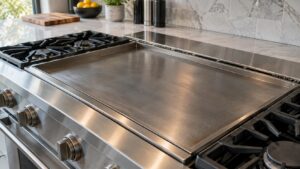
The French Top (plaque coup de feu) is a heavy cast-iron simmer plate, and over time it can crack, warp, or rust if neglected. The good news: the plate is a serviceable component, not a reason to replace your range. This guide explains your options.
Why French Tops fail
Cast iron is durable but not indestructible. Thermal shock (pouring cold water on a hot plate), impacts, or long-term neglect can crack or warp the plate, while moisture and lack of seasoning cause rust. Proper care prevents most of this — see our French Top seasoning guide.
Repair options short of replacement
- Surface rust: Often correctable by cleaning, re-seasoning, and ongoing maintenance. Not a reason to replace anything.
- Minor warping: May still be usable, though heat distribution can suffer.
- Cracks: A cracked plate should be replaced as a module for safe, even cooking.
Replacing the plate vs. the range
The French Top plate is part of a rangetop module that can be serviced or replaced independently of the oven and the rest of the range. Replacing a hand-built La Cornue range over a cracked plate would make no financial sense. Plate or module replacement costs are a small fraction of a new range — typically from a modest parts-and-labor figure. See our repair cost guide.
Preventing future damage
Season the plate regularly, avoid thermal shock, dry it after cleaning, and never use harsh abrasives. With proper care a French Top lasts for decades. Our French Top cooking guide also covers heat-zone technique that reduces stress on the plate.
When to consider a different module
If you find you rarely use the French Top, a replacement is a chance to reconfigure — though rangetop module changes on a built range can be involved. Explore module options on lacornueusa.com.
Professional service
Replacing a French Top plate or module is best handled by a technician who can source the correct part and ensure proper fit and burner alignment. Schedule a service appointment to restore your rangetop.
How to judge the severity
Not every blemish on a French Top is a problem. Surface rust on a neglected plate is cosmetic and almost always reversible — clean, dry, and re-season it. Minor warping may leave the plate usable, though heat distribution can suffer and pans may sit unevenly. A true crack, however, compromises even cooking and structural integrity and means the plate (or module) should be replaced. When in doubt, run a flat straightedge across the surface to gauge warp, and look closely for hairline cracks radiating from the center where heat is most intense.
Prevention is the real economy
Most French Top damage is preventable. The leading cause of cracks is thermal shock — never pour cold water onto the hot plate. Rust comes from skipping seasoning and leaving the plate wet. A regular thin-oil seasoning routine and drying the plate after cleaning will keep cast iron sound for decades. Our seasoning guide covers the method.
Frequently asked
- Can a cracked plate be welded? Cast iron repair is unreliable for a cooking surface; replacement is the safe, even-cooking choice.
- Is replacing the plate cheaper than a new range? Vastly — it is a module-level part, quoted “from $X.” See our repair cost guide.
Replace the plate, not the range
The French Top plate sits within a rangetop module that can be serviced or replaced independently of the oven and the rest of the range, so a cracked plate never justifies replacing the whole appliance. A technician sources the correct plate or module for your model and ensures proper fit and burner alignment — fit matters, since a mismatched plate cooks unevenly. If you find you rarely use the French Top, a replacement is also a chance to reconsider the module, though rangetop changes on a built range can be involved. Explore options on the manufacturer site before deciding.