Choosing a La Cornue Rangetop Configuration
Choosing a La Cornue Rangetop Configuration is a common question among La Cornue owners. This guide walks through it step by step with technician-grade detail.
One of the joys of ordering a La Cornue is configuring the rangetop from a menu of modules. The right combination depends on how you cook. This guide walks through each module and how to mix them.
The available modules
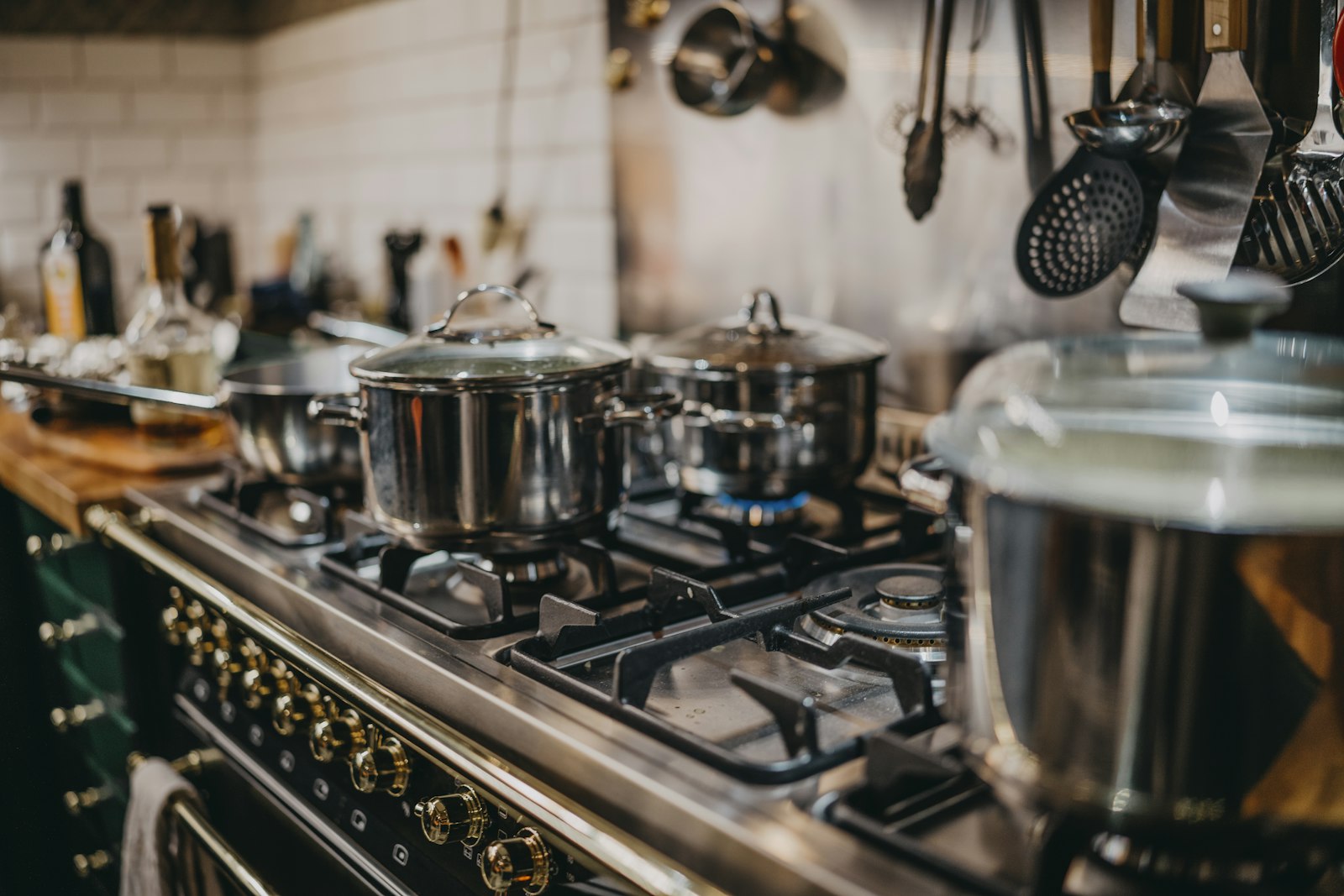
- Gas burners — Brass “flammes” burners, front burners up to ~17,000 BTU on natural gas, rear ~7,500 BTU. The all-purpose choice for high heat and visual flame control.
- French Top (plaque coup de feu) — A cast-iron simmer plate engraved with stars, giving concentric heat zones from a center boil to an edge hold. Ideal for sauces and gentle cooking. See our French Top seasoning guide.
- Grill — A lava-rock gas grill module for searing and char.
- Induction — Ceramic-glass zones (~2,100W, 3,700W boost) with pan detection and the residual-heat “H” indicator. The most precise and easiest to clean.
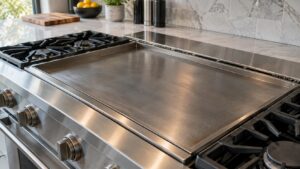
- Teppanyaki — An electric flat-top griddle for high-heat griddling.
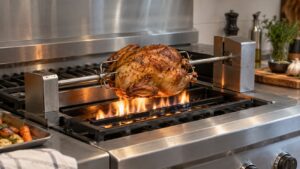
- Flamberge — A gas rotisserie module for spit-roasting.
Matching modules to your cooking
If you sear and stir-fry, prioritize gas burners. If you make delicate sauces and reductions, a French Top is invaluable. If you want precision and easy cleanup, add an induction section. Griddle fans should consider Teppanyaki, and roast lovers the Flamberge. Many cooks combine two or three modules — for example, gas burners plus a French Top, or burners plus induction.
Configuration codes by size
Each Château size uses its own configuration codes (B-series on the 75, C-series on the 90, E-series on the 120, K-series on the 150, L-series on the 165, N-series on the Grand Palais 180). Induction-equipped layouts typically carry an “I” suffix (CI, EI, KI). Larger ranges support more simultaneous modules.
Plan for installation
Gas modules need a gas line; induction and Teppanyaki need heavy electrical service. Mixing fuels means planning both. Review our installation requirements guide and confirm module availability per size on lacornueusa.com.
Service for every module
Each module type has its own maintenance and repair needs — burner orifices, French Top seasoning, induction coils, grill lava rocks, and rotisserie motors. Our technicians service them all. Schedule a service appointment for rangetop diagnostics or maintenance.
Three sample configurations
To make the choices concrete, here are combinations cooks commonly specify:
- The classic French kitchen: A bank of brass burners alongside a French Top, so you have high-heat searing and a continuous simmer plate for sauces and reductions.
- The precise modernist: Brass burners plus an induction section for fast, easy-clean precision when you want it and flame when you don’t.
- The entertainer: Burners, a lava-rock grill, and a Flamberge rotisserie for searing, char, and spit-roasting at gatherings.
Think about cleaning and upkeep, not just cooking
Each module carries its own maintenance rhythm: brass burners need port cleaning, the French Top needs seasoning, induction glass needs gentle wiping, the grill needs lava-rock burn-off, and the Flamberge has a motor to keep clear. Choosing a module you will actually maintain is as important as choosing one you will cook on. Our seasoning and care guides — such as seasoning the French Top — cover the routines.
Frequently asked
- Can larger ranges hold more modules? Yes — wider sizes (K, L, N series) support more simultaneous modules than the smaller B and C layouts.
- Which layout do I tell the service center? Quote your configuration code (e.g., CI, EI) so module-specific parts are matched correctly.
Plan around installation early
Module choices drive the install. Gas modules — burners, grill, Flamberge — need a properly sized gas line, while induction and Teppanyaki need heavy electrical service, and a mixed rangetop means planning both. Decide your modules before finalizing the kitchen’s utilities, because adding an induction section later, for example, may require electrical work that is far easier to run during a renovation than after. Review our installation requirements guide as you settle the configuration, and confirm which modules each size supports on the manufacturer site.