Baking bread in La Cornue oven cavities rewards the vaulted design: the sealed dome stores and reflects radiant heat evenly, which suits bread and pastry. To get the most out of it, give the oven a full preheat so the dome heat-soaks, favor the center rack, open the door as little as possible, and judge the loaf by timing and feel, since the Château vaulted oven has no window. Use your recipe’s temperature, confirm it with an independent oven thermometer, and read your owner’s manual for anything specific to your model. We do not give times or temperatures here because they depend on the recipe and the oven.
Is a La Cornue vaulted oven good for bread?
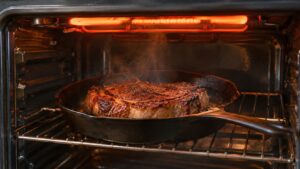
It is well suited. Our guide to how the vaulted oven works says the radiant heat excels at roasting meats, baking bread and pastry and slow-cooking, anywhere uniform, gentle heat improves results. The curved dome reflects heat down and around the food, so a loaf browns evenly without the drying air movement of strong convection. Cooks who switch to a vaulted oven often notice more even browning and better moisture retention. That does not mean you can ignore technique; the habits below are what make it work.
How should you preheat for bread?
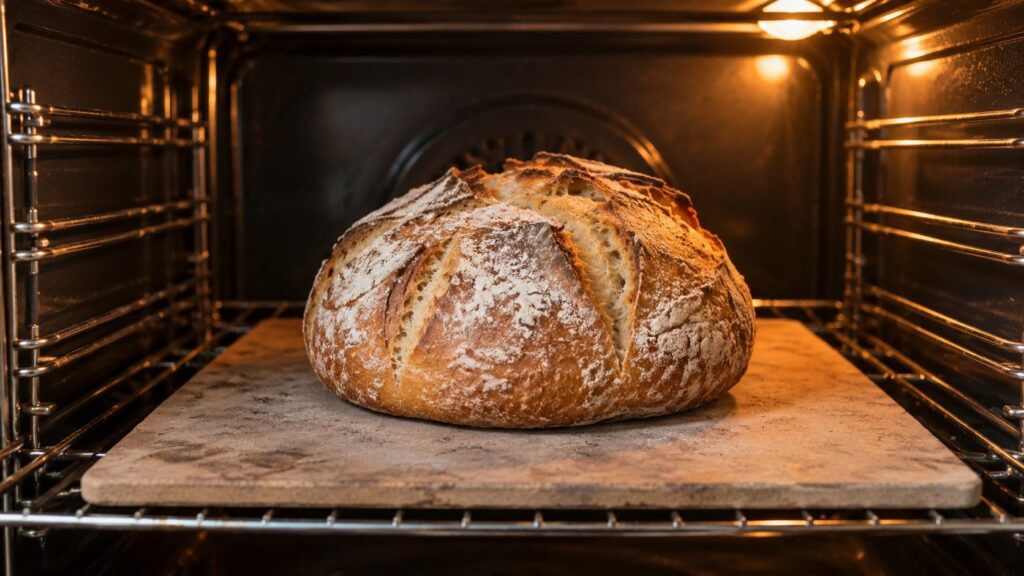
Give the oven a full preheat so the dome heat-soaks. Our vaulted oven guide stresses this: because the voûte cooks by radiant reflection rather than forced convection, the dome and floor need to be thoroughly hot before the loaf goes in. A heavy baking stone, if your recipe uses one, needs to come up to heat with the oven. We do not give a preheat time because it depends on the model and whether the oven is gas or electric; use the oven’s own indication and your thermometer. Put the thermometer in the center, let the oven stabilize and take several readings, as our temperature drift guide recommends.
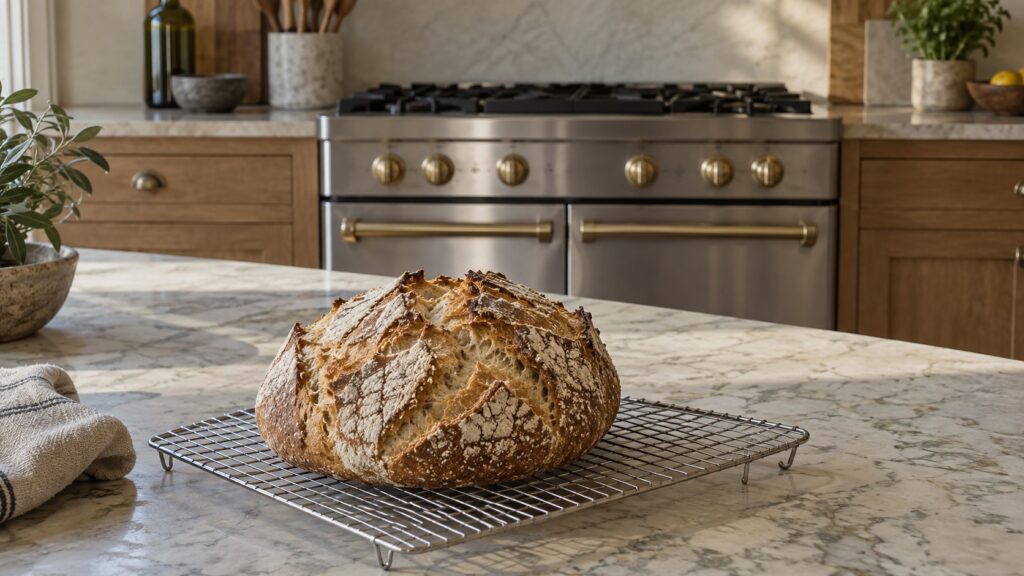
Where should the loaf go in the oven?
Favor the center rack for the most even exposure, as the vaulted oven guide advises. A loaf set too high sits near the dome and may brown on top before the inside is done; a loaf set too low gets more heat underneath. If you bake more than one loaf, leave space between them so radiant heat reaches each side. Our vaulted oven roasting guide has more on rack position and the way radiant heat browns food.
How do you check bread without a window?
The Château vaulted oven is sealed with no window, which keeps the dome even. The trade-off is checking by opening the door, and seasoned owners learn to rely on timing and feel. Open the door quickly, look, and close it, because every opening lets heat out and breaks the sealed environment. Use the recipe’s time as a guide, then judge by color and by a tap on the bottom of the loaf when you take it out: a done loaf sounds hollow. Rotate only if the loaf is browning unevenly, and if it consistently does, see our uneven baking guide.
Plan the loading before you open the door. Have the dough ready, scored if your recipe calls for it, on a peel or in its pot, and the rack already in the position you want. Open the door, slide the loaf in, close the door and step back. The point is to keep the opening short, because the sealed dome holds heat that took time to build, and a long open-door pause costs recovery time. Wear dry oven mitts, keep your arm clear of the oven floor and the door edge, and do not lean over a gas oven’s open door. If a loaf sticks to the peel, do not reach in to fix it with your hand; use a tool.
Bread dough is a wet, sugary-surface food, so crumbs and flour will fall. Let the oven cool afterward and sweep the floor of the oven with a soft cloth rather than leaving flour to carbonize; our interior care guide explains that letting spills carbonize repeatedly is one of the surest ways to harm a vaulted oven.
How do you load the loaf, and what about steam and crust?
A crisp crust depends on moisture early in the bake. A covered heavy pot, such as an enameled cast iron Dutch oven, traps steam from the dough without adding water to the oven. Check the pot maker’s guidance on lid and handle heat limits before you use it in the oven. A hot cast iron pot stays hot long after it leaves the oven, so lift it with dry oven mitts and set it on a trivet. We do not recommend pouring water onto the oven floor or spraying the walls, because moisture lingers in a sealed dome and we have no guidance that says it is safe for your model; if you want to add steam, ask your dealer or check the manual. After baking, let the oven cool and dry the interior, as the interior care guide explains.
What if the bread bakes unevenly?
Uneven color on one side usually comes from one of three things: rack position, a door that is not sealing, or a thermometer reading that does not match the setting. Check the gasket with a slip of paper at several points, as described in our door gasket care guide, because a leak undermines the whole sealed design. If the oven runs hot or cool compared with an independent thermometer, a technician can look at the thermostat or sensor. If the loaf is pale on the bottom, the stone or pot may not have preheated long enough.
Does a CornuFé oven bake bread differently?
Yes. The CornuFé multifunction oven circulates air with a convection fan and offers conventional bake, convection bake and bottom heat modes, among others; our oven modes page says bottom heat suits crisp bases such as pizza, and conventional bake suits delicate single-rack items. Mode names differ by model, so read your manual. If you are comparing the two oven families, our Château versus CornuFé guide explains the cooking character of each.