La Cornue Range Tops
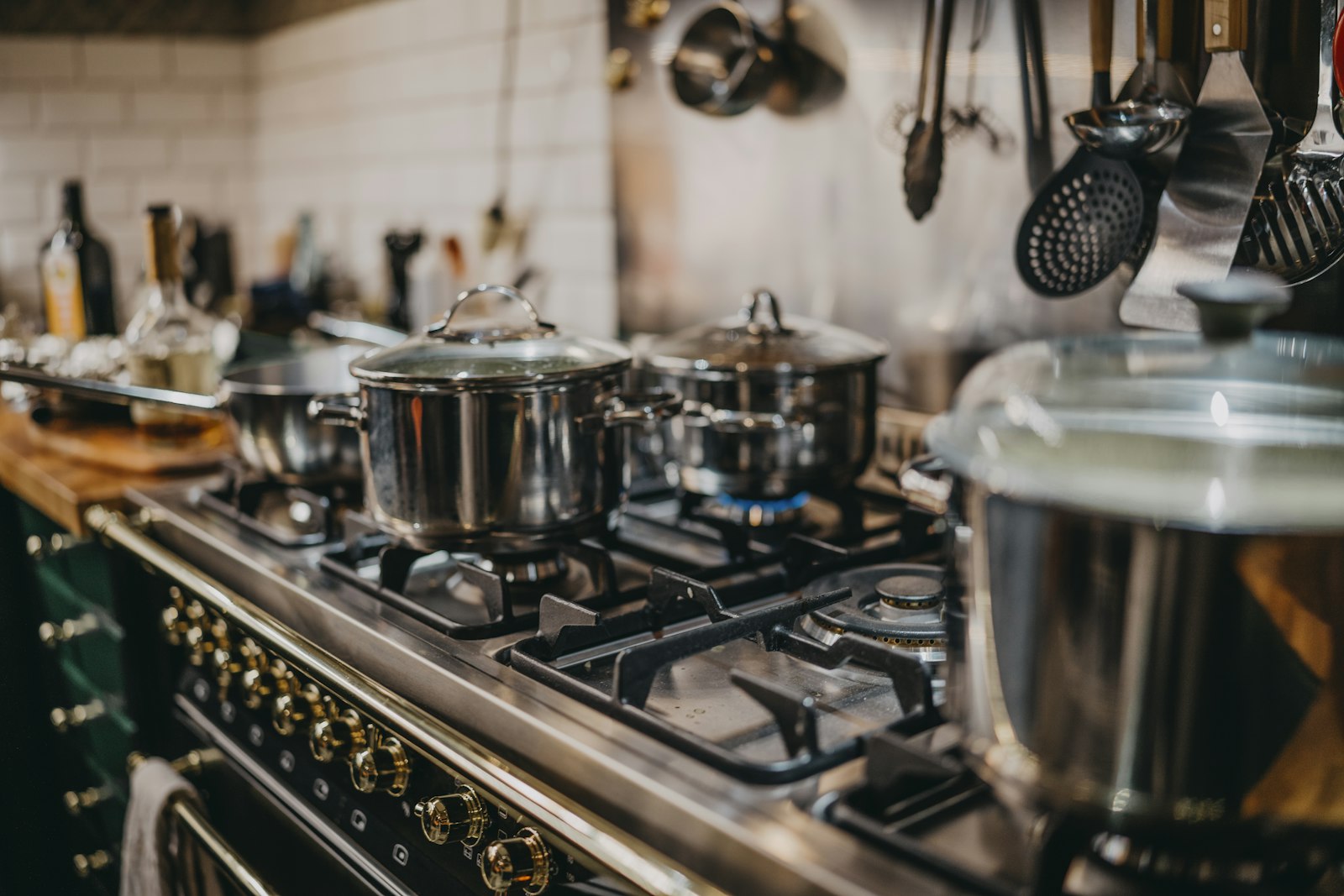
La Cornue Range Tops combine hand-built French craftsmanship with serviceable, repair-friendly engineering. This page covers the lineup, the technologies behind them, and the problems our certified technicians resolve.
The La Cornue range top, explained
La Cornue’s “range top” is the configurable cooking deck of its hand-built ranges — the same celebrated rangetop that crowns every Château from 60 to 165, the Grand Palais 180, and the freestanding CornuFé 90 “Albertine” and CornuFé 110. Built to order in France since 1908 by the Compagnons, the deck is assembled from mix-and-match modules chosen at order time. You can review the configurations we service in our model directory and see current build options on the official La Cornue site.
Modules and technologies
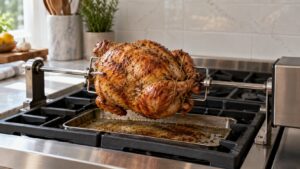
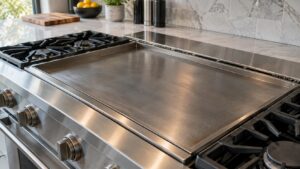
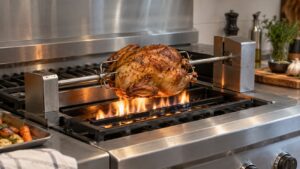
The brass “flammes” gas burners reach roughly 17,000 BTU on the front burners (around 7,500 BTU rear) on natural gas. The cast-iron French Top — the plaque coup de feu — is engraved with La Cornue’s étoiles and creates graded heat zones across a solid simmer plate. Induction modules run on ceramic glass at about 2,100 W per zone with a 3,700 W boost, complete with a pan detector and an “H” residual-heat indicator. Add to that a lava-rock gas grill, an electric teppanyaki, and the Flamberge gas rotisserie module. CornuFé range tops use five brass burners or a five-zone induction surface.
Finishes and craftsmanship
The range top and its trim are finished in roughly 50 vitreous enamel colors — including the Suzanne Kasler Couleur and Étoilé Collections — with polished or brushed brass, nickel, chrome, or copper accents. Because every deck is hand-built to a unique module layout, correct service depends on identifying exactly which burners and modules a given range carries.
Configuring the cooking deck
The freedom to lay out the range top is what sets La Cornue apart. A cook can pair high-output brass burners for boiling and searing with a French Top for gentle, all-day simmering, then add a grill for steaks or a teppanyaki for quick high-heat cooking, and finish with the Flamberge gas rotisserie for roasting. Each size of range — from the compact Château 60 up to the Grand Palais 180 — supports a documented set of configuration codes that fix how many of each module the deck can hold. Because those layouts differ so much from one range to the next, a repair always starts by confirming the exact modules installed, since a French Top, an induction zone, and a grill each fail and are serviced in entirely different ways.
Common La Cornue range top problems
- Gas burner ignition failure — clogged ports or a fouled electrode.
- French Top uneven, cracked, or warped — heat stress or impact damage to the cast-iron plate.
- Grill module clogged — grease buildup or spent lava rocks.
- Induction zone failure or “U” flashing — no/incompatible pan, or a coil/sensor failure if other zones work.
- Teppanyaki not heating — element or control failure.
- Flamberge rotisserie motor or gas problem — the spit won’t turn or won’t light.
- Valve leak, stiff knob, or yellow flame — air-shutter adjustment, often after an LP/NG conversion.
- Spark module clicking, hob discoloration, drip-tray or grate corrosion, and loose or worn knobs.
Induction-equipped decks may show E2, U400, “Er,” or “U”; see our error code directory.
Maintenance essentials
- Season the French Top and keep it dry to prevent rust and warping.
- Clean induction glass with a dedicated cleaner; never use abrasives.
- Service the grill’s lava rocks and clear the drip tray regularly.
- Keep burner caps seated and ports clear for even, blue flames.
- Polish brass trim and check that knobs and valves move freely.
Professional La Cornue range top service
Range top repairs span gas valves, igniters, induction coils, grill and teppanyaki elements, and the Flamberge rotisserie — work for certified technicians familiar with French rangetop modules. We stock common parts, honor the 5-year parts and labor warranty where applicable, and quote repairs from $X. Schedule La Cornue range top repair or book online.