
La Cornue Stainless Hob and Surface Care
La Cornue Stainless Hob and Surface Care is a common question among La Cornue owners. This guide walks through it step by step with technician-grade detail.
Stainless steel hob surfaces and trim on a La Cornue are durable and timeless, but they show fingerprints and can discolor from heat if neglected. This guide covers keeping stainless looking its best.
Clean with the grain
Stainless steel has a directional grain. Always wipe along the grain, not across it, to avoid streaks and to keep the finish uniform. Use a soft microfiber cloth dampened with warm water and a drop of mild dish soap for everyday cleaning.
Fingerprints and smudges
Fingerprints are the most common complaint. A dedicated stainless-steel cleaner or polish removes them and leaves a protective film that resists new prints. Apply to the cloth, wipe with the grain, and buff dry. Avoid spraying directly near knobs and controls.
Heat discoloration
High heat can leave bluish or rainbow discoloration on stainless around burners or on the hob. A non-abrasive stainless cleaner usually restores the color. For stubborn discoloration, a specialized stainless polish applied with the grain can help. Avoid abrasive pads that scratch.
What to avoid
- Steel wool and abrasive scouring pads.
- Chloride-based or bleach cleaners, which can pit stainless.
- Leaving salty or acidic spills to sit, which can cause spotting.
- Cross-grain scrubbing.
Drip trays and grates
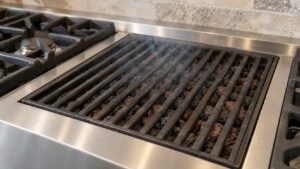
Stainless drip trays and grate hardware collect grease and can corrode if neglected. Wash them with hot soapy water, dry fully, and address any early corrosion promptly. Keeping these clean also helps the rangetop look cohesive alongside enamel and trim.
Coordinating care
If your range mixes stainless with enamel and other trims, see our vitreous enamel cleaning guide and the appropriate trim guide for a consistent routine.
Reference and service
Surface-care recommendations are on lacornueusa.com. If stainless components are pitted or corroded beyond cleaning, schedule a technician to discuss options.
Removing heat tint without damage
The bluish or rainbow discoloration that appears on stainless around burners is a thin oxide layer from high heat, not permanent damage. A non-abrasive stainless cleaner applied along the grain usually lifts it; for stubborn tint, a specialized stainless polish works without the scratching that scouring pads cause. The trick is patience and grain direction — work with the metal’s lines, not across them, and the color evens back out.
Protecting against salt and chloride pitting
Stainless is corrosion-resistant, not corrosion-proof. Its weak point is prolonged contact with salt, acidic foods, and chloride- or bleach-based cleaners, which can pit the surface. Wipe salty and acidic spills promptly, keep bleach products off the steel, and dry after cleaning. A stainless polish that leaves a light protective film also helps resist fingerprints and grime between cleanings.
Frequently asked
- Why does my stainless streak? Cross-grain wiping and leftover cleaner — wipe with the grain and buff dry.
- Can I use the same routine on drip trays and grates? Yes — hot soapy water, dry fully, and address early corrosion before it spreads.
Everyday habits that keep stainless bright
Stainless looks its best with light, frequent care rather than occasional heavy scrubbing. Wipe with a soft, damp microfiber cloth and a drop of mild dish soap along the grain for daily cleaning, and reach for a dedicated stainless cleaner or polish on fingerprints, finishing with a dry buff. Keep steel wool, gritty cleansers, and chloride or bleach products away from the surface, and wipe salty or acidic spills promptly to avoid spotting. If your range mixes stainless with enamel and other trims, coordinate routines using our vitreous enamel cleaning guide for a cohesive look. Heat tint around the burners is just a thin oxide layer — a non-abrasive stainless cleaner worked along the grain usually restores the color without scratching. Keep chloride- and bleach-based cleaners off the steel entirely, since they can pit it, and wipe salty or acidic spills promptly so they cannot leave spots.