
La Cornue Knob and Bezel Care
La Cornue Knob and Bezel Care is a common question among La Cornue owners. This guide walks through it step by step with technician-grade detail.
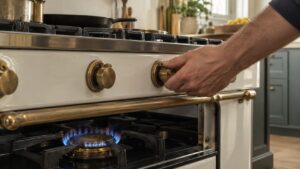
The knobs and bezels on a La Cornue are among the most-touched parts of the range and a focal point of its styling. They collect grease and fingerprints, and a knob can stiffen over time. This guide covers keeping them clean and operating smoothly.
Cleaning knobs and bezels
- Most La Cornue knobs pull straight off the valve or switch stem for cleaning — confirm for your model before pulling.
- Wash removable knobs in warm soapy water, rinse, and dry fully. Never put plated or brass knobs in the dishwasher.
- Wipe bezels with a soft, damp cloth; match the technique to the finish (brass, nickel, chrome, or stainless).
- Avoid spraying cleaner directly on or behind controls — liquid can reach the valve or switch. Spray onto the cloth instead.
Matching the finish
Bezels often match the range’s trim metal. Clean and polish them using the same approach as the rest of the trim — see our brass cleaning guide or nickel and chrome trim care guide depending on your configuration.
Addressing a stiff knob
A burner knob that becomes hard to turn usually means the gas valve behind it has dried out or accumulated debris. Forcing a stiff knob can damage the valve or the knob. The valve may need re-greasing with high-temperature valve grease or replacement — this is gas-component work for a technician. See our stuck burner knob guide.
Worn or loose knobs
A knob that spins loosely or no longer aligns with the markings may have a worn stem interface or a stripped insert. Replacement knobs keep the controls accurate and the look intact. Confirm the correct part for your model.
Preventing problems
- Wipe knobs after cooking so grease does not bake on.
- Do not force a stiff knob — have the valve serviced.
- Reinstall removable knobs fully seated and aligned.
Reference and service
Knob and bezel part references are on lacornueusa.com. For a stiff valve or worn knob, schedule a technician to service it safely.
Removing knobs without damage
Most La Cornue knobs pull straight off the valve or switch stem, but confirm for your model before tugging — some seat more firmly than others. Pull evenly and straight rather than rocking side to side, which can stress the stem. Once off, wash removable knobs in warm soapy water and dry fully; never put plated or brass knobs in the dishwasher, where heat and detergent dull the finish. Reinstall fully seated and aligned with the markings so the indicated setting matches the actual valve position.
Stiff knob vs. worn knob — different fixes
Diagnose by feel. A knob that is hard to turn but moves the burner points to a dried-out or fouled gas valve behind it — a gas-component service, not a knob problem. A knob that spins freely without changing the flame has a worn or stripped interface and needs replacing. Forcing a stiff knob risks cracking it or damaging the valve stem, so resist that temptation and have the valve serviced instead — see our stuck burner knob guide.
Frequently asked
- Can I lubricate a stiff valve myself? No — it needs proper high-temperature valve grease applied by a technician; household lubricants are unsafe near gas.
- Why clean the bezel separately? Match the technique to its finish (brass, nickel, chrome, or stainless) using the relevant trim guide.
Simple habits that prevent knob problems
A little routine care keeps knobs and bezels both attractive and functional. Wipe knobs after cooking so grease does not bake on, reinstall removable knobs fully seated and aligned with the markings, and clean bezels with the technique that suits their finish. Never force a stiff knob; have the valve serviced instead, since forcing it risks cracking the knob or damaging the valve stem. And because a sticking valve can also fail to close fully, treat any gas odor as an emergency per our gas smell safety guide.