La Cornue First
La Cornue First is a common question among La Cornue owners. This guide walks through it step by step with technician-grade detail.
A brand-new La Cornue carries manufacturing residues — oils, coatings, and protective films — that should be burned off before you cook. A proper first-use break-in removes odors and prepares the surfaces. This guide walks through it.
Before you start
Confirm the range is fully installed: leveled, anti-tip secured, and gas/electrical connections verified and leak-tested. See our leveling guide and dual-fuel hookup guide. Remove all packaging, tape, and protective films from inside and out. Ventilate the kitchen and run the hood.
Breaking in the oven
- Wipe the oven interior with a damp cloth to remove dust and loose residue.
- Run the empty oven at a high temperature for the period recommended for your model to burn off coatings. Expect some odor and possibly light smoke — this is normal.
- Keep the room well ventilated; run the hood throughout.
- Let the oven cool, then wipe the interior again before first cooking.
On dual-oven models like the 120, break in both the gas vaulted oven and the electric vaulted oven.
Breaking in the burners and modules
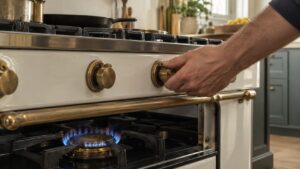
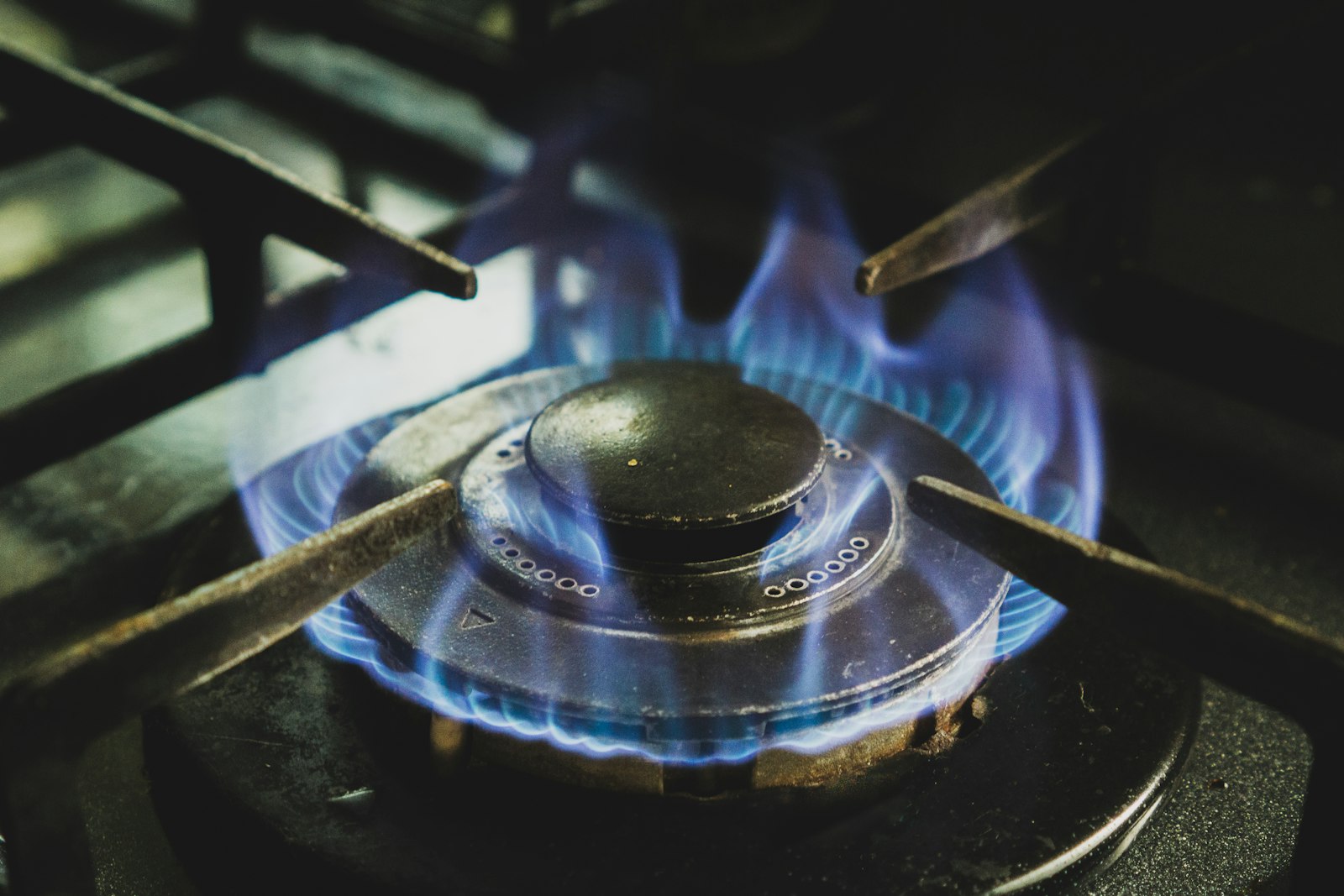
- Gas burners: Light each burner and run them to confirm a steady blue flame and burn off any oils. A yellow flame on a new install may indicate an air-mix issue — see our yellow flame guide.
- French Top: Season the cast-iron plate before first use — see our French Top seasoning guide.
- Induction: Power up and verify each zone with a compatible pan; watch for any error code.
- Grill/Teppanyaki: Run them per the manual to cure protective coatings.
What to expect
Some smell and light haze during break-in is normal and temporary. Strong, persistent smoke or any gas odor is not — shut down and consult our gas smell safety guide.
Reference and support
Follow the break-in instructions specific to your model; details are on lacornueusa.com. If anything seems off during commissioning, schedule a technician to inspect the installation before regular use.
Why the smell happens — and when it is not normal
The odor and light haze during a first break-in come from protective oils and coatings burning off the new metal and enamel. This is expected and fades within the first heat cycles. What is not normal is heavy, persistent smoke, a chemical-plastic smell that does not clear, or any whiff of unburned gas — those signal a missed protective film, a wiring issue, or a gas problem. If you smell gas at any point, stop and follow our gas smell safety guide.
Season and verify before your first real meal
Break-in is also the moment to prepare the cooking surfaces and confirm everything works. Season a French Top before its first use, verify every gas burner lights and burns blue, check that each induction zone detects a pan with no error code, and run any grill or Teppanyaki module to cure its coatings. Catching a problem now — rather than mid-recipe — is the whole point of a careful commissioning.
Frequently asked
- How long should the oven burn-off run? Follow the period in your model documentation; ventilate and run the hood throughout.
- Do dual-oven models need both broken in? Yes — break in both the gas and electric vaulted ovens.
Before you start the break-in
Confirm the range is fully installed first: leveled, anti-tip secured, and gas and electrical connections verified and leak-tested. Remove all packaging, tape, and protective films from inside and out — a missed film is a common cause of heavy smoke during the first heat — then ventilate the kitchen and run the hood throughout. Wipe the oven interior with a damp cloth before the burn-off, run the empty oven at the high temperature recommended for your model, let it cool, and wipe again before your first real cook. Season any French Top before its first use.