La Cornue Oven Door Won’t Seal
La Cornue Oven Door Won’t Seal is a common question among La Cornue owners. This guide walks through it step by step with technician-grade detail.
If your La Cornue oven door won’t close fully or seal tightly, heat escapes — leading to long preheats, uneven cooking, and a warm oven exterior. This guide covers the common causes and fixes.
Why a proper seal matters
The oven door must compress its gasket against the cavity to keep heat in. On the sealed vaulted oven especially, a poor seal undermines the radiant heat the voûte is designed to deliver. Symptoms of a bad seal include heat or steam escaping around the door, long preheat, and inconsistent baking.
1. Worn or displaced gasket
The most common cause is a hardened, cracked, flattened, or dislodged door gasket. Inspect it all the way around; if it no longer compresses or has pulled out of its channel, it needs cleaning, reseating, or replacement. See our door gasket care guide.
2. Hinge problems
Oven door hinges can wear, bend, or lose spring tension, so the door no longer pulls closed squarely against the gasket. A door that sags, sits crooked, or won’t stay shut points to the hinges. Hinge replacement is typically done in pairs and requires removing the door.
3. Misalignment
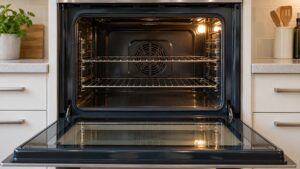
If the range isn’t level, the door may not align with the cavity — see our leveling guide. Also check that nothing inside (a rack, a pan, or food) is blocking the door from closing fully.
4. Door obstruction or debris
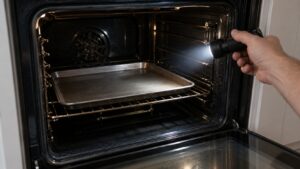
Food debris or hardened spills along the door edge or cavity lip can prevent full closure. Clean the sealing surfaces.
Diagnostic check
- Inspect and clean the gasket; reseat or replace if worn.
- Confirm the range is level and nothing obstructs the door.
- Check the door for sag or crookedness (hinge issue).
- Close the door on a slip of paper at several points — easy pull-out means a weak seal there.
Effect on cooking
A leaking door commonly causes the symptoms in our temperature drift guide and uneven baking guide.
Professional service
Gasket and hinge replacement restore a tight seal. Schedule a technician. Part references are on lacornueusa.com.
Gasket vs. hinge — how to tell
Two different parts produce similar symptoms, so check the door’s behavior. If the door closes squarely but heat still escapes, the gasket is the suspect — inspect it for hardening, cracks, flattening, or sections pulled from the channel. If the door sags, sits crooked, won’t stay shut, or no longer pulls square against the cavity, the hinges have worn, bent, or lost spring tension. Hinges are typically replaced in pairs and require removing the door, so identifying which part is responsible before service avoids unnecessary work.
Don’t overlook level and obstructions
Sometimes the door is fine and the surroundings are not. An out-of-level range can leave the door misaligned with the cavity — re-check leveling per our leveling guide — and hardened spills or food debris along the door edge or cavity lip can hold the door open a fraction. Clean the sealing surfaces and confirm nothing inside (a rack or pan) blocks full closure before assuming a parts failure.
Frequently asked
- How do I confirm a weak seal? Close the door on a slip of paper at several points; easy pull-out marks a weak spot — see our gasket care guide.
- Why does this matter so much on a vaulted oven? The sealed voûte relies on a tight door to hold its even radiant heat.
A simple diagnostic before you call
Run a quick check: inspect and clean the gasket, reseating or noting it for replacement if it is hardened, cracked, or flattened; confirm the range is level and nothing inside obstructs the door; look for sag or crookedness that points to worn hinges; and close the door on a slip of paper at several points — an easy pull-out marks a weak seal there. A leaking door commonly causes long preheats and the symptoms in our temperature drift guide, so fixing the seal often resolves complaints that look like a thermostat problem.